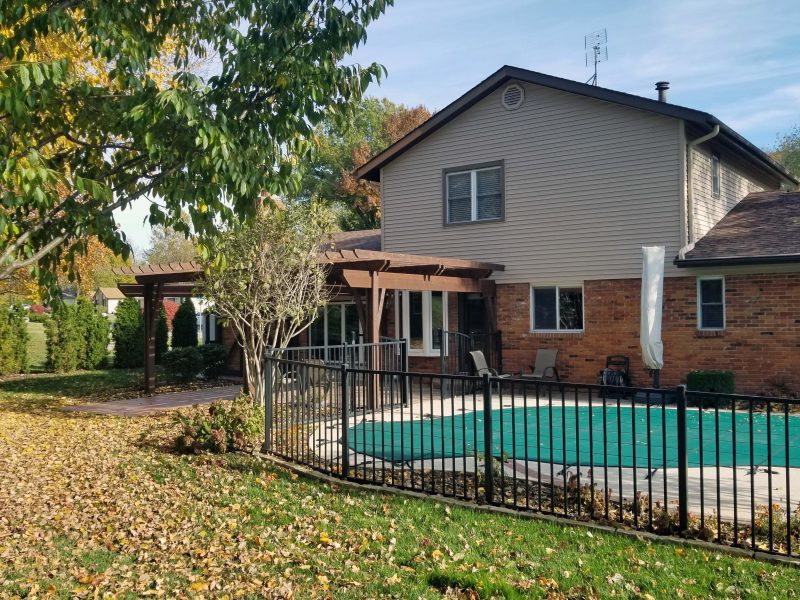
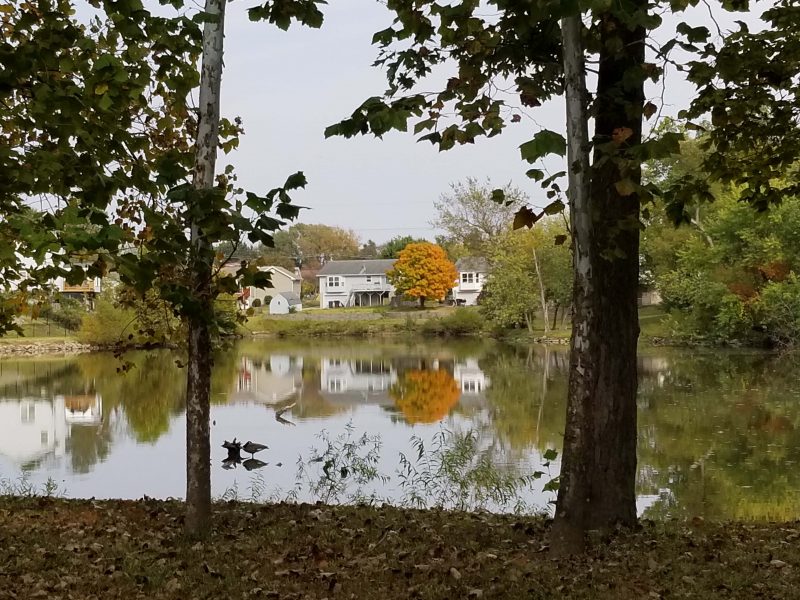
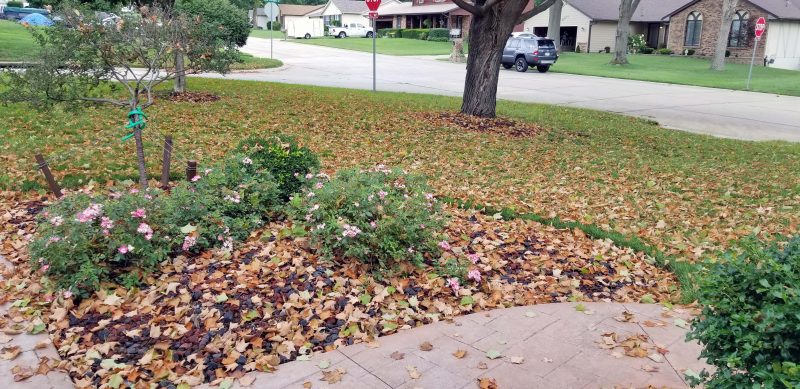
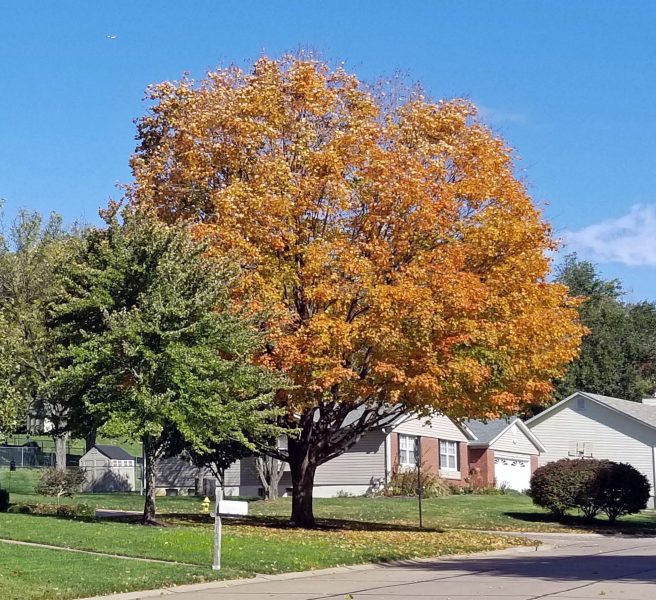
Summer is officially over at our house. The golden leaves on the ground crackle under our feet, the pool is winterized, the umbrella is covered, and the patio furniture is packed away in the storage shed. Firewood will be delivered this week, just in time for some fall fire bowl time.
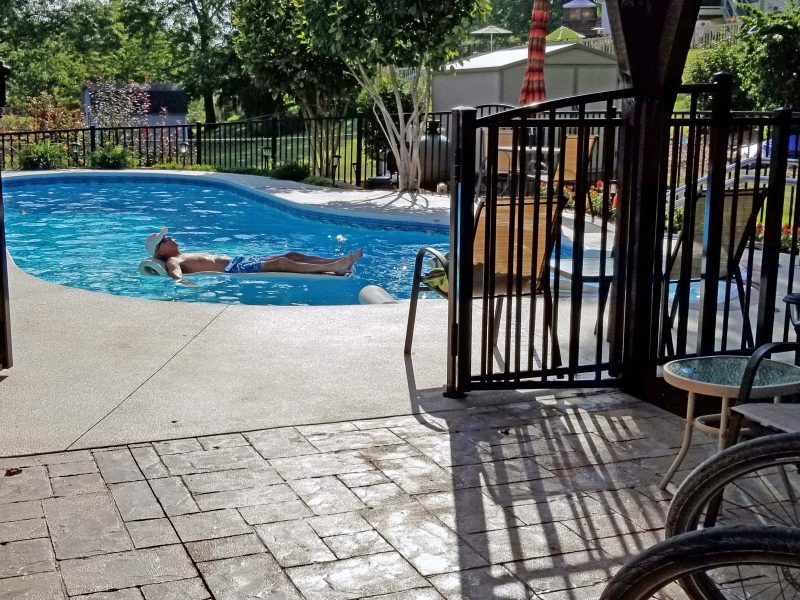
We left two lawn chairs on the pool deck for nights at the fire bowl and for days when it’s warm enough to sit outside in the afternoon sunshine. There are two additional lawn chairs on the patio (visible through the fence) because . . .
. . . our hot tub is finally at the dealer, waiting to be delivered to our house. It will be placed on the concrete pad visible in the center left, off the patio and left of the pool. We’ll need some lawn chairs beside the hot tub to hold our towels and robes while we luxuriate in the nice warm water, enjoying the relaxing water jets. We ordered the hot tub on June 13, almost exactly five months ago. You’ve gotta love the COVID supply chain issues!
Update coming when the hot tub is installed. I can’t wait!
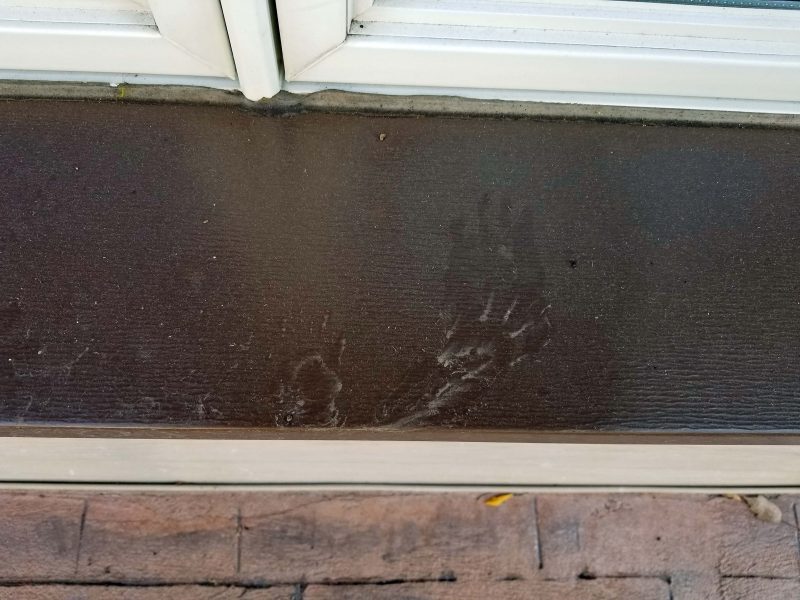
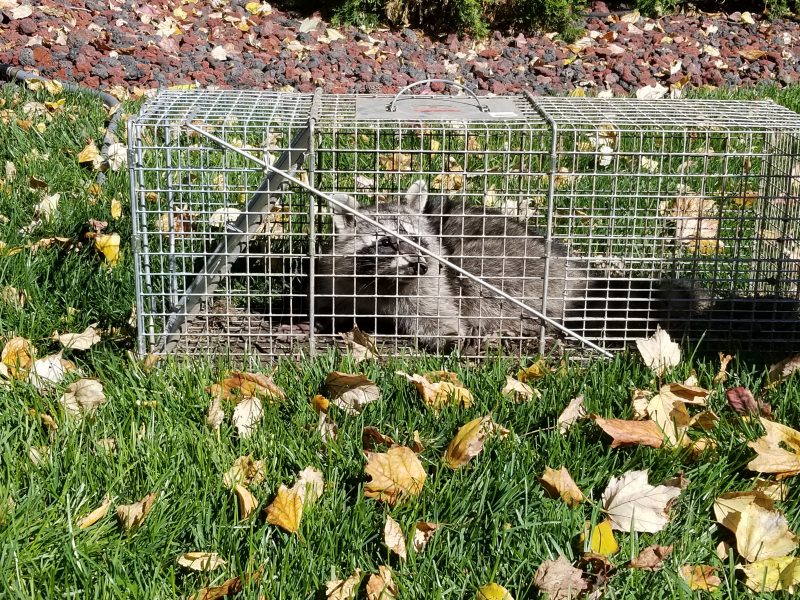
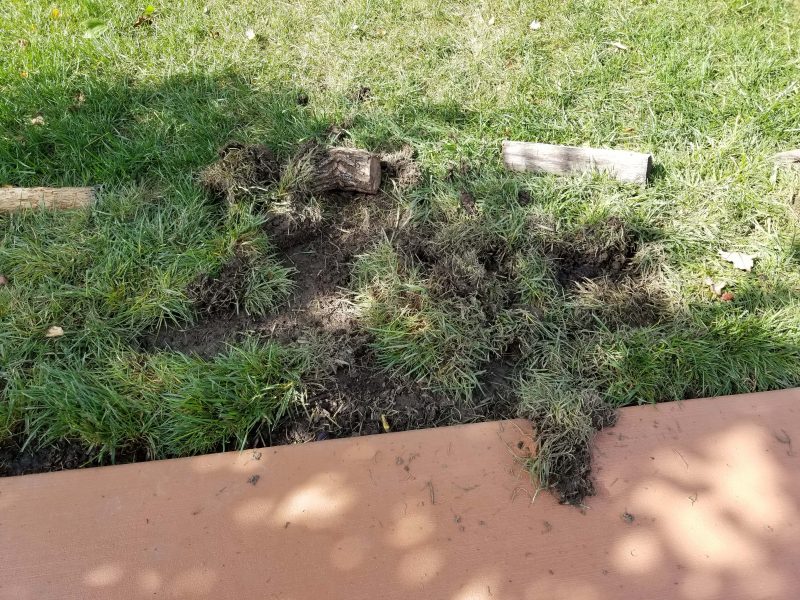
In early October, there was a lot of digging going on in our yard and the footprints indicated it was being done by a raccoon.
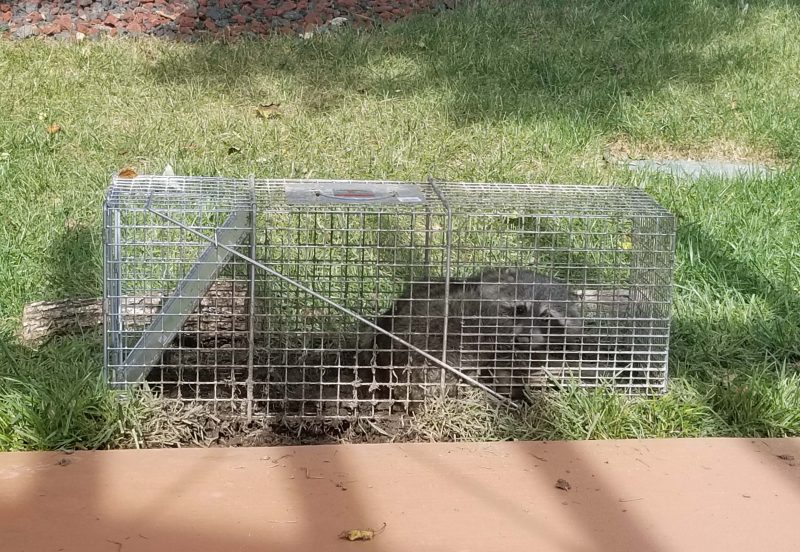
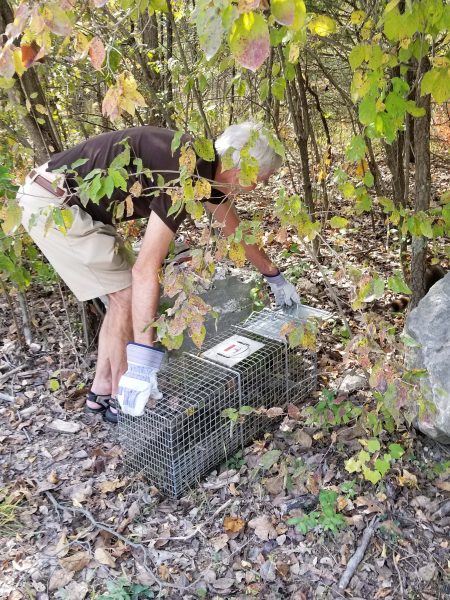
Ted bought a trap and we caught Ringo that same night (October 8), then released him into the Busch Wildlife Conservation Area the next day. Whew! That was easy!
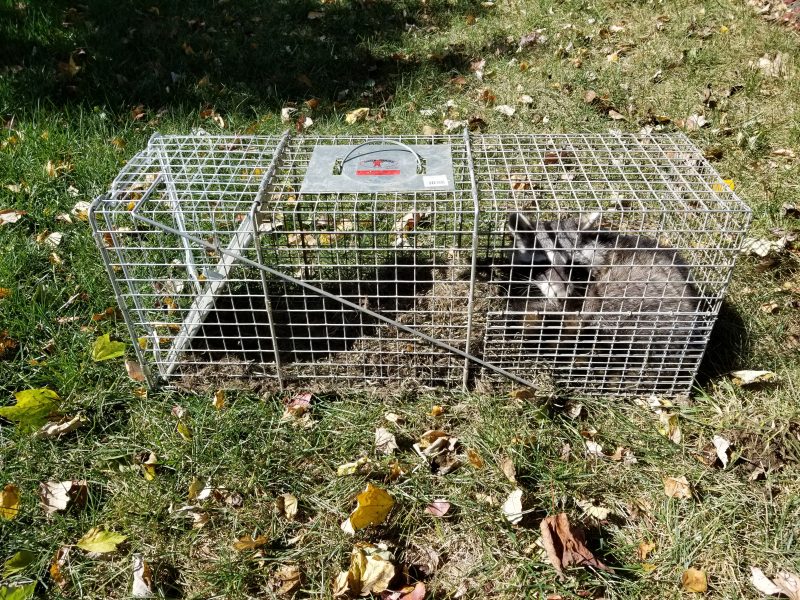
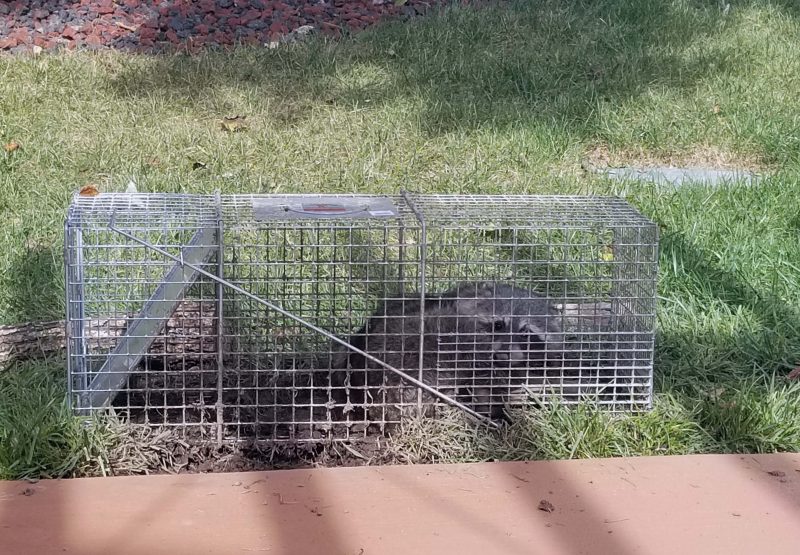
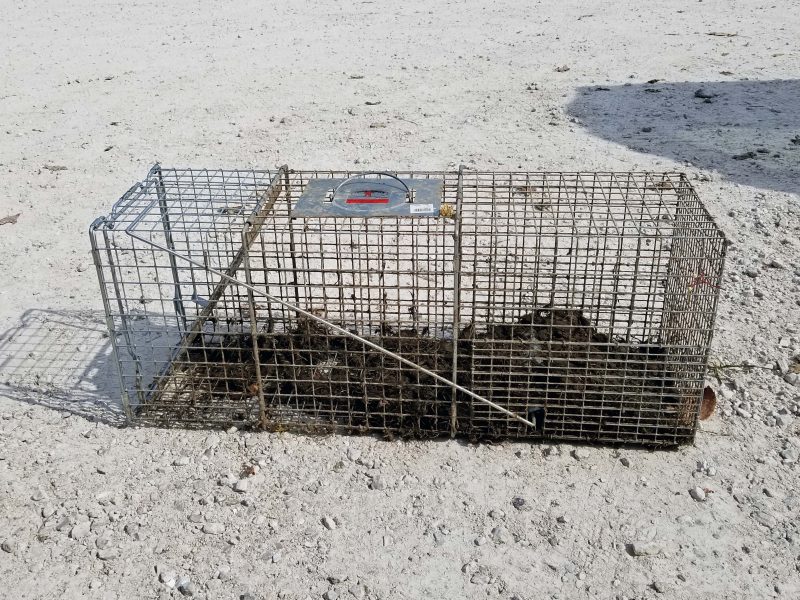
A few days later, we saw more raccoon tracks. We decided Ringo must have a wife, so Ted set the trap again and we caught the little woman (didn’t actually identify gender-type) on October 13. Look at the pile of dirt “she” dug up through the holes in the trap.
Ted released Number 2 and put the trap away. But wait! There was fresh digging three days later. Ted set the trap again and Number 3 (one of the grown kids?) was sitting in it on October 16.
What is going on??!! Is our yard the neighborhood attraction for the wildlife community living in the woods across the street? Did Ringo pass the word somehow to tell all his friends that the Busch Wildlife Conservation Area is an awesome place and that the transport carrier is in our yard?
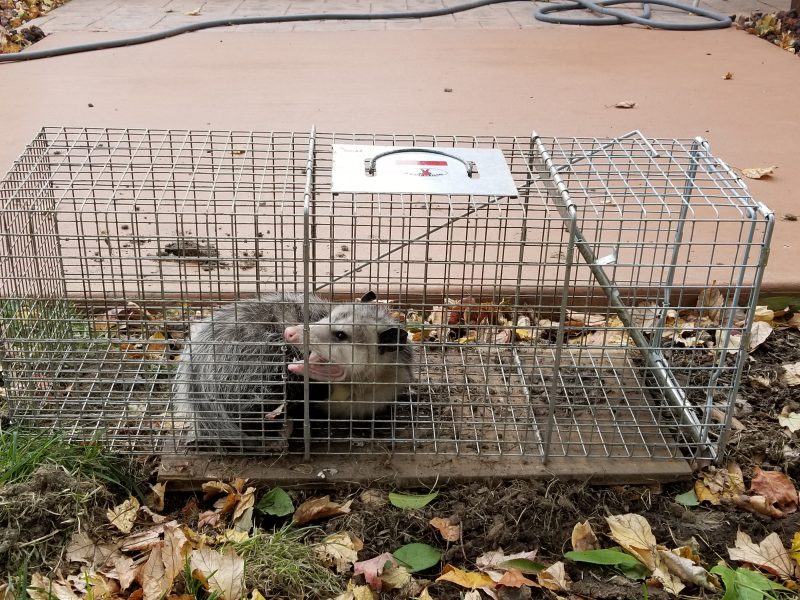
In a forward-thinking manner, we decided to keep setting the trap every night until we captured every critter that was digging up our lawn. Two days later (October 18), we apparently captured a friend of Ringo’s family–an opossum. Check out those teeth! He was asleep and woke up when we lifted the trap. He didn’t make a sound, so maybe this was just a yawn. Ted made another relocation deposit at Busch.
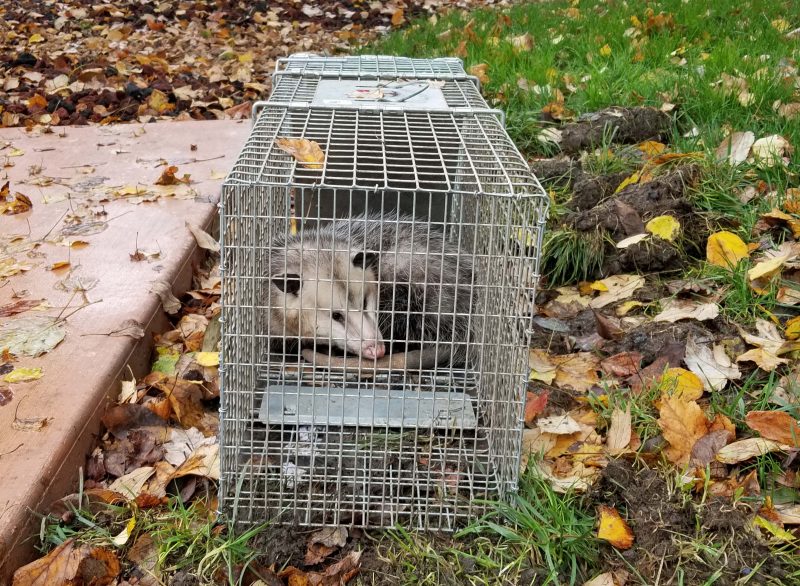
We kept the trap baited and sure enough, on October 21, there was another opossum sleeping in it and awaiting transfer.
That’s five critters trapped and relocated. It’s been a week since we trapped No. 5 and there’s no evidence of new digging in the yard, so our 2020 wildlife relocation program might be finished. At least for awhile.
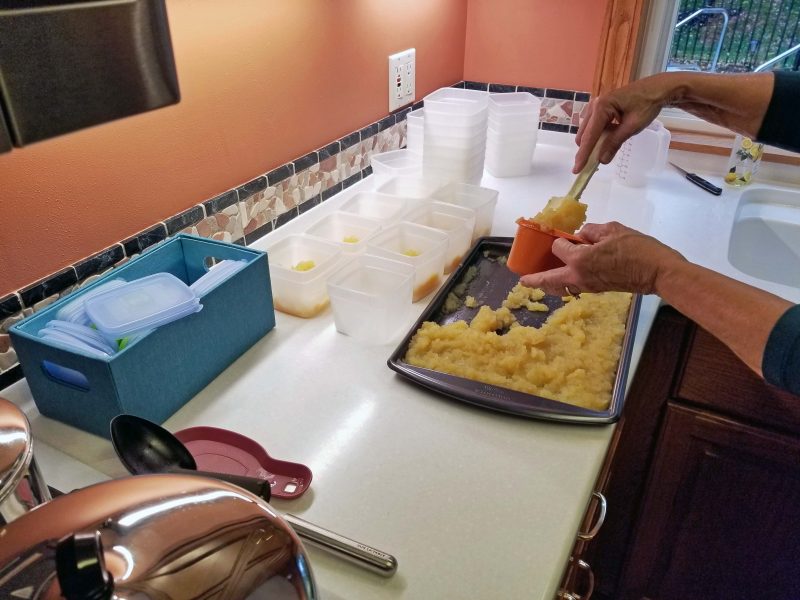
It’s time to make applesauce again. I don’t especially like the job, but we love our homemade chunky-style applesauce, so-o-o-o, . . . .
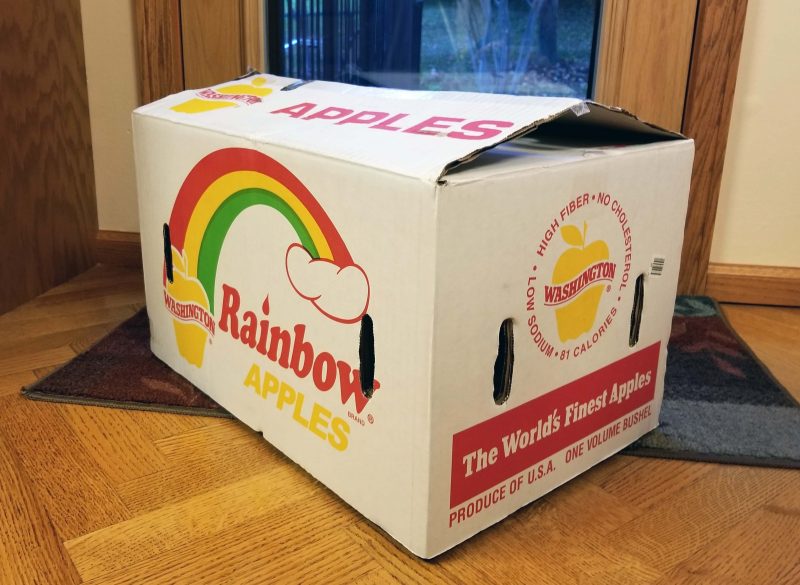
We bought a bushel of apples–“The World’s Finest Apples,” according to the box. They were beautiful apples.
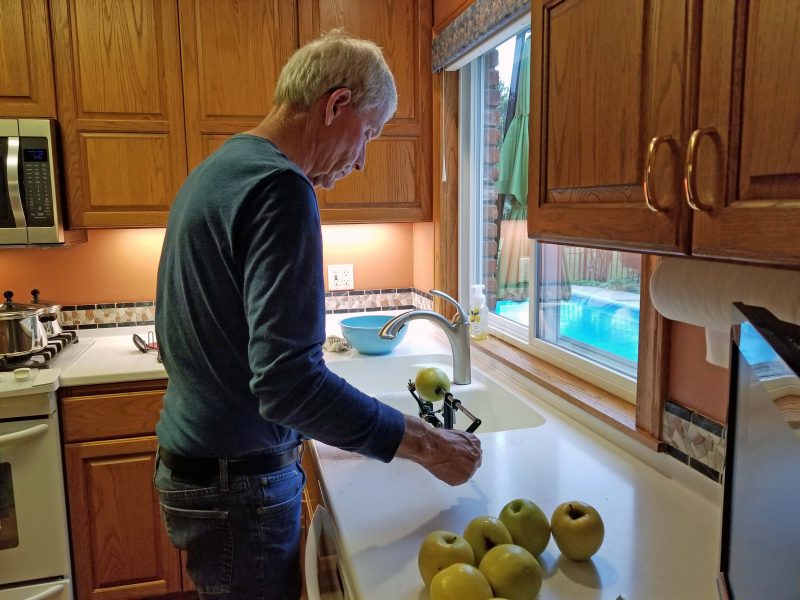
Ted’s main job is to operate the apple peeler/slicer. Why do they have to put a sticker on every. single. apple??
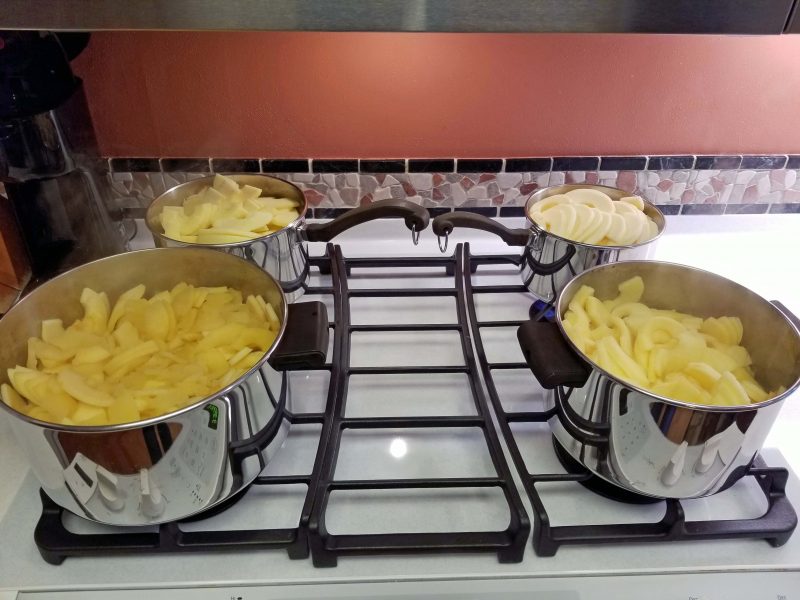
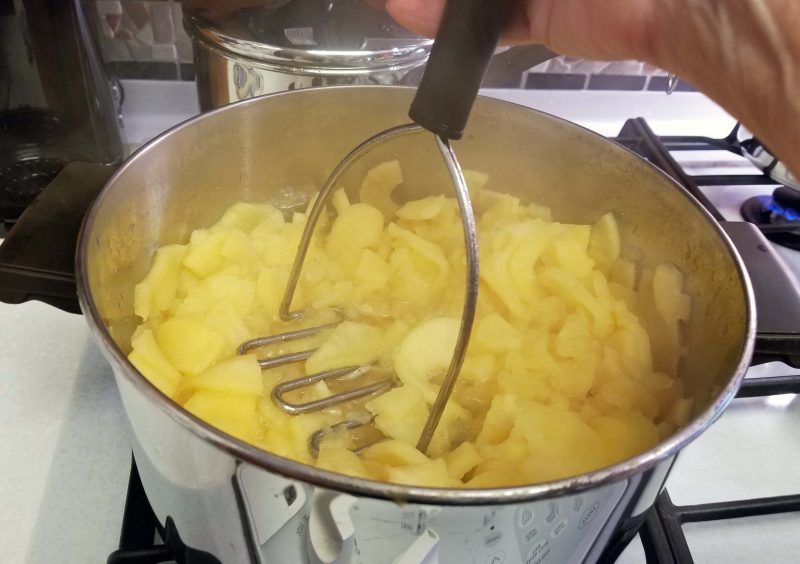
Then I fill the kettles and cook and mash the peeled/sliced apples.
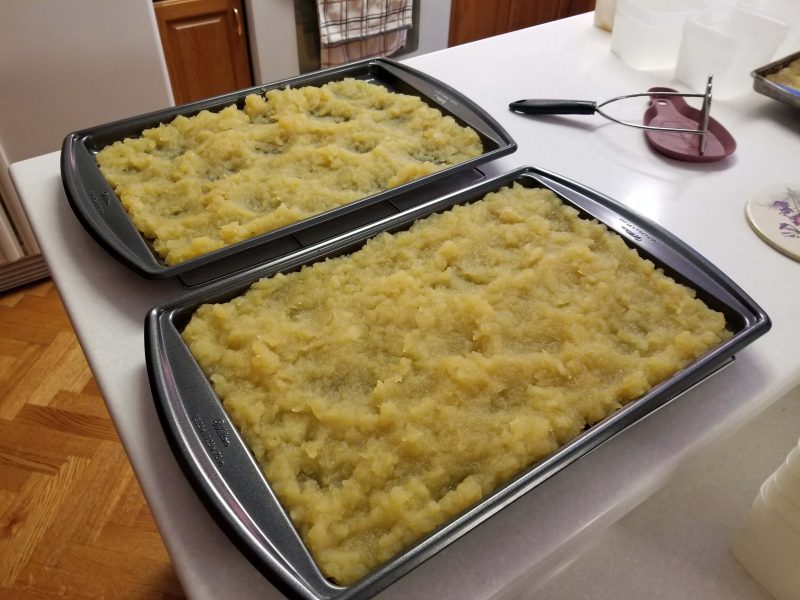
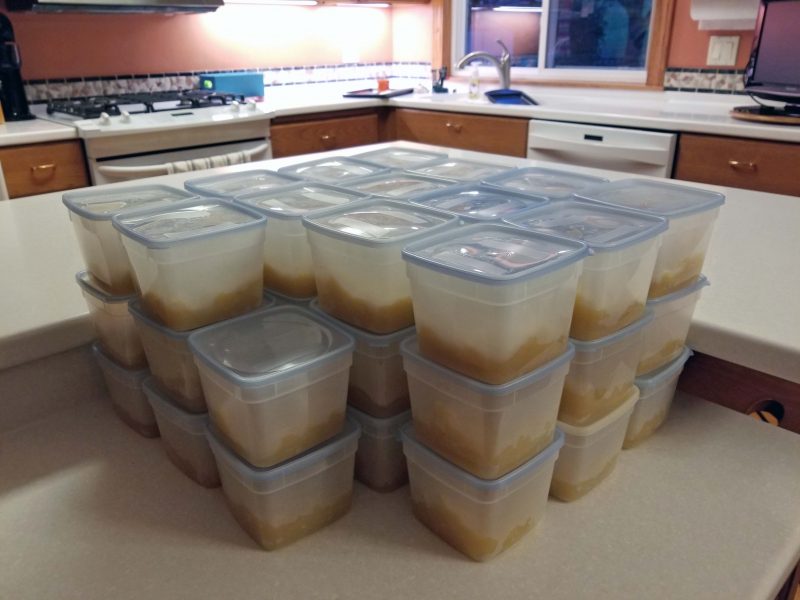
The applesauce needs to cool before I put it into meal-size boxes for future use.
Ted carries the boxes to the freezer. . .
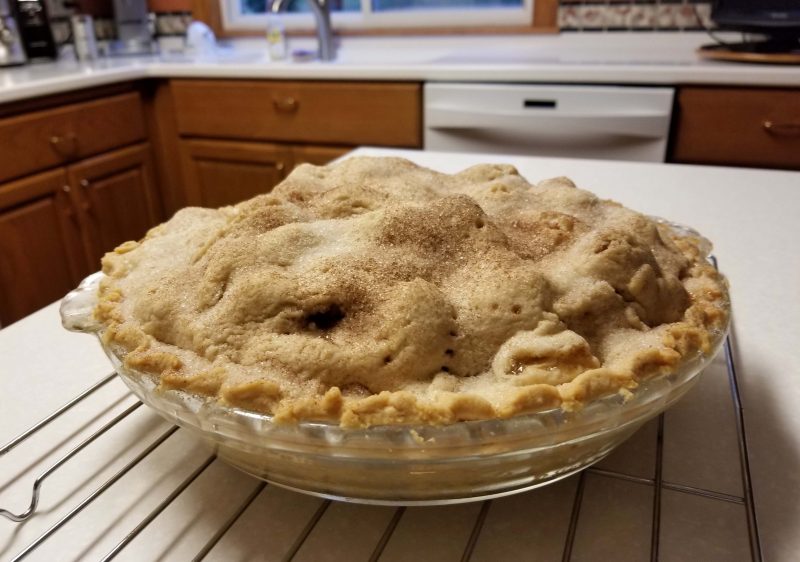
. . . and we always save a few apples so I can make an apple pie to celebrate the end of the applesauce-making process. The supply of applesauce and the pie reward make the work worth the effort.
Ted and I decided to vote by absentee ballot this year because we think there will be very long lines at the polls on November 3. The line was a lot longer than usual for the 2018 midterms when I counted 75 people ahead of us, and there are always long lines for Presidential elections. Maybe especially for this Presidential election. Besides, the weather could be crummy in November, so who wants to stand outside if they don’t have to?
We’ve never voted absentee or by mail before, but the process was very simple. We filled out our absentee ballot request online and then headed for the Election Authority office just a short distance from our house, where we received our ballots and cast them immediately. As it turned out, if we were appearing in person with a photo ID, we could pick up our ballots and vote without the application. Oh, well. It’s better to be prepared, right?
The roads near the Election Authority office were clearly marked with “Election Authority Office” signs at each corner along the way, but we already knew where it was–next door to where my SCC program used to provide a GED classroom site.
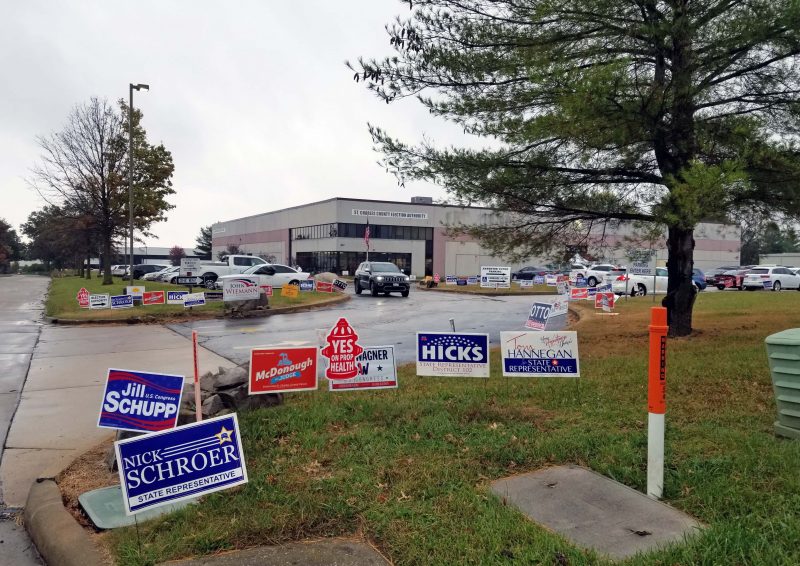
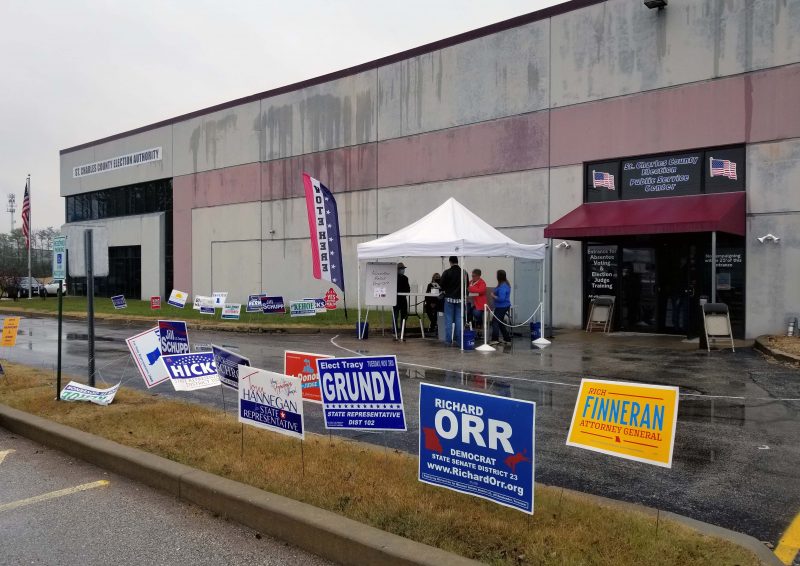
Our first surprise was the number of campaign signs posted along the road and around the parking lot. The signs added a colorful and–dare I say?–decorative touch to a dreary day and a blah parking lot. I didn’t read any of them because I already knew who I was voting for. Does anyone decide how they will vote when they arrive at the polling place parking lot and see those signs? “Oh, I was going to vote for Donald Duck, but the Mickey Mouse sign at least 25 feet from the polling place door caught my attention and changed my mind.”
Our second surprise was the steady stream of cars coming and going and filling the parking spaces. When we left, there were at least as many cars in the parking lot and at least as many people in the room as when we arrived. If there’s a steady stream of voters like this–a rainy Tuesday afternoon–every day, a lot of people are voting early. Maybe the polling place lines won’t be so long on November 3 after all.
Curbside voting was available for those who requested that their ballots be mailed to them in advance. For awhile, there was a long line of cars at the curbside, but not when I took this picture.
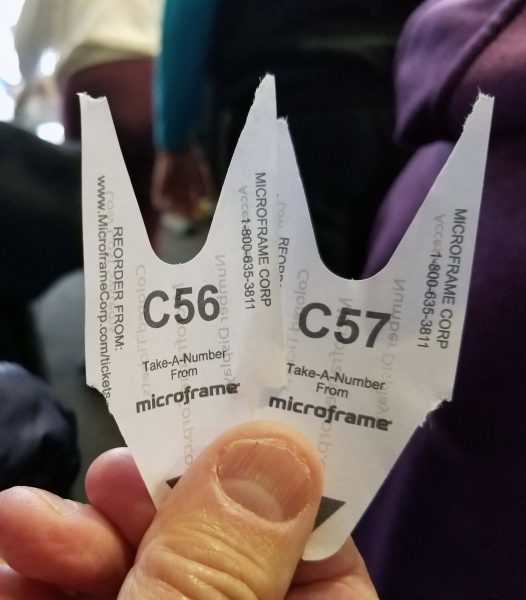
When we entered the building, the number-caller shouted “5!” These were our numbers. There were seven election judges working, so it took us less than 30 minutes to get our ballots and to cast our votes. We didn’t really keep track of the time, so that’s a guess, but the line kept moving. I asked the number-caller if she goes home hoarse at the end of the day and she said, “We all do.”
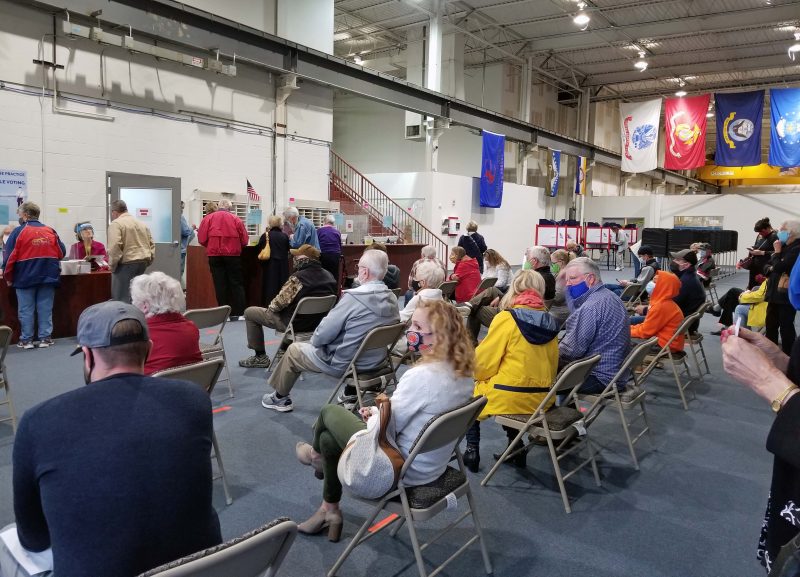
Here’s a partial view of the crowd. There were people (including us) standing along two walls, people seated, and people voting at the tables with the red and white and the black divider screens (right center) and at tables in a large room behind the staircase. We even saw someone we knew–Ed, from the bike shop where we bought our bikes and where we keep finding new bike gear to buy. Ed told me once he has five bicycles and uses them all for different kinds of biking. He’s retired so he works part-time for the Election Authority and part-time at the bike shop. Today, he was answering questions on the floor and directing human traffic in the room.
In less time than we stood in line in 2018, we had fulfilled our civic duty.
I found some more old photos while I was looking for something else. I always enjoy looking at old pictures and remembering the good times they bring to mind.
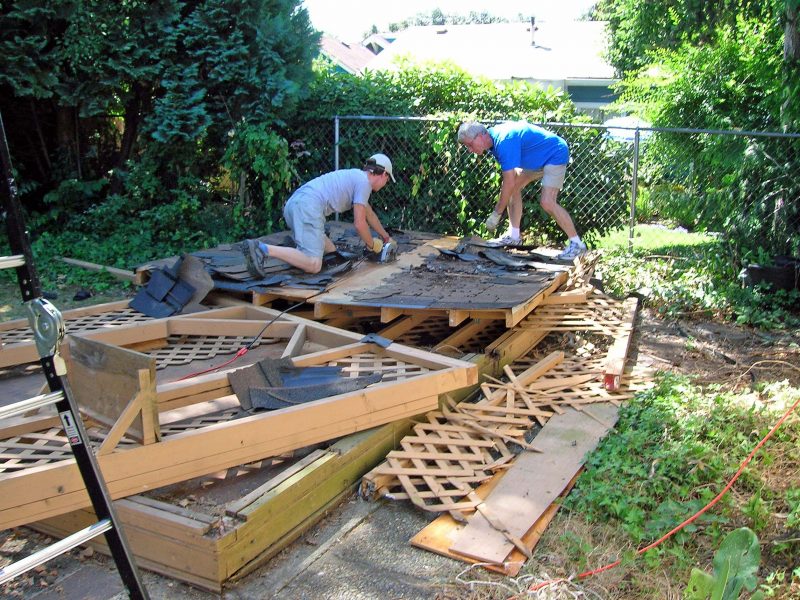
Some of our visits to Thom’s house included helping him with home projects. In August 2006, we helped him tear out the overgrowth along his back yard fence. There was a lot of it and the yard looked noticeably larger when we finished. Things were going well, so Thom decided to take advantage of the extra help to dismantle some structures he didn’t like in his back yard. There was a good-sized pile of scrap lumber when we finished.
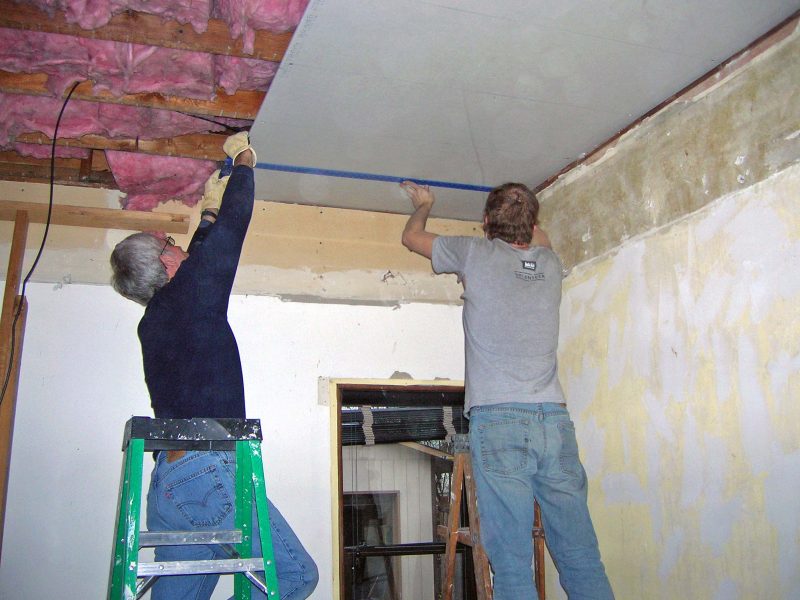
When we visited Thom in March 2008, he needed help lifting, holding, and nailing drywall to his bedroom ceiling.
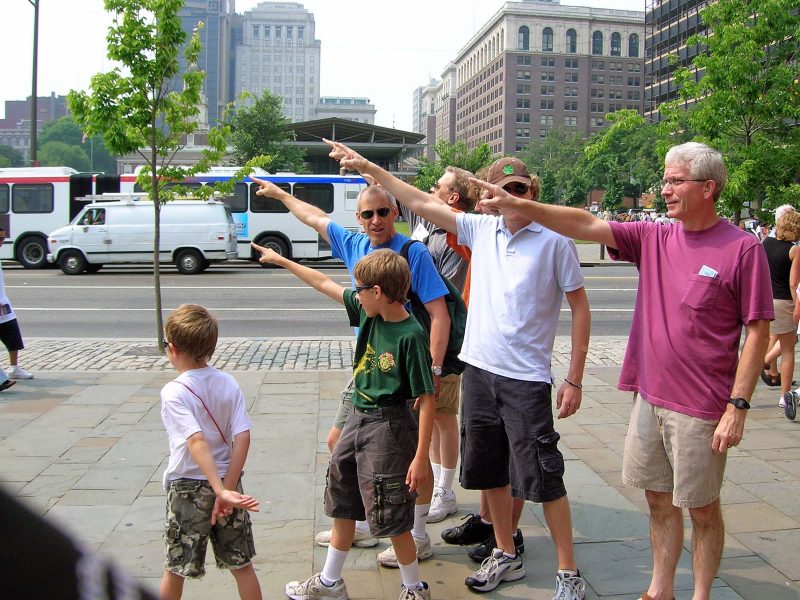
In July 2006 and August 2008, we went to Houston for family reunions at Steve and Joan’s house. Who knows how goofy stuff gets started? During the reunions, we posed a “directional” picture at every place we visited. On July 2006, we were all on the same page about which way to go for our sightseeing. That’s (L > R) Ben, Phil, Russ, Steve, Todd (you can see a little bit of his hair, his orange shirt, and his black shoes), Matt, and Ted.
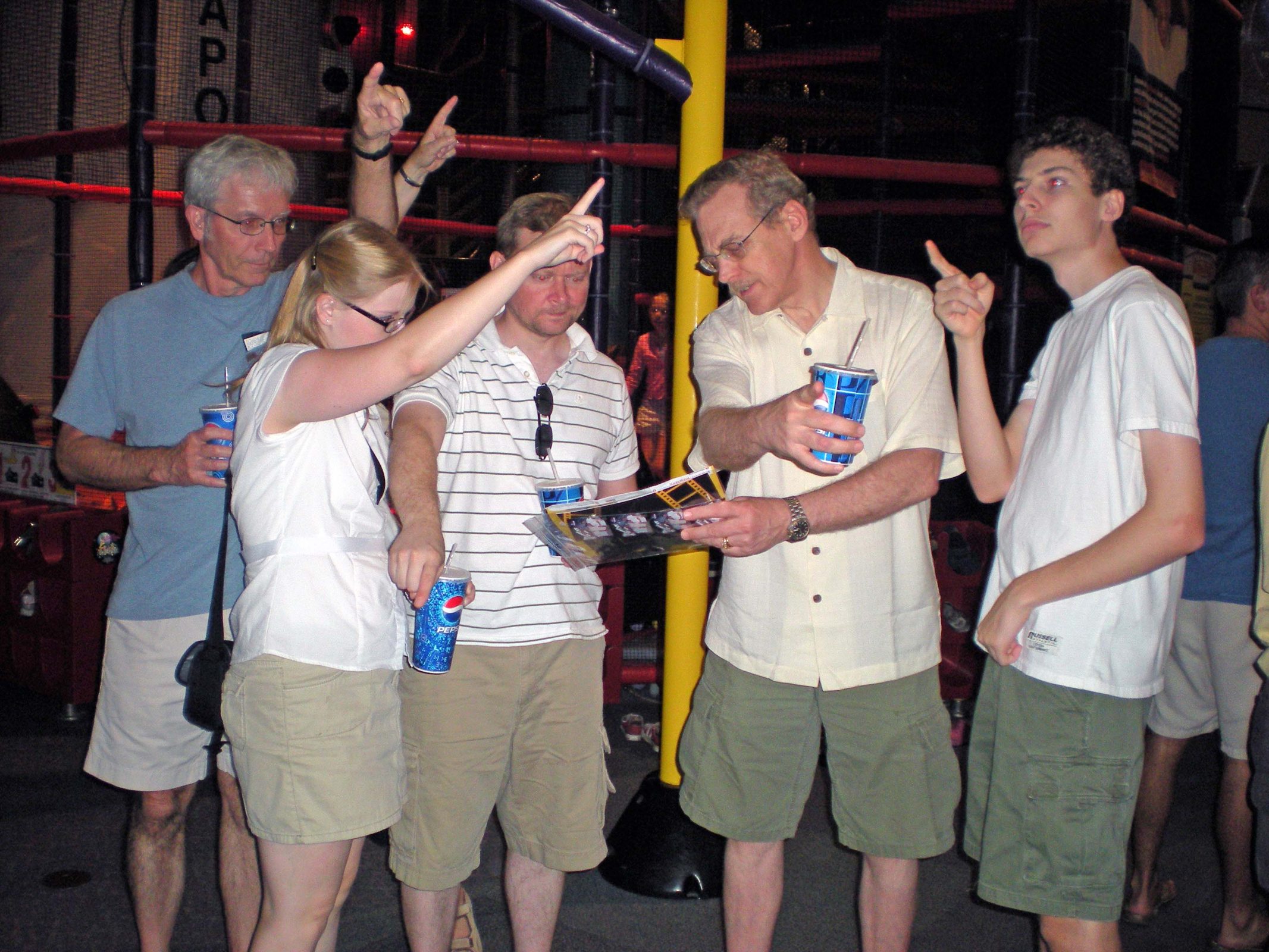
By August 2008, we were older and apparently more confused. This time it’s Ted, Carrie, Eric, Steve, and Todd. This might be inside the Houston Space Center main building. It was obviously time for a refreshing beverage.
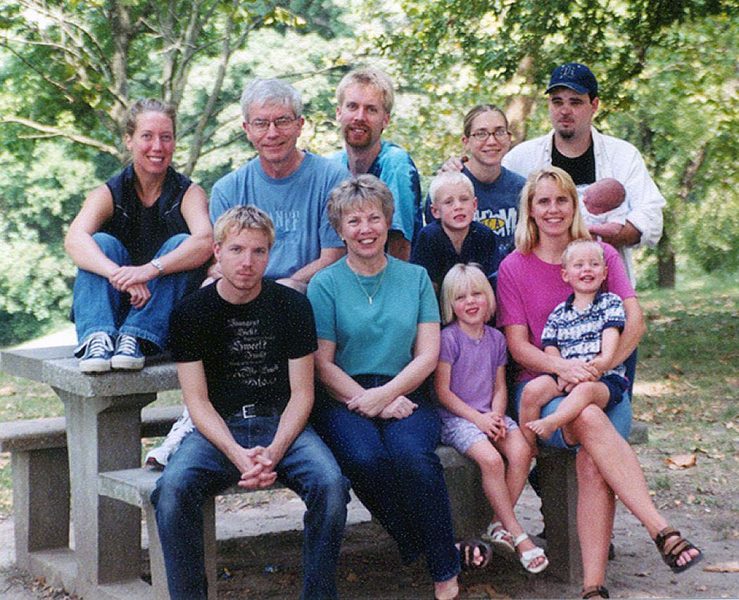
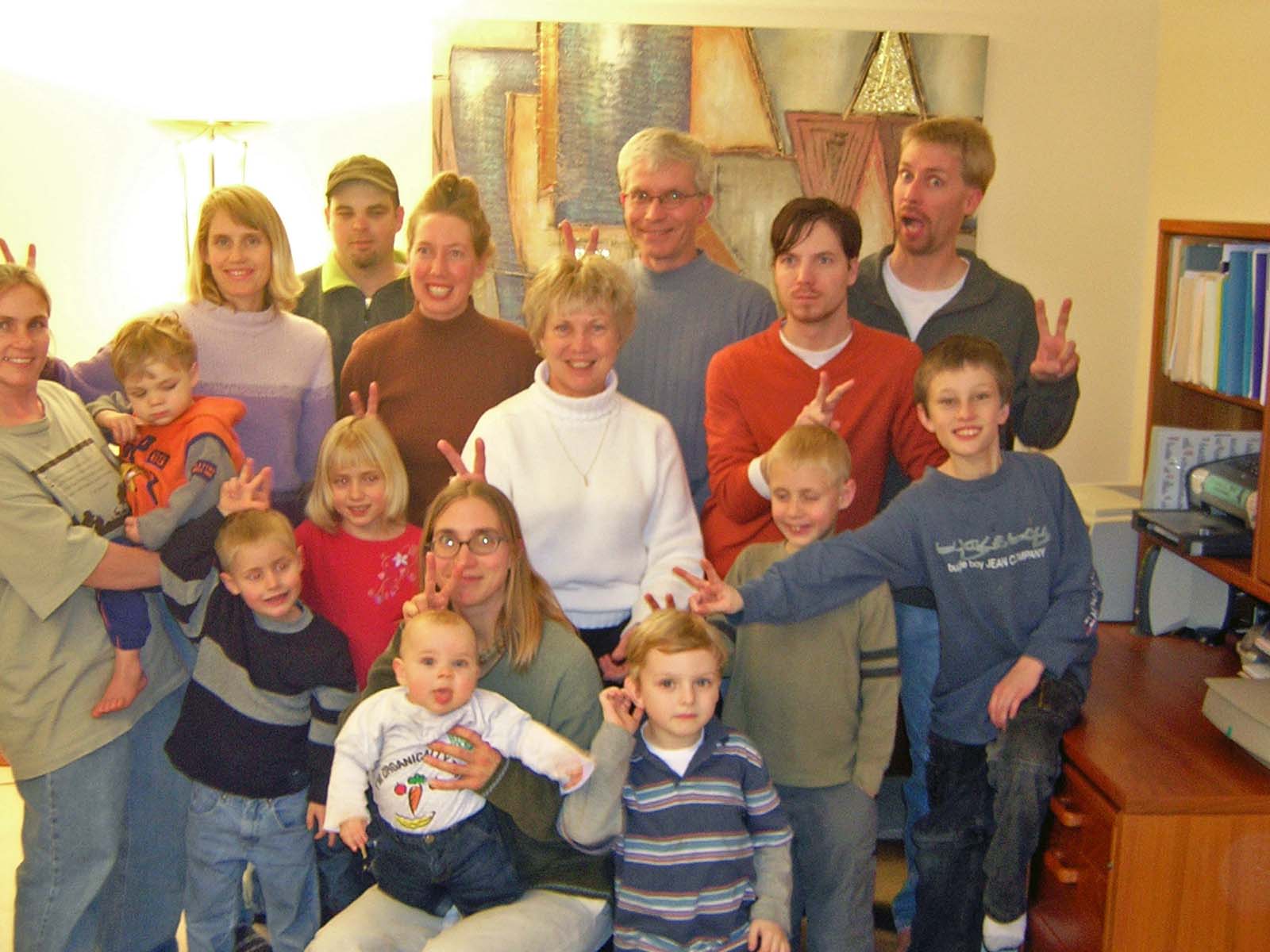
Ted and I were excited to have grandchildren. Here is our first family group photo with our four children and almost all of our grandchildren. Julian didn’t come along with Thom this time.
We had a larger family in December 2005 when I graduated with my doctoral degree. This isn’t a digital picture (although we bought a digital camera in 2003), so we didn’t know until the film was developed that Annette is only partially present (left).
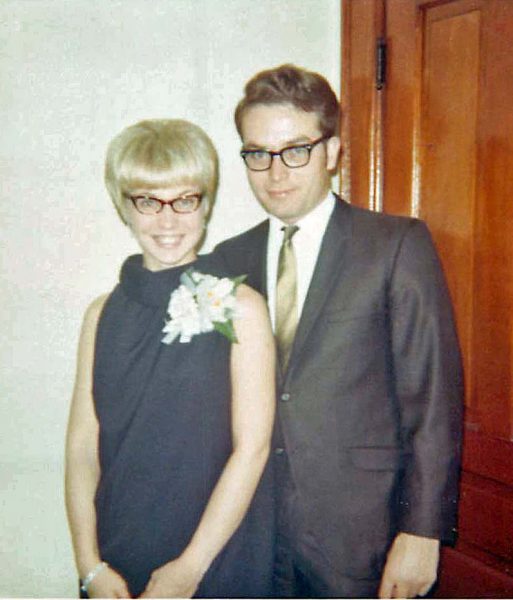
Going back in time, this is a photo of Ted and me going to a homecoming activity in October 1968. We had already purchased my engagement ring and our wedding rings, but hadn’t told anyone that we would soon be officially engaged. We’ve always counted it as our engagement picture.
Last week, I received an Amazon catalog in the mail. I didn’t even know Amazon mailed catalogs! I’m not big on catalog shopping, so I quickly riffled through the pages before throwing it into the recycle bin.
During my riffle, I saw a Christmas tree maze. I couldn’t resist drawing my way through the maze. Then I saw another activity page. I finally checked the table of contents (yes, a table of contents, not an index like catalogs usually have), and found lots of fun activities. The promise on the catalog was true: It was “Joy Delivered” and it put an Amazon Prime smile on my face.
Here’s the catalog cover. With the “kid” appearance, it’s no surprise it was a toy catalog.
Here are the activity pages. There’s even a page of stickers (bottom right) to go with “A Winter’s tail Tale.”
The catalog included a page with a recipe for “sip, sip, hurray” hot chocolate and another page to “Make a list, check it twice” with the note that the list may include “anything, like hugs, hats, or talking mice.” Maybe I’ll use that page to make my Christmas list. Who do I know that wants a talking mouse for Christmas?
Today was Ted’s and my third try to reach the eastern terminus of the Katy Trail, and the third time was the charm. The trail repairs between Black Walnut and Machens have been completed. During our ride, we passed the low point of the trail. The high point of the trail is 955 feet, near Clinton in western Missouri.
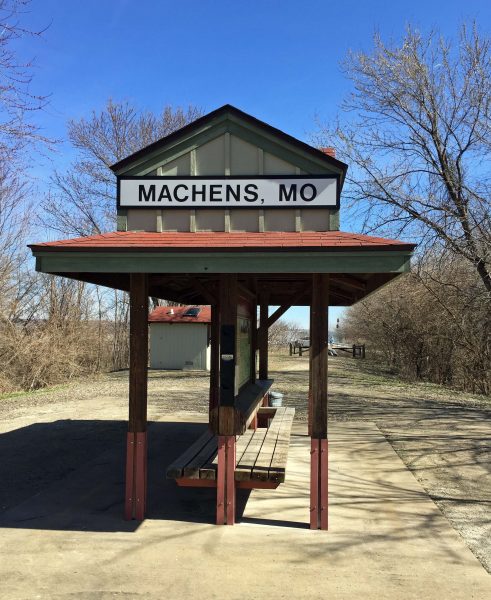
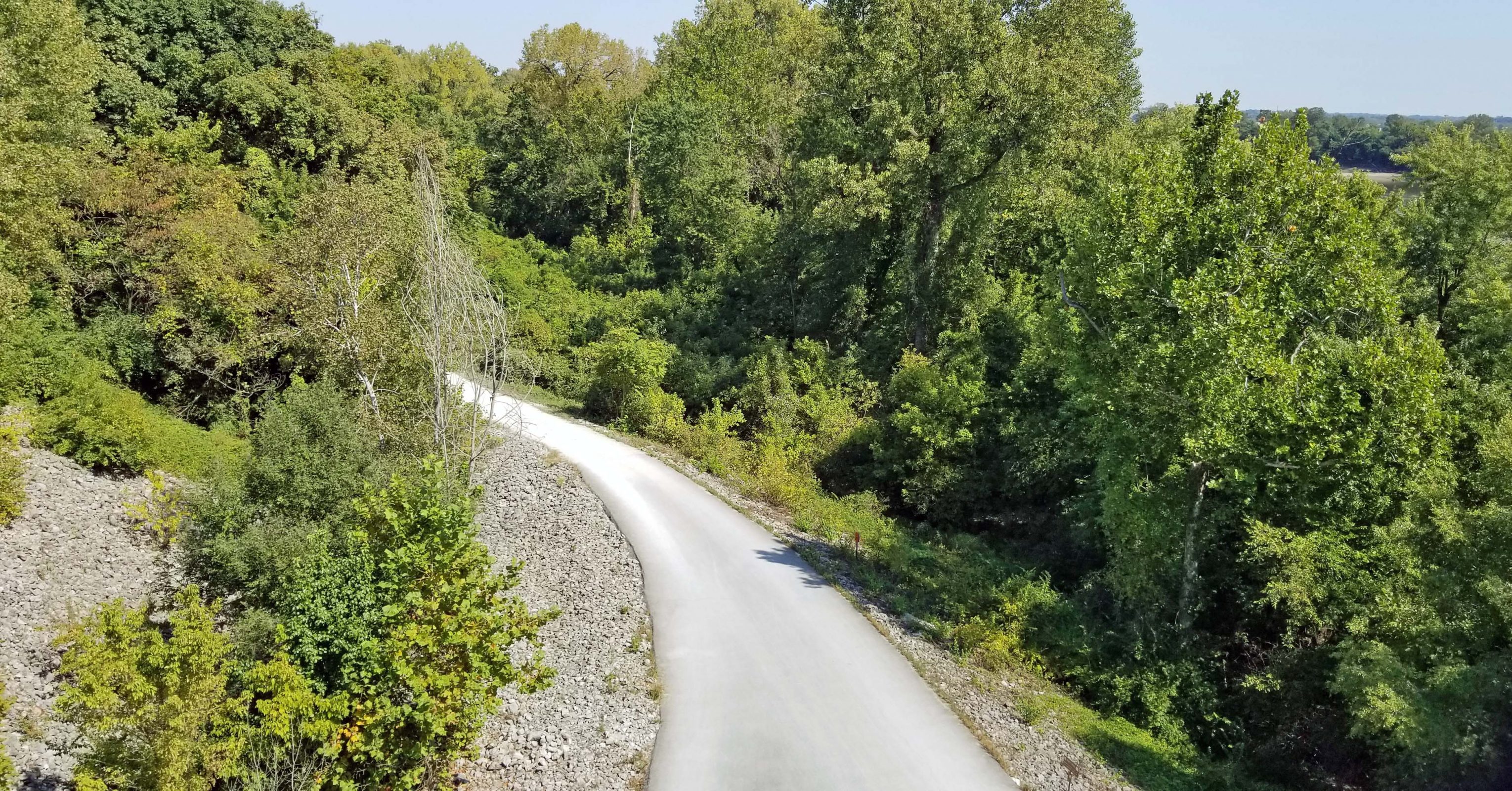
Since we’ve biked this route twice before, I wasn’t really thinking about taking pictures along the way. That means I have to confess that I found both of these photos online. The season is wrong (see the bare trees), but the low point is still 436 feet, and the depot and the gate at the end of the trail looked just like this.
Our goal has been to ride the Katy Trail from the eastern end to somewhere around Columbia because that’s as far as we want to drive to arrive at a trailhead. Today we met some other bikers at Machens who said they recently took their bikes on the train from St. Louis to Hermann to bike farther west. That sounds like a good idea. We might have to revise our western goal.
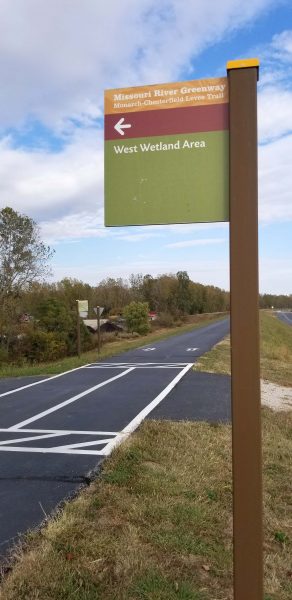
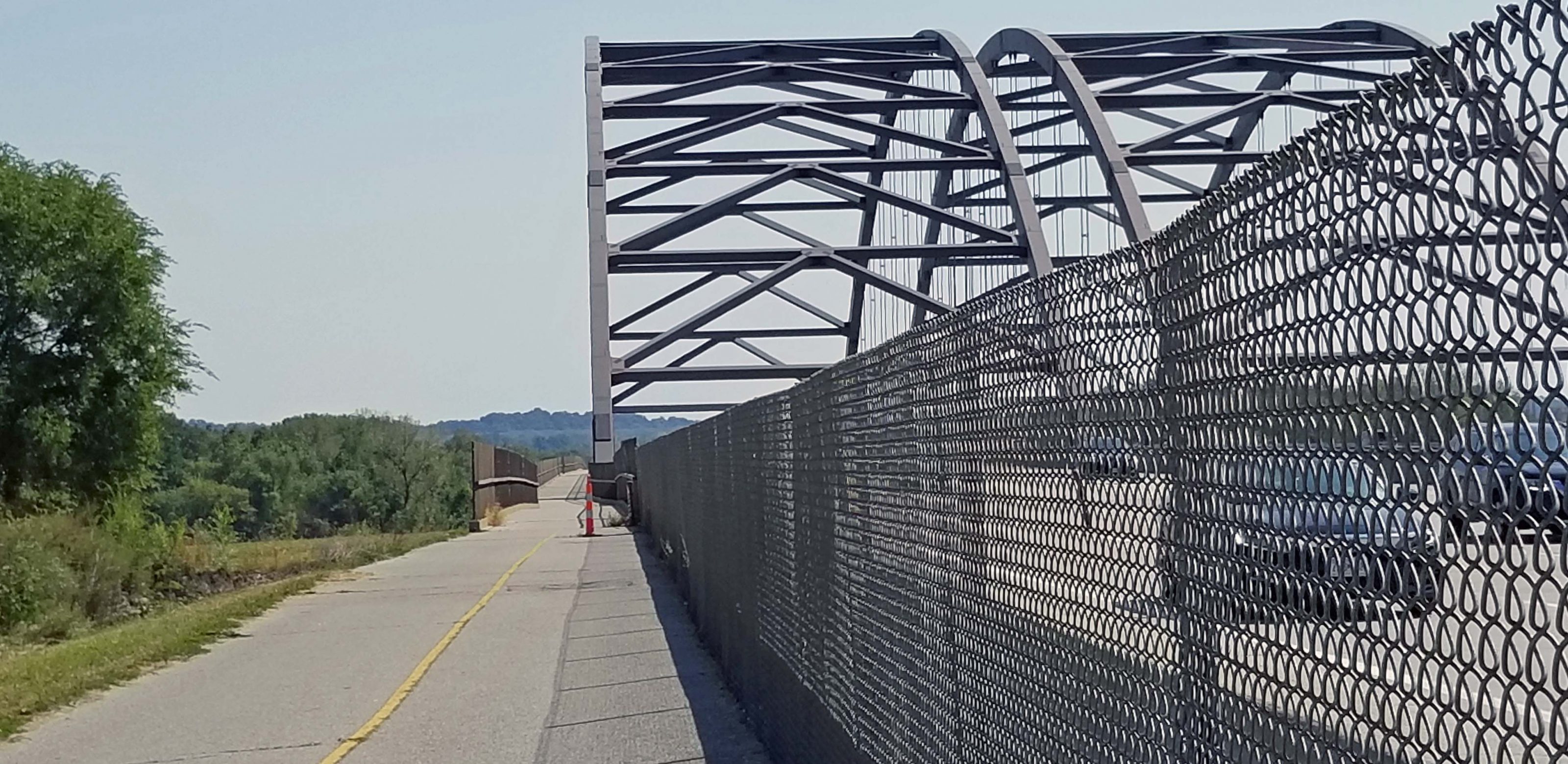
Ted and I started today’s bike ride on the Busch Greenway approach to the Katy Trail, then followed the Katy for less than a mile before going up the ramp to the bike lane on I-64 to cross the Missouri River. On the St. Louis County side of the river, we entered the Monarch Chesterfield Levee Trail, a portion of the Missouri River Greenway system.
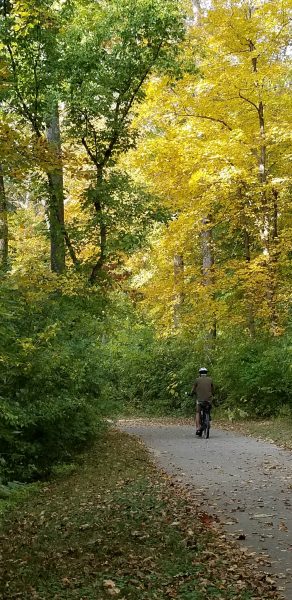
It was a beautiful fall day for biking.
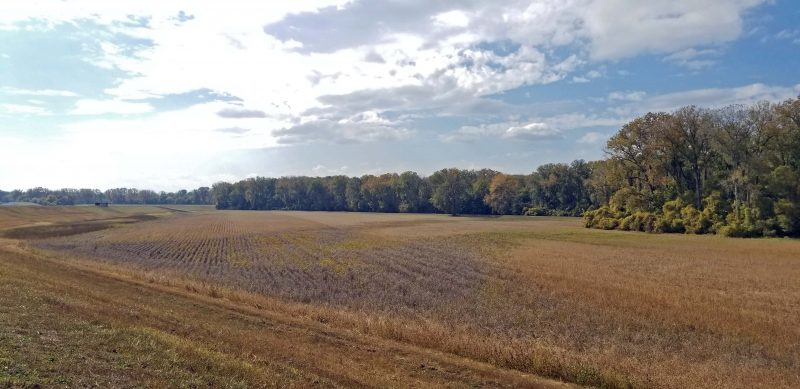
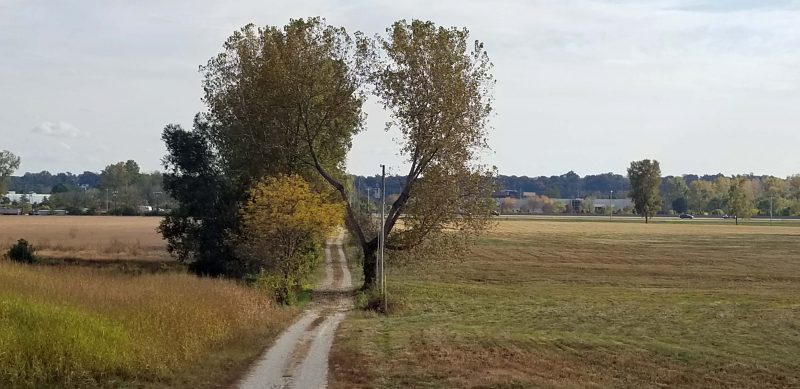
The levee views were kind of blah, since most of the crops are harvested, and the trees have not yet reached their peak colors. Even so, it was nice to ride along the top of the levee for 23 miles.
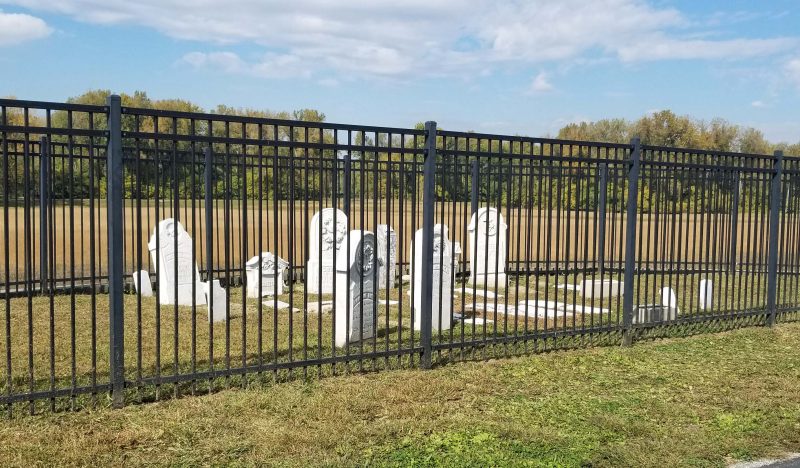
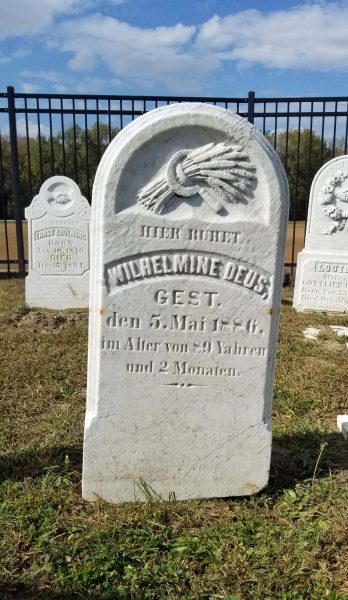
Almost immediately after entering the trail, we were surprised to see a small cemetery alongside the bike path
The headstones were engraved in German. This woman’s age was even given in months–89 years and 2 months.
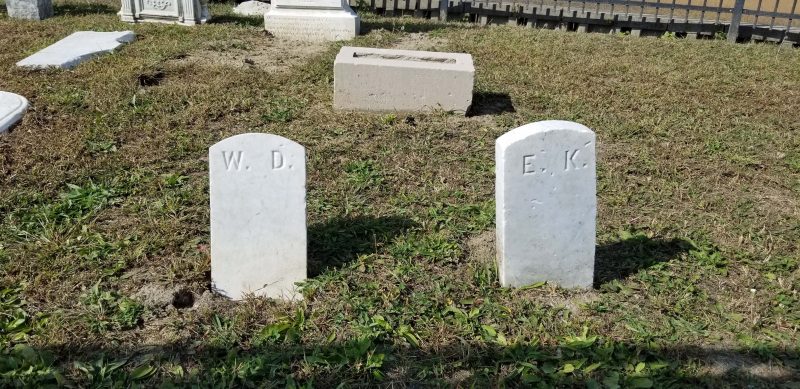
These two markers were the epitome of simple.
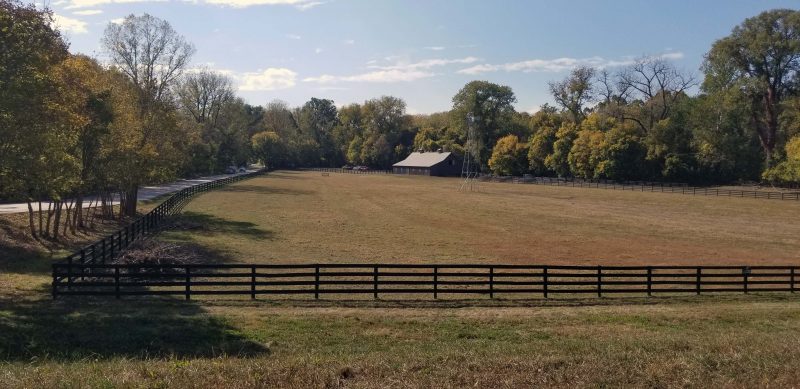
We joined the levee trail near the middle of its length. Eventually, the trail will make a ring around 1,200+ acres and we’ll be able to bike in a circle. For now, we biked along the arm to the right, then back to cover the other arm, and then back to the Katy trailhead in the center. At one end of the levee trail, we saw a scenic barn and windmill. The windmill is on the right side of the barn. It doesn’t show well from this angle.
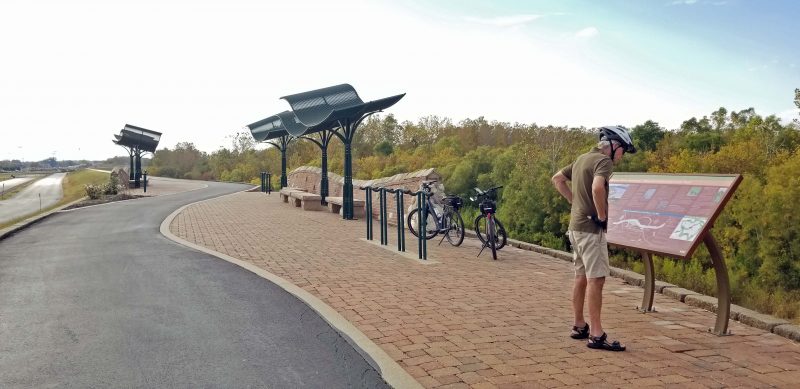
About halfway down the other arm we stopped at a rest stop. It looks like it’s supposed to provide some shade, but it didn’t. The high temperature today was 87 degrees, so a little shade would have been nice.
When I saw this tree, I couldn’t help thinking that it’s begging for someone to kick a ball through it and yell “Score!”
This bike ride was a bit of a “remember when” ride. The Monarch Levee was one of 1,000 levees that failed during the Great Flood of 1993. Its failure resulted in 15-20 feet of water covering the Chesterfield Valley and making US 40 (now I-64) impassable through the Valley for months. Note: At one point in 1993, Missouri was “a state divided.” The Missouri River runs across the state and every bridge crossing was flooded except the I-70 bridge in St. Louis County and a bridge in Kansas City.It was literally impossible to cross the Missouri River to travel north and south across the entire state except near the Kansas and Illinois state lines.
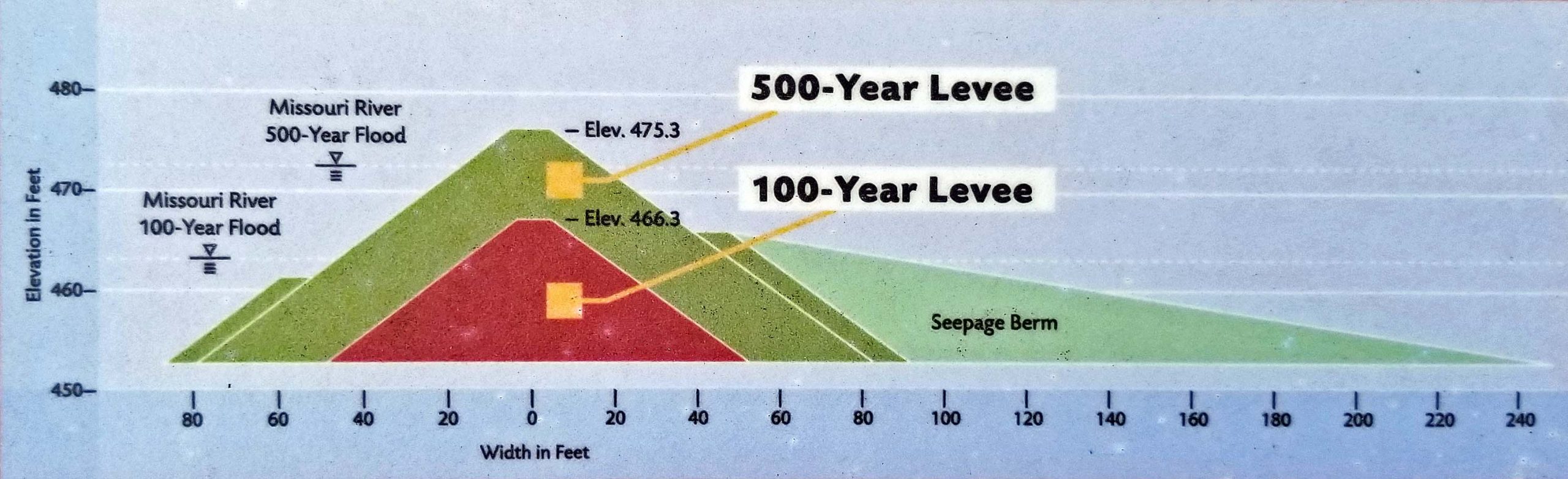
After 1993, the original 100-year levee was replaced with the 500-year levee we biked on today. After the Great Flood of 1993, the City of Chesterfield offered a tax incentive that made the Chesterfield Valley a mecca for retail. This idea has become a model for other cities to develop floodplains. I assume all those retailers hope to make enough money between now and the next levee failure to cover their future losses.
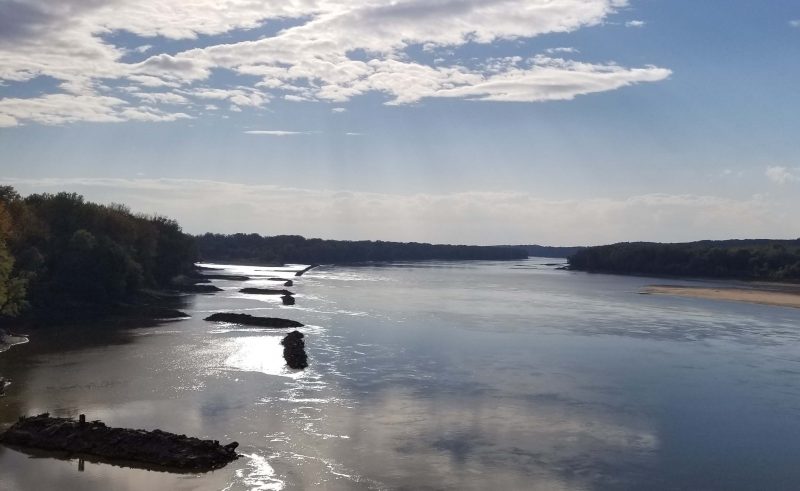
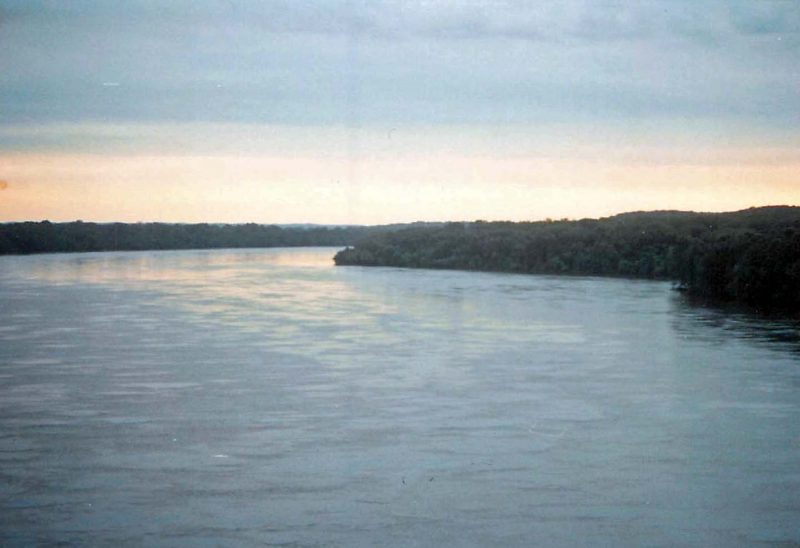
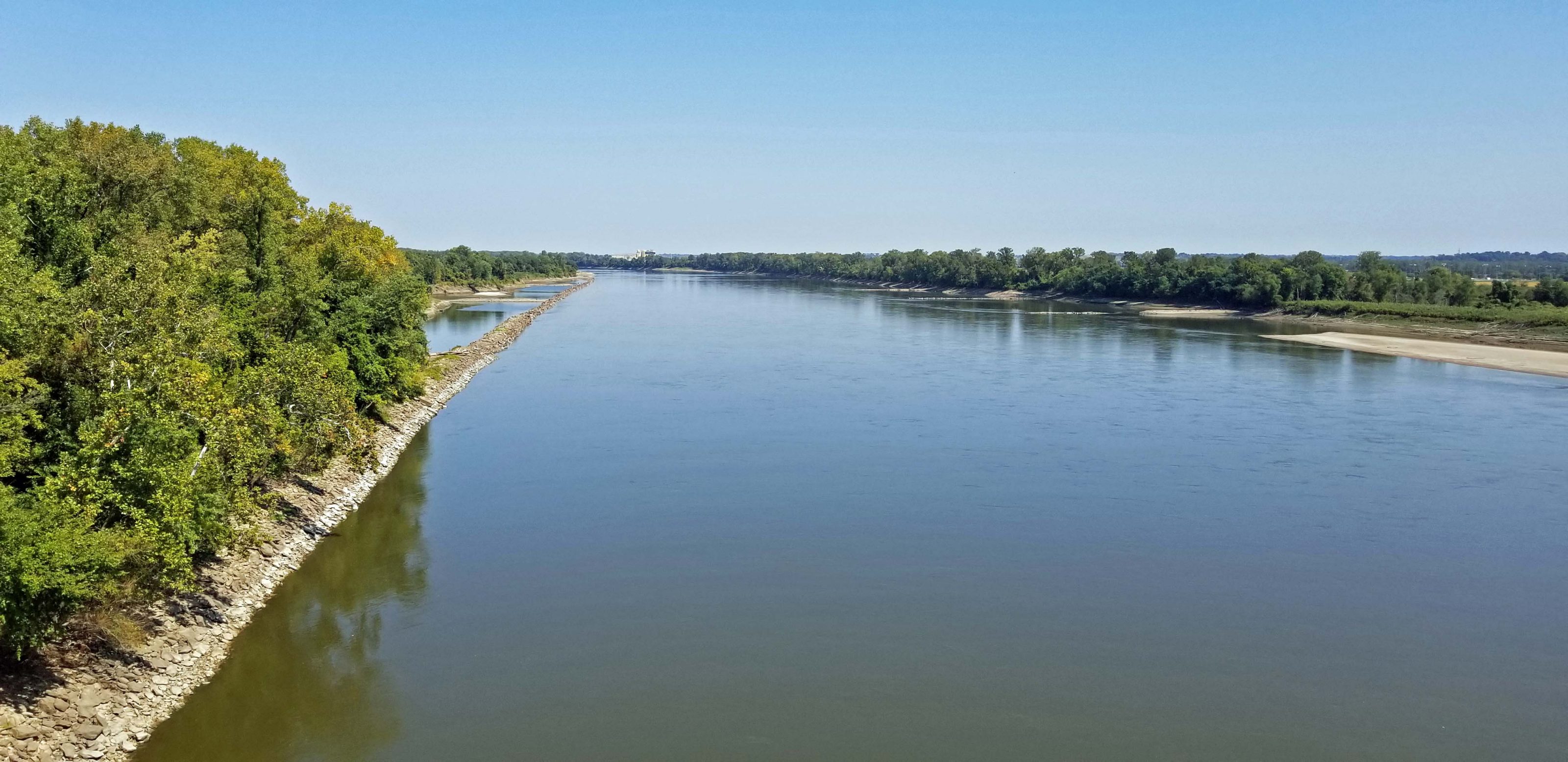
Just for fun, I looked up some of our 110 mm Instamatic 1993 pictures to compare them with our bike ride today. Here are two views of the Missouri River from the I-64 bridge. One was taken today, after weeks of very little rain; the other was taken in 1993 during the flood. See if you can tell which is which. Ted and I remember looking down from the bridge deck in 1993 and being amazed at how rapidly and powerfully the water was flowing and how much large debris it carried.
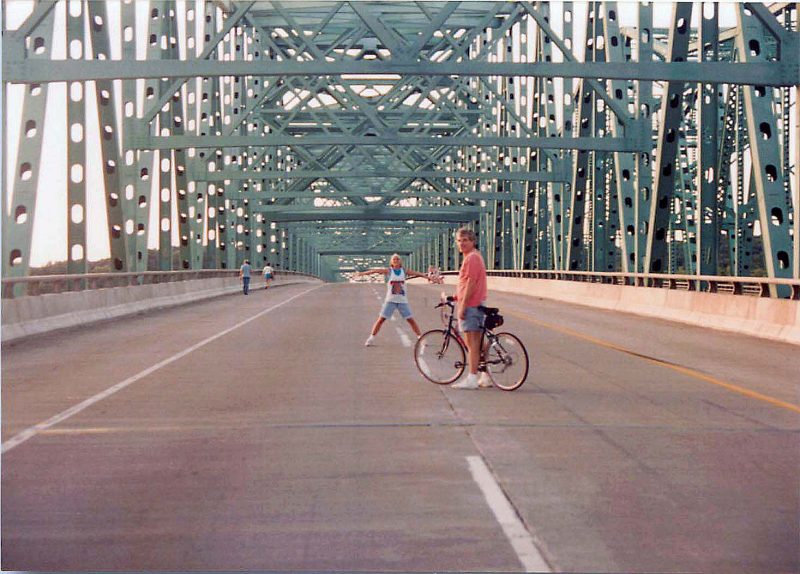
Today, Ted and I rode our bikes across the Missouri River in the bike lane on the bridge, safely protected from the eight traffic lanes crossing the river. In the summer of 1993, it wasn’t a problem crossing the bridge on the roadway because the highway was closed. The dry road surface ended in St. Louis County shortly after crossing the bridge. That’s Ted on his bike and Kari bravely standing in the middle of the highway, excited about the lack of traffic.
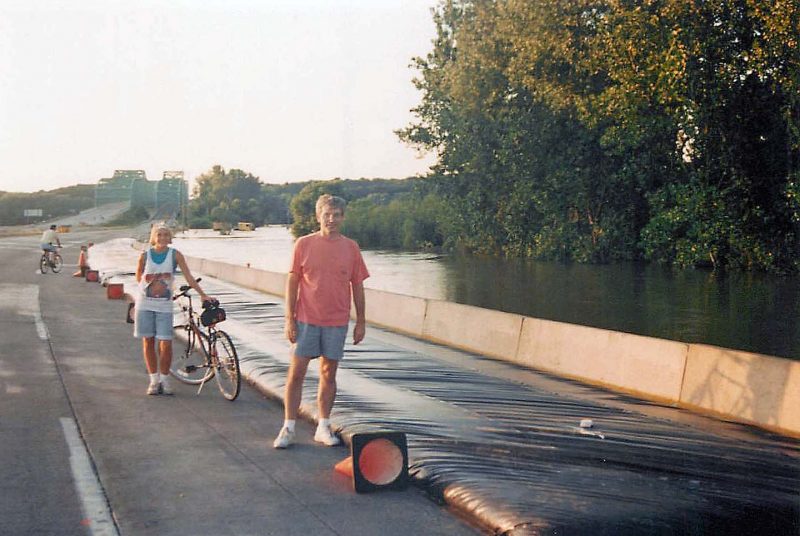
We biked across the bridge several times in 1993. It was a kind of tourist attraction for bikers and walkers. The commuter parking lot on the St. Charles County (western) side of the bridge was filled with cars equipped with bicycle carriers. The river in flood and the extent of the floodwaters were amazing sights. Also, it was just fun to bike on a closed / empty highway across a major river. The photo below shows how far we could go on the eastern side of the bridge. Notice the barriers trying to keep the water off the available roadway.
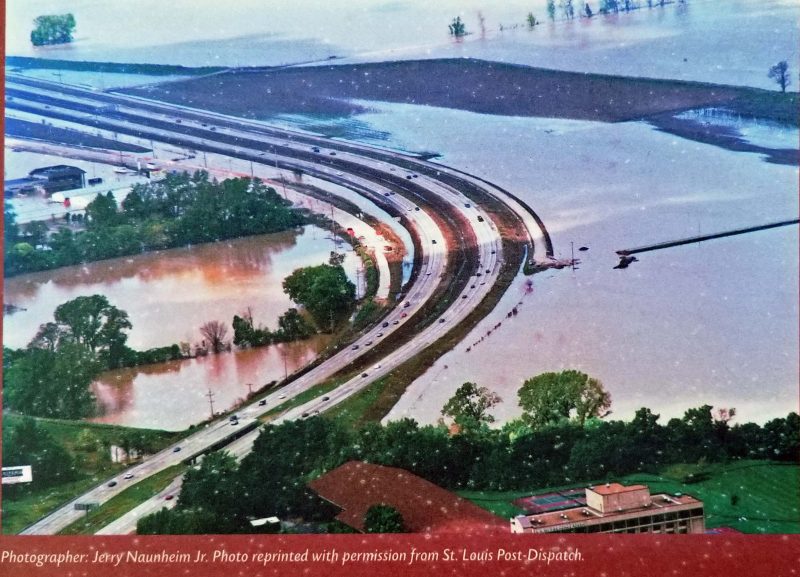
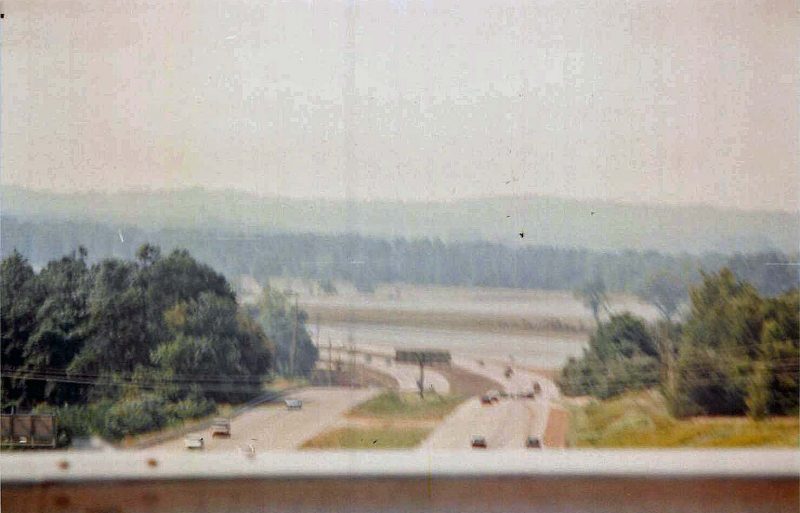
The photos below were taken from the eastern side of the Chesterfield Valley. Both pictures were taken after the floodwaters receded far enough to open US 40 (now I-64). Picture 15-20 feet of floodwater covering the highway. The upper photo was taken by a newspaper photographer from a helicopter; the lower one was taken by me from the side of the roadway.
Like other sightseers, Ted and I drove across the Valley when the highway opened to gawk at the floodwaters and the damage. Unfortunately, only a few hours after the highway was opened and only a few minutes after I took my photo, MODOT began putting barriers across the entrance ramp to the highway because the water was rising again. Ted and I had to take the long way home over I-70 instead. The highway remained closed for several more weeks.
Thankfully, we didn’t have any drama like that today–just one more enjoyable bike ride.
We’ve had a raccoon digging up our yard every night after dark for more than two weeks. He likes digging in the sod Ted just laid down, in the thinner areas of the lawn, and in every single flower bed. When he finds something to eat, he stands on the first step in the swimming pool (about two inches of water) to wash his food. He leaves his muddy footprints all over our patio, pool deck, and pool steps. Here’s what his digging looks like. Daily. This has to stop!
Ringo shows no sign of planning to leave our yard to dig elsewhere, so Ted called the state conservation department and the animal control folks to get some ideas for dealing with a rogue raccoon. The agencies won’t do anything about the critter themselves “because of COVID,” but recommended a trap baited with cat food. Yesterday, Ted bought a trap and some cat food and set the trap in Ringo’s favorite spot: Ted’s new sod.
When we went to bed, we turned on the patio lights to see if the trap had been tripped. It wasn’t. During the night, I woke up and noticed it was brighter than usual in our bedroom, so I peeked outside to see if the moon was shining in. It wasn’t, but I saw that we had forgotten to turn off the patio lights, so I went to the kitchen to turn them off. As long as I was there, I checked the trap again and it was tripped. Apparently, the lights attracted Ringo. He couldn’t resist the yummy cat food, so he walked into the trap and locked himself inside.
In the morning, I watched him for awhile. He paced a lot and turned in circles, but he didn’t seem overly concerned about his confinement. Sometimes, he’d plant his feet and push against the sides or the top of the trap, trying to get out, and he spent a lot of time digging in the ground between the trap wires. Ha-ha, Ringo! Now you know what “trap” means–you can’t get out! Ted picked the right spot for the trap. Ringo apparently went directly to the trap because we didn’t see any damage or muddy footprints anywhere else in the yard this morning.
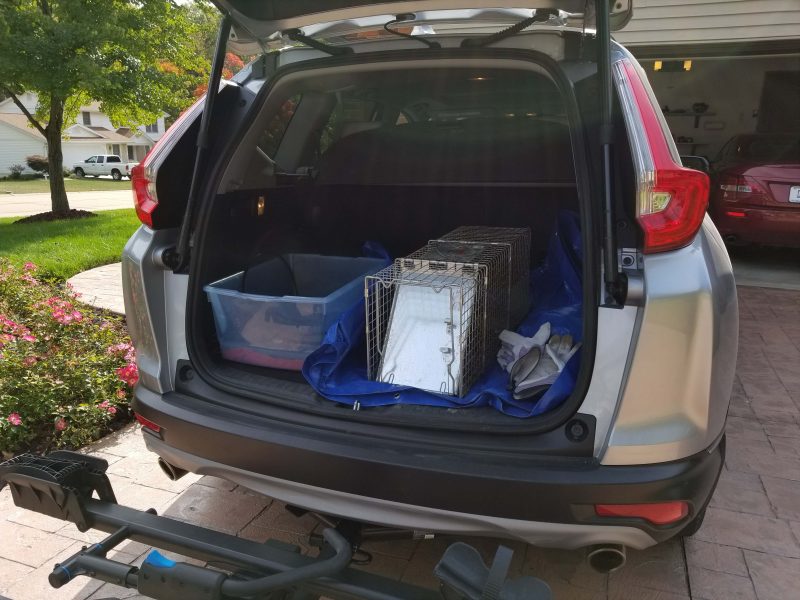
Before buying the trap, we had decided to release our captured critter in the Busch Wildlife Conservation Area–not too far away, but far enough that he shouldn’t be able to find his way back to our house–especially if he was riding in the dark in the trunk and couldn’t see where he was going. We loaded Ringo up for his first (and only?) car ride.
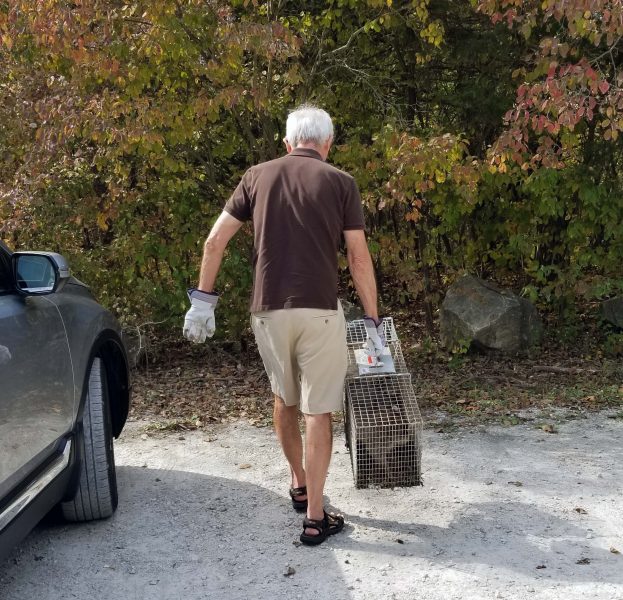
We picked a spot at the edge of the woods to release Ringo, and Ted carried him over.
While Ted worked to open the trap door, Ringo did some more pacing and circling. He might have looked busy, but he was paying attention. The instant the trap door opened, he shot out like a streak. I was ready for his escape photo with my finger on my camera button, but he was too fast for me. He’s not in the photo below. The dark area inside the trap is the dirt he dug up between the trap wires while he paced last night.
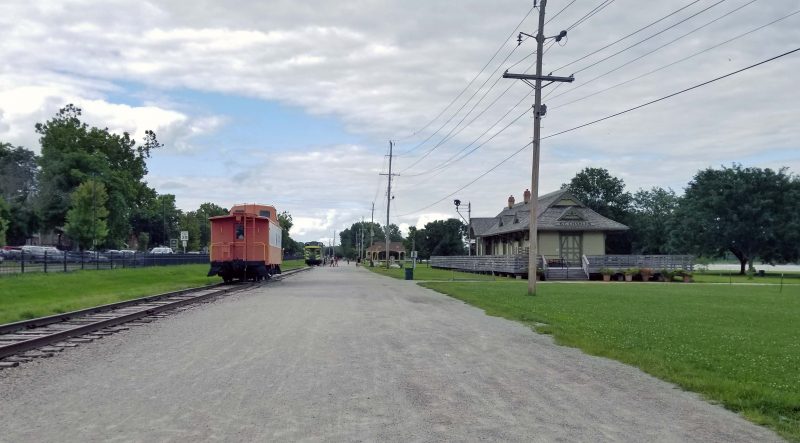
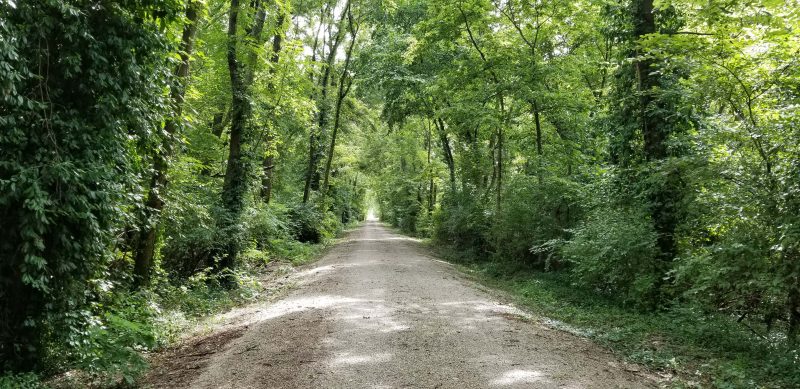
Here’s Ringo’s escape-attempt dirt pile in the trap. Past experience says he could have dug out a lot more if he hadn’t had to work within those little square spaces of the trap. Add this dirt to the dirt from the wide open spaces of the flower beds and other areas of the lawn where he’s been digging, and you’ll have an idea of how much damage he’s been doing to our yard every night. He’s definitely a master digger! Note: The Katy Trail can be accessed from this parking lot. The white gravel surface of the parking lot (below) is what they use on the Katy Trail. It’s very dusty and that’s why we have to clean our bikes after a long ride on the Katy.
I hope Ringo finds some friends in the conservation area and enjoys digging in the forest. Ted and I will be glad if we don’t have to tamp down the grass and clean the mud from the pool, the pool deck, and the patio tomorrow morning.
Ted and I saw this pretty maple tree on our bike ride today. There’s a Canadian goose standing on some wood in the lake and there was a blue heron doing the same thing just to the right of my photo, but he flew away while I was getting off my bike. I miss our maple tree.
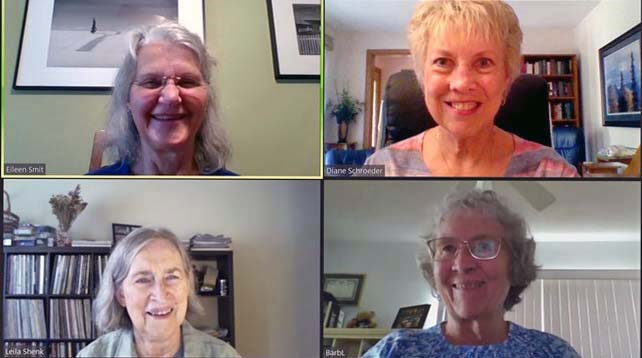
My senior year college roommates (six of us) were scheduled to meet in Madison, WI for our annual get-together on August 24. Of course, it’s 2020, so lots of things aren’t happening the way we planned them. Instead of an in-person reunion, we had a Zoom reunion today. All six of us were planning to be at the Zoom-union, but two did not join the meeting–not even after we texted a reminder to them. Again, it’s 2020, so who knows what might have prevented them from joining us.
Not surprisingly, we talked about some of our college memories, including the Viet Nam war protests. UW-Madison and UC-Berkley were the two most politically active campuses in the country in the late 1960s. I was actually stopped at the point of a bayonet during one protest, but that’s a different story. (I wasn’t even protesting!) Lin’s, Carol’s, and Barb’s husbands all served in Viet Nam. Lin’s husband was a POW and Barb’s husband was exposed to agent orange and has some serious health problems as a result. We talked about the parallels of that era and the current Black Lives Matter movement.
A happier topic was technology. We graduated in 1969, long before PC’s, internet, cell phones, social media, etc. We did have radio and television (the 1960s weren’t that long ago!), but electric typewriters weren’t common except in businesses. We all agreed we are glad to have the technology to meet in one place today (Zoom) while we are in Michigan, Wisconsin, Florida, and Missouri.
It’s been 51 years since we graduated from college, but we’re keeping up with the times and still having fun together.
We are probably having our last weekend of summer weather with temperatures in the upper 80s, so Ted and I decided that today was the day to check the Centennial Greenway off our bike route wish list. Eventually, the Centennial Greenway will be 20 miles long, but right now, only 3.5 miles are finished.
A section of the Centennial Greenway crosses the Missouri River via a separate lane on the MO Hwy 364 bridge. Hwy 364 connects St. Charles and St. Louis counties. On the St. Charles side, the greenway bridge connects to the Katy Trail; on the St. Louis side, it connects to the Creve Coeur Park Trail. The photo below shows the bike lane of the highway.
Since we parked near the Katy Trail trailhead, one of the first things we saw beneath the bridge was the Katy Trail.
We haven’t biked across the Missouri River since the Great Flood of 1993 when we biked over the I-64 bridge to view the flooding of the Chesterfield Valley. The bridge and the St. Charles side of the river weren’t flooded, but the Monarch Levee on the St. Louis County side of the bridge failed and put the Valley under 20 feet of water. We couldn’t bike beyond the bridge. Today, you can see how low the river is. The breakwaters all show and there are visible sandbars. We need some rain.
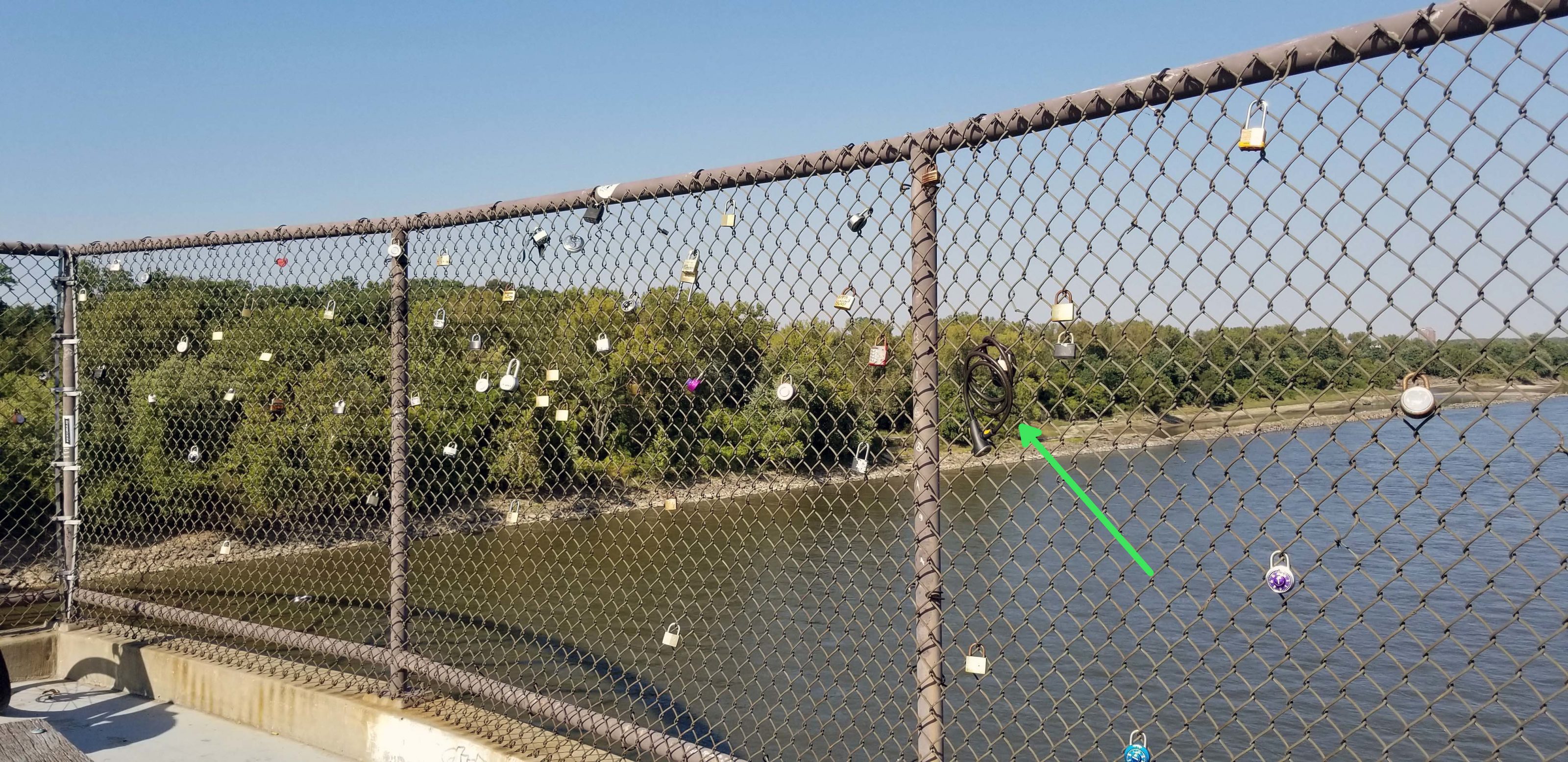
It doesn’t look like the “love locks bridge” in Paris, but this turnout on the bridge bike lane has a fledgling collection of locks. Is love stronger if you attach a cable bicycle lock to the fence instead of a simple padlock?
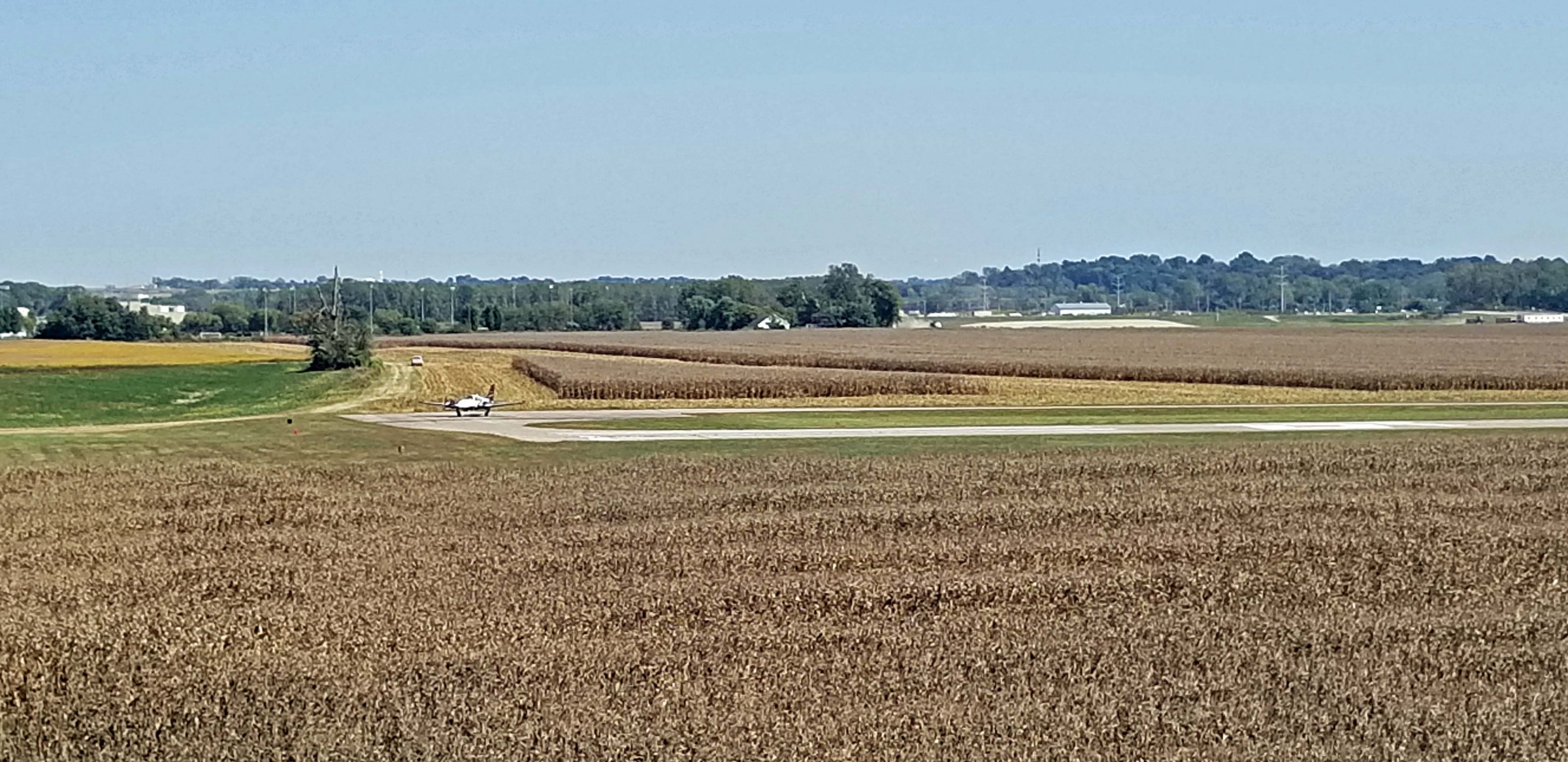
The first thing we saw in St. Louis County was the Creve Coeur Airport. There’s a small plane at the turn of the runway, preparing to take off (left center).
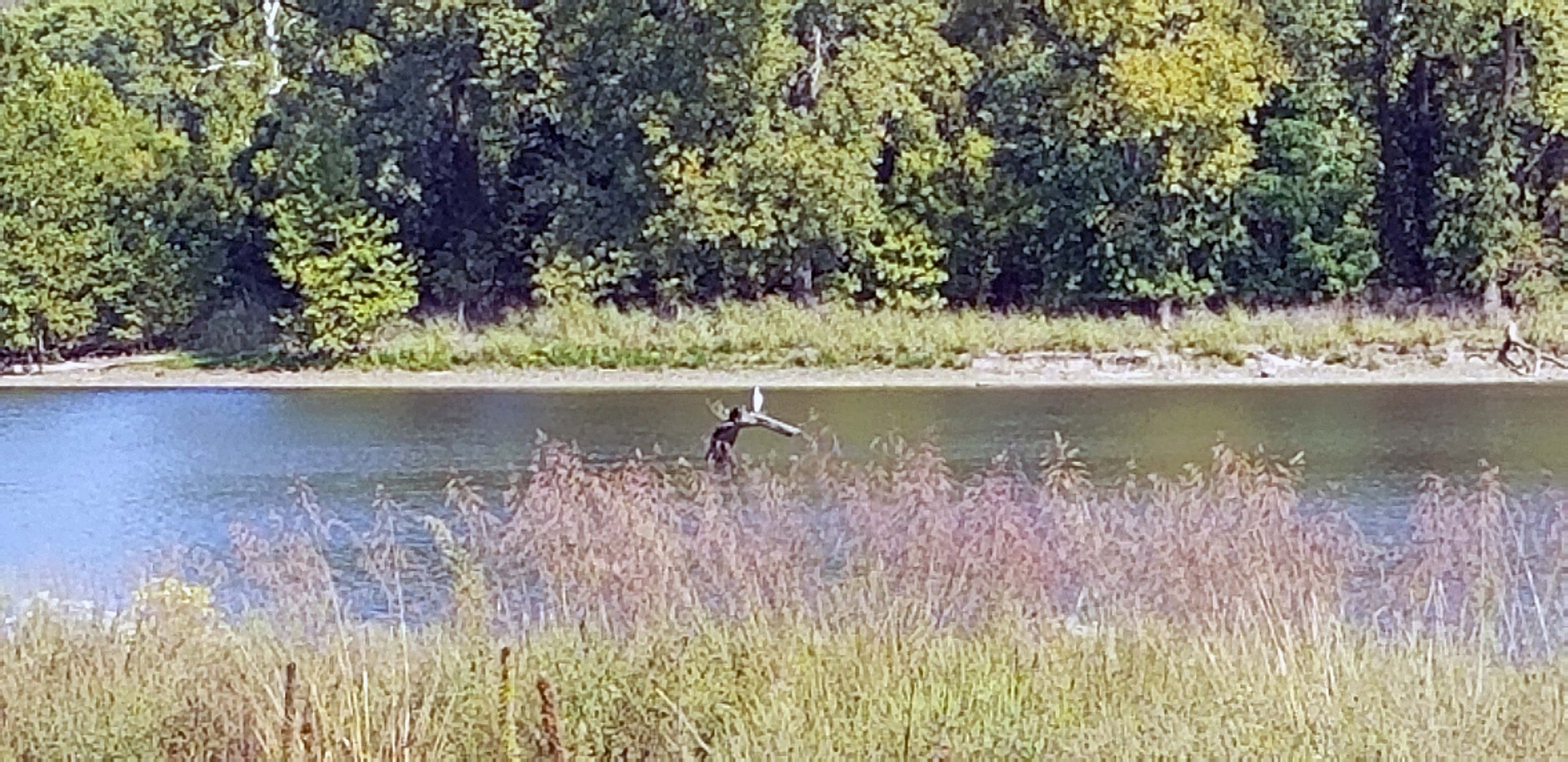
Creve Coeur Park is the largest park in St. Louis County and includes one of the largest natural lakes in Missouri. The lake is named–surprise!–Creve Coeur Lake. A large portion of the park is wetlands. (That sounds better than saying “A large portion of the park is swampland.”) The wetlands are used for conservation purposes, including the study of several kinds of waterfowl. We saw a large white waterfowl, but it was too far away to positively identify it. We think it was a crane. It’s sitting on the log sticking out of the water.
The park has a paved walking / biking trail, a playground, picnic pavilions, boat docks with canoe and kayak rentals, a sand beach (no swimming allowed), a variety of athletic fields (tennis, soccer, archery, and more), and a golf course. It is one of the most popular parks in the region and the Creve Coeur Park Trail is described as “heavily trafficked.” This is true. We did a lot of bobbing and weaving with our bikes and I felt like a stuck record when I kept passing walkers and saying, “On your left.”
Here’s a view of the sand beach area (it’s called a beach, but swimming is prohibited) and the lake with the boat docks and rentals at the curve of the beach.
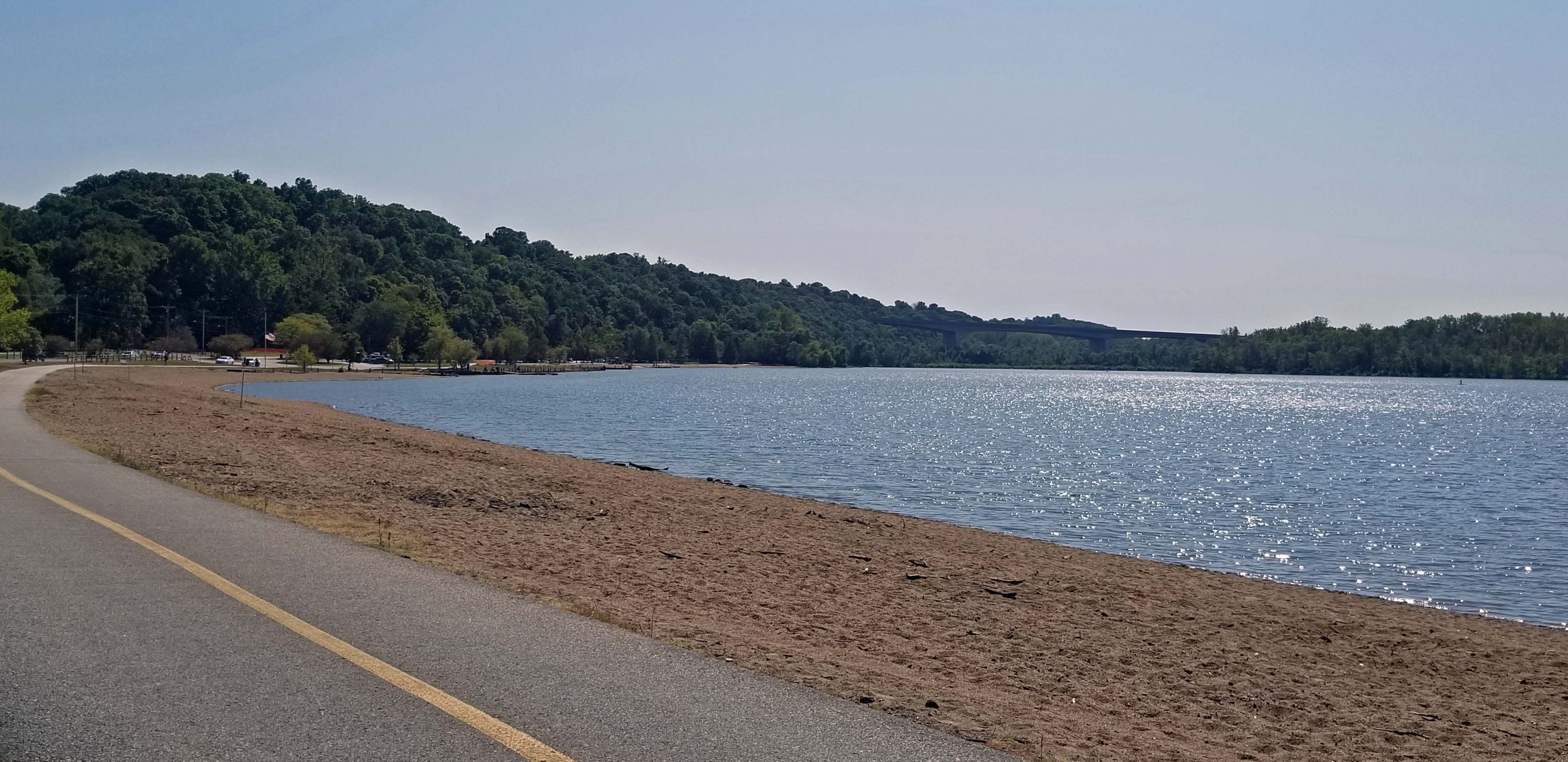
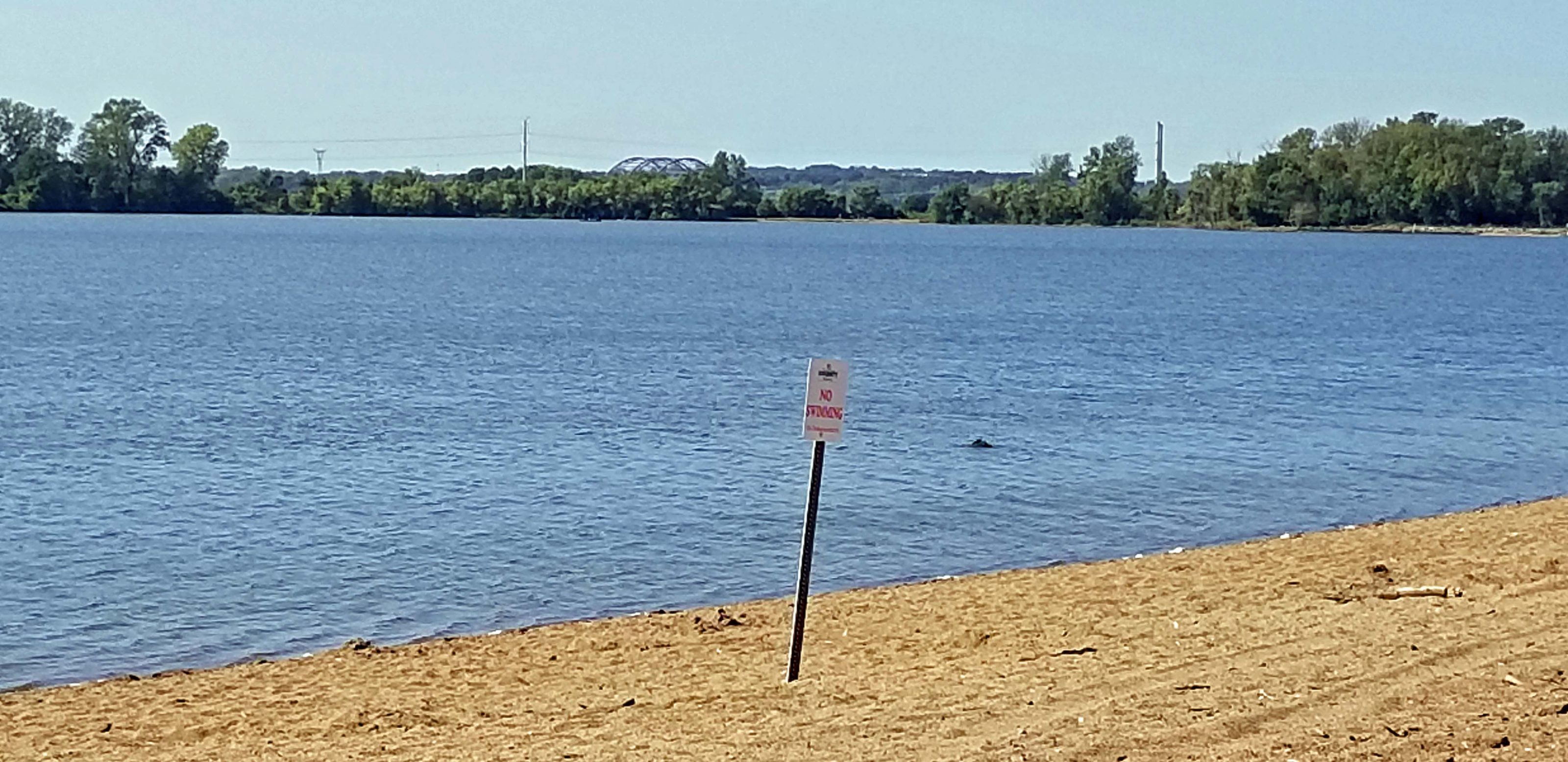
Looking in the opposite direction, you can see the Hwy 364 bridge we crossed in the distance (center) and the “no swimming” sign.
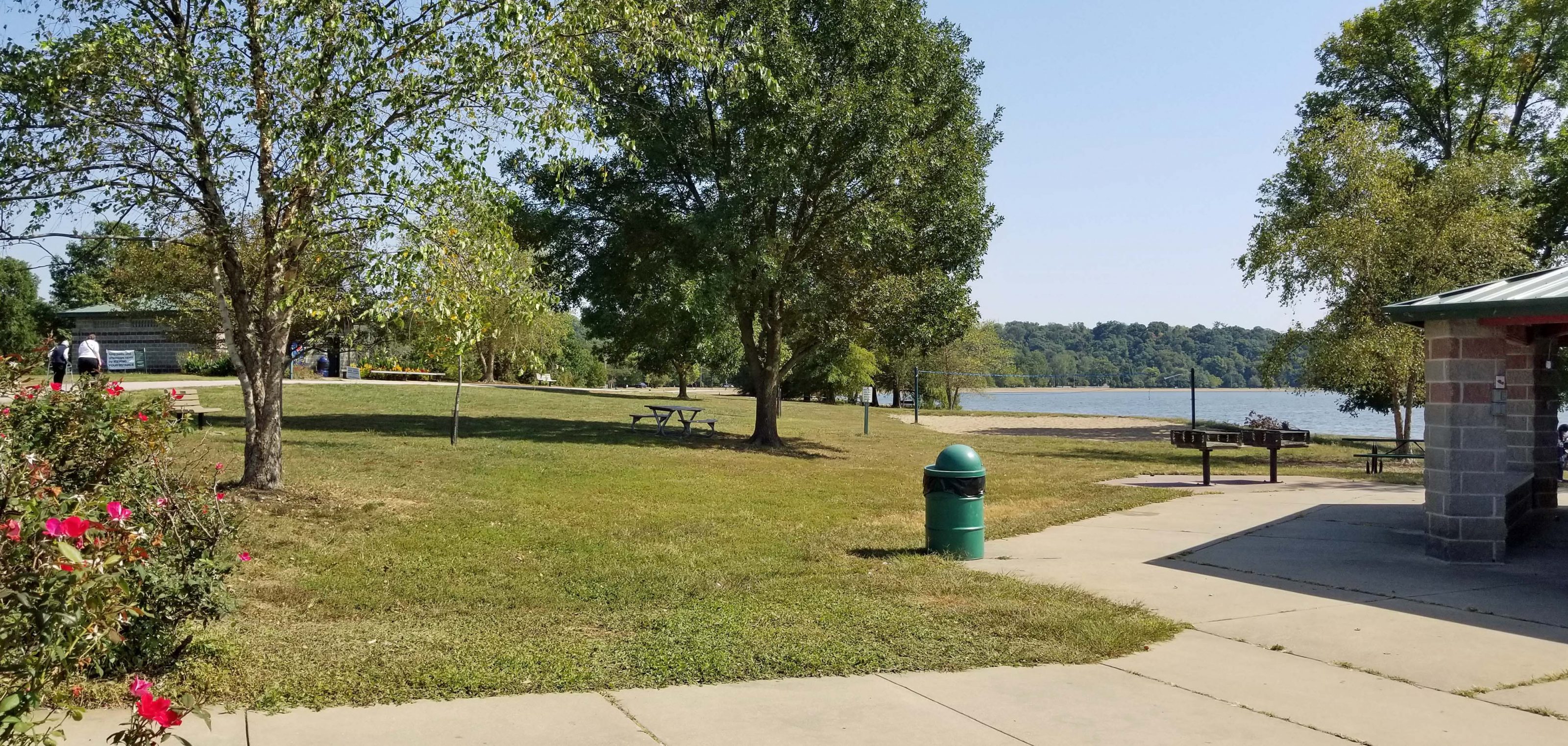
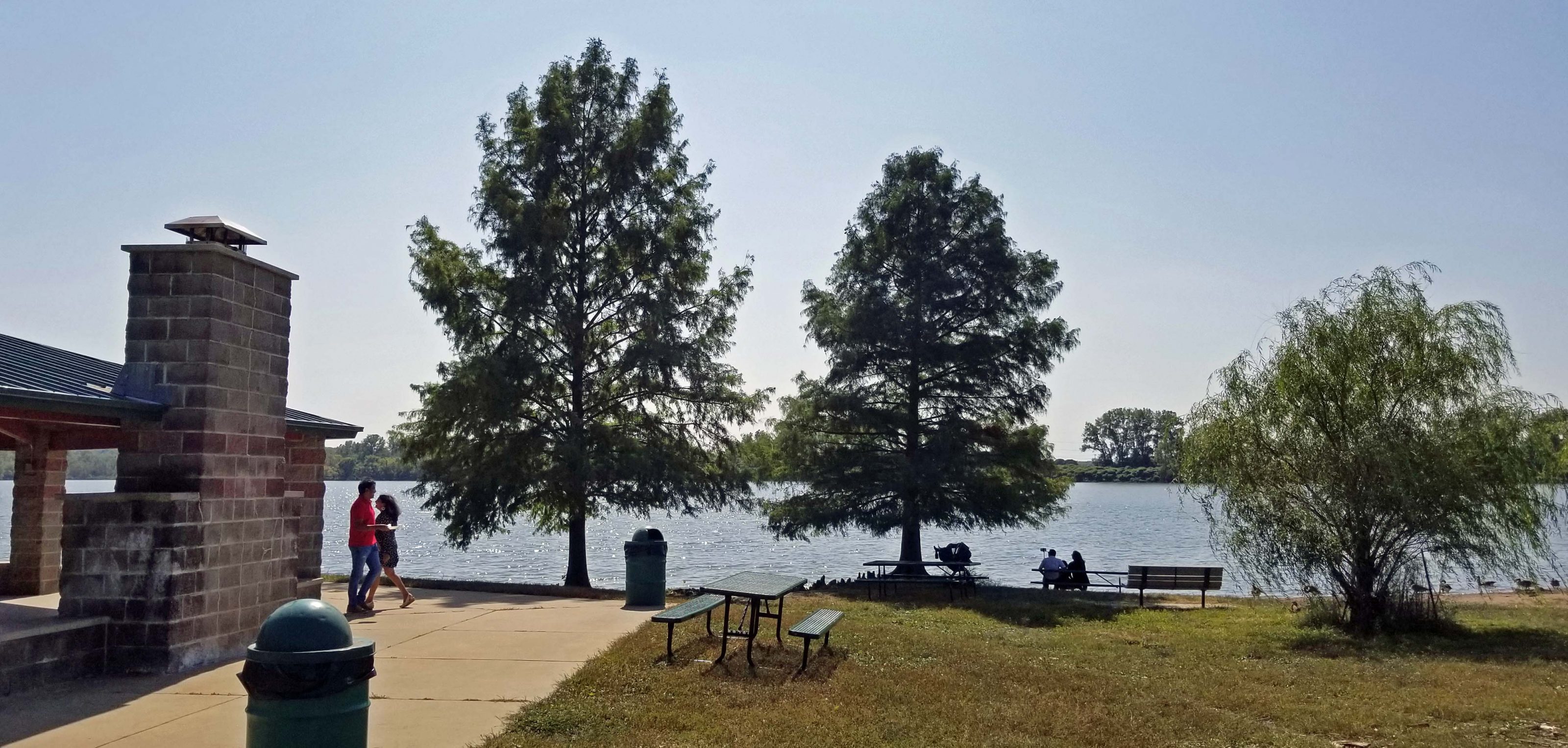
Picnic pavilions are scattered over this section of the park.
There are lots of park benches, so it’s easy to find a place to sit and look at the lake.
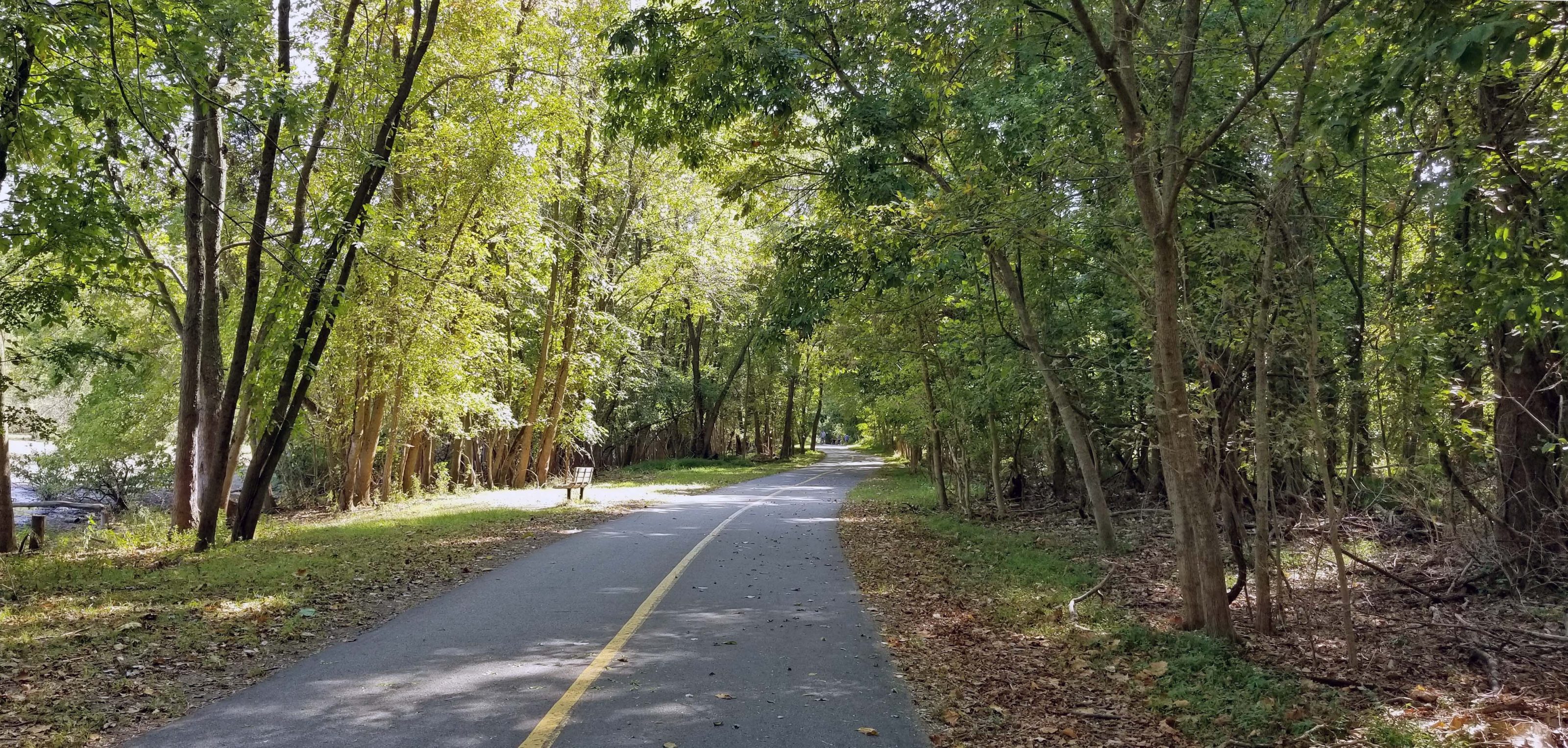
Except for the beach / picnic areas and the athletic fields, much of the trail that circles Creve Coeur Lake is wooded.
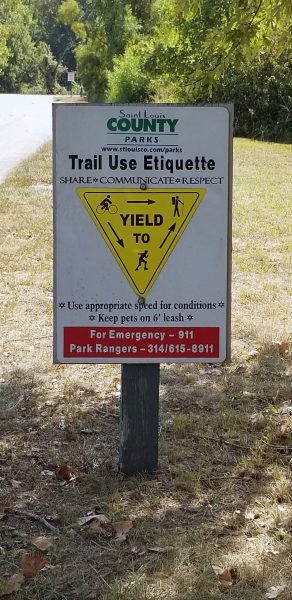
In case you don’t know, “Trail Use Etiquette” signs are posted along the trail.
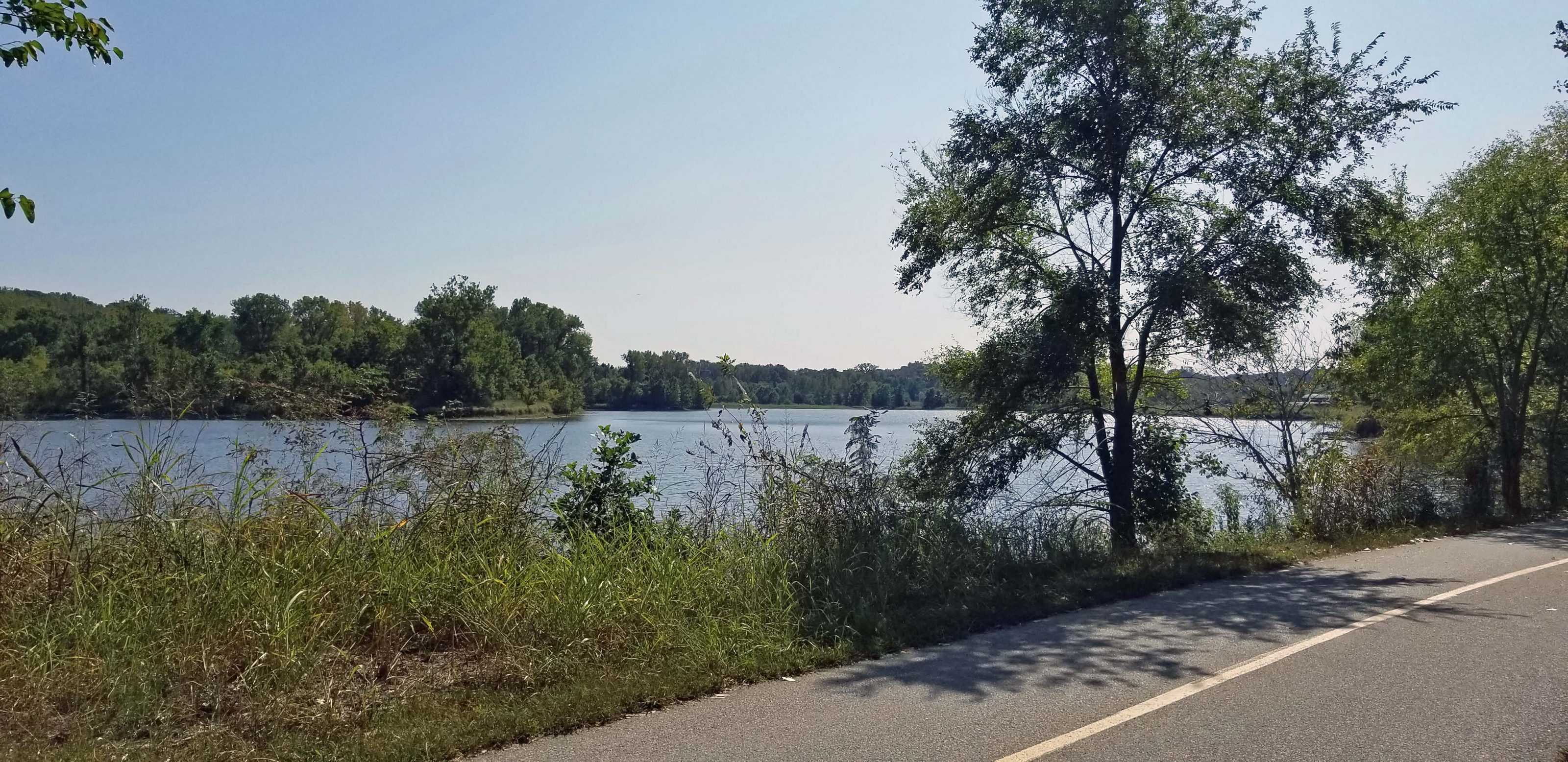
Mallard Lake is a smaller body of water adjacent to Creve Coeur Lake. When Creve Coeur Lake was dredged in 2003, Mallard Lake was added as a siltation lake to prevent the need for later dredging. I’m not sure what that means or how it works, but it sounds like a good idea. A trail circles Mallard Lake as well and it is far less crowded than the trail around Creve Coeur Lake. Here’s a view of Mallard Lake.
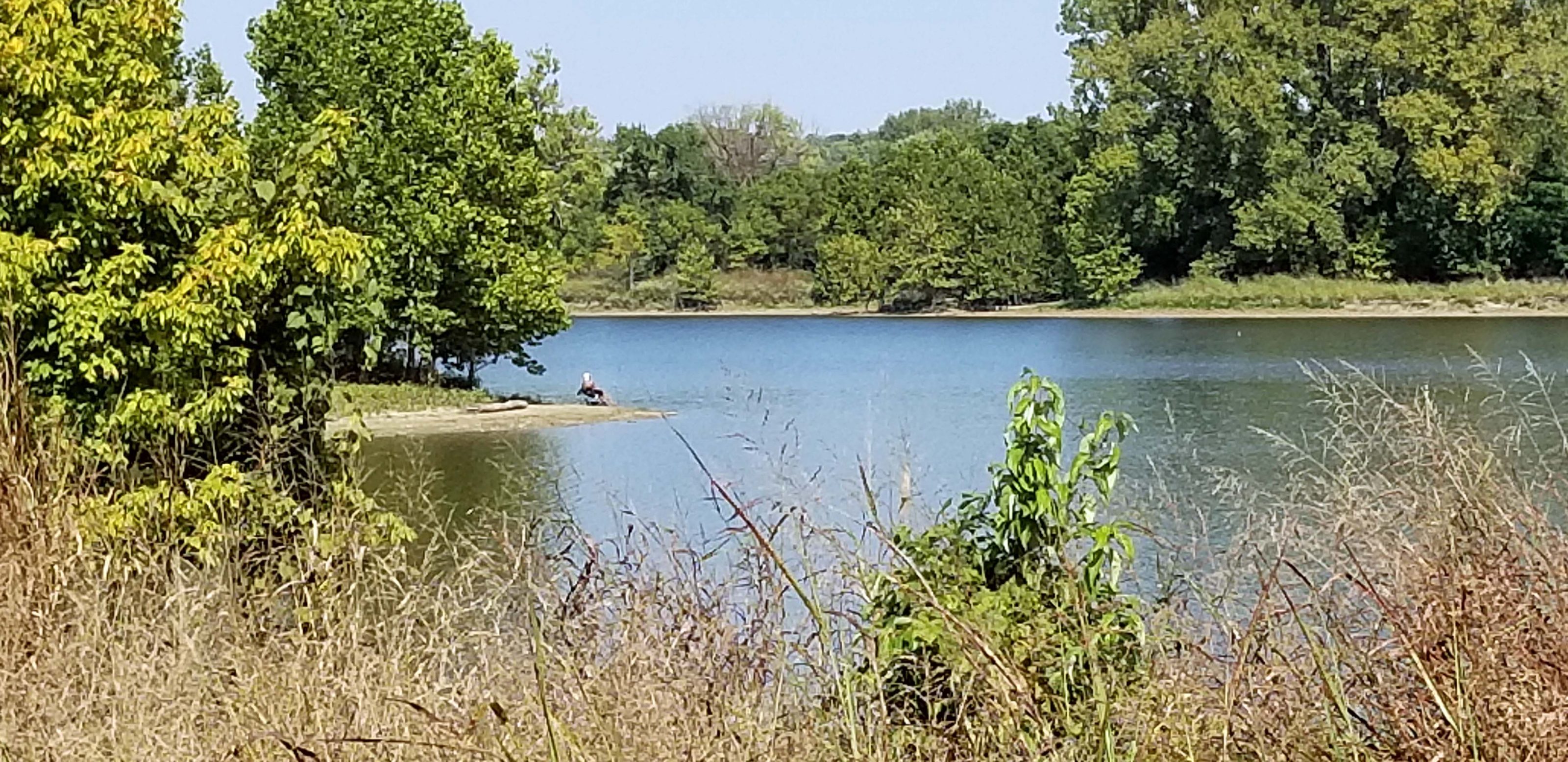
This lady brought a lawn chair and is enjoying the peace and quiet while she does some fishing in Mallard Lake.
When we finished circling both lakes, Ted and I headed back across the Missouri River to our car. We had a great 20+-mile ride and it was fun to cross the Missouri River via the bridge bike lane.
Next on the bike ride wish list: Cross the Missouri River via the bike lane on I-64 to bike the (rebuilt) Monarch-Chesterfield Levee Trail through the (formerly flooded) Chesterfield Valley.
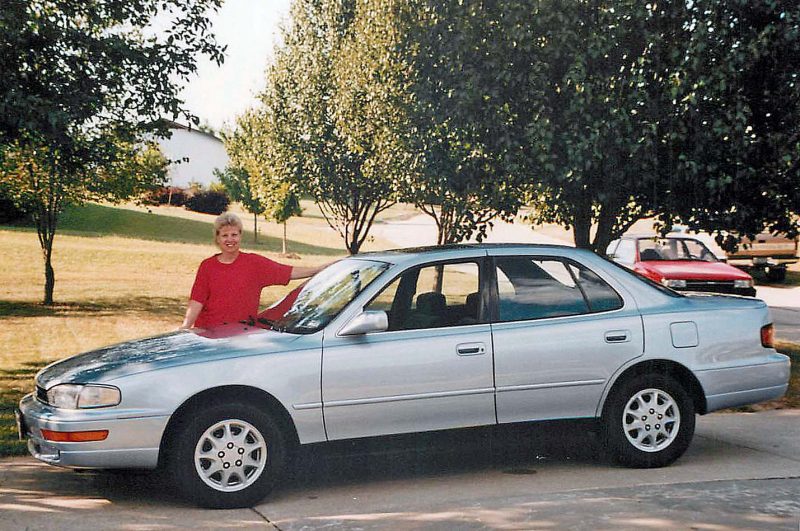
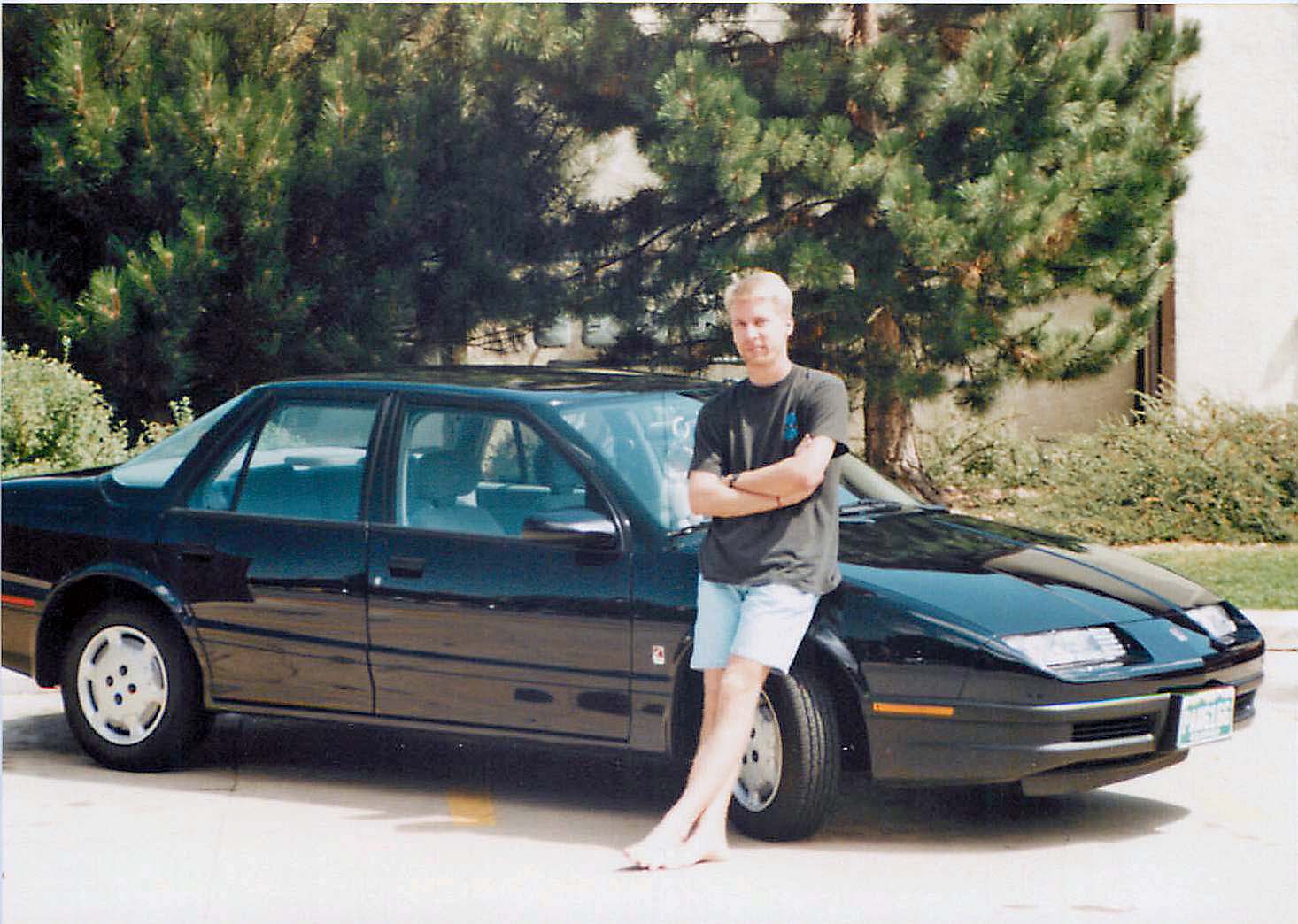
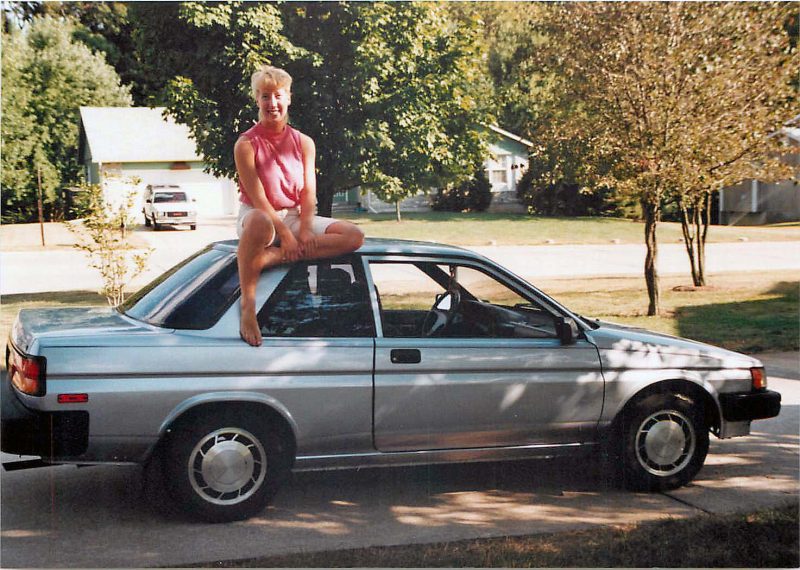
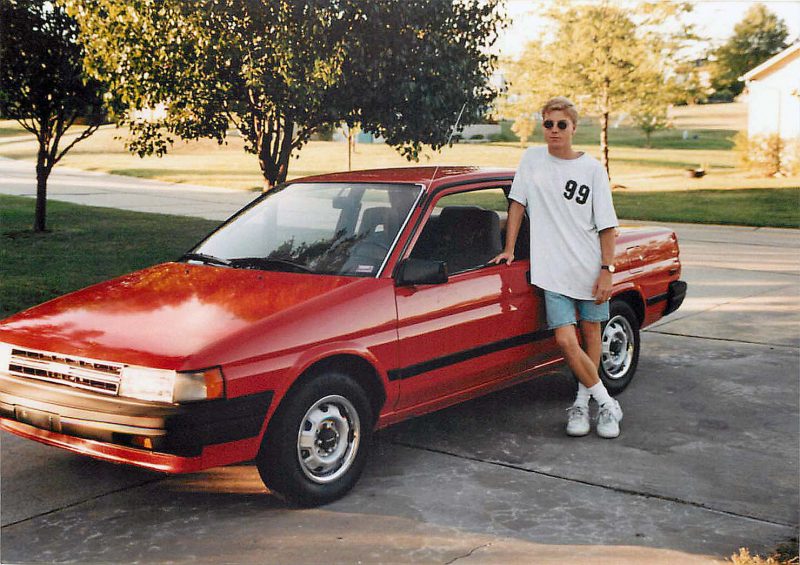
I was scrolling through old photos for a project Ted and I are working on and found an interesting series of pictures. I don’t remember why, but one day in 1995, when Kathy, Thom, and Kari were all at home, we decided to take a picture of each of us with our cars. Maybe we were inspired by Jeff’s picture of his new car.
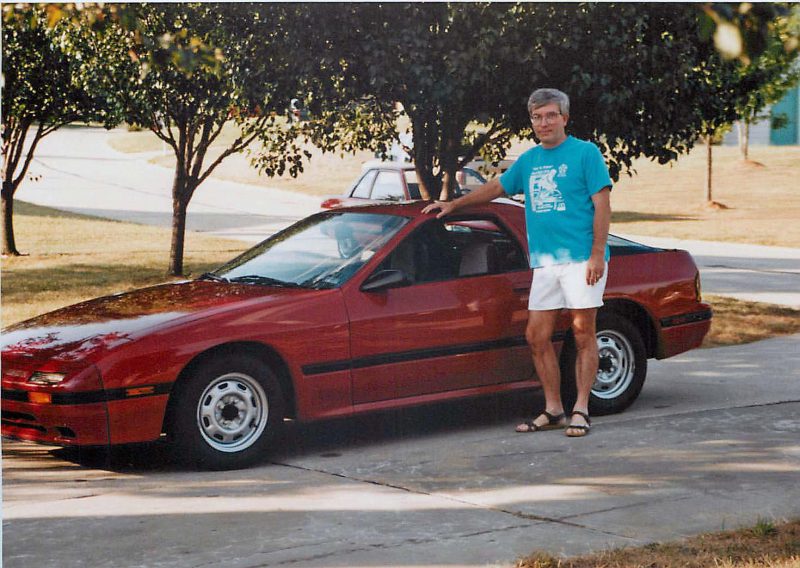
Ted had a 1987 Mazda RX-7. He was privileged to have the snazzy sports car. We loved driving it because it had a 49/51 weight distribution and was great on corners and curves. The stick shift added to the thrill. The car did not have a back seat–not even a mini back seat–so it had to be insured as a sports car, not a coupe. The curved back window on the hatch and the pop-up headlights were so cool!
I had a 1992 Toyota Camry that we bought when we needed space to get the kids and their stuff back and forth to college. That was before kids needed a U-Haul to tote all their college-bound stuff. The Camry had such a smooth ride, we used to get sleepy on long drives. We called it “the Camry effect.” My favorite feature was the moon roof.
Jeff bought a brand new 1995 Saturn when he graduated from college and got a full-time job with Hughes in Aurora, CO. This picture was taken in his Aurora apartment parking lot. He was excited that the purchase included a free car wash with every oil change. It was totaled when another driver pulled out in front of him, so he replaced it with another Saturn, which he drove for 13 years.
Kathy had (I think) a 1987 Toyota Tercel. I know it was a Tercel; I’m not sure of the model year. A deer hit her one time and left a minor dent on the hood. She taped a band-aid over it. She got amazing gas mileage (38 mpg?) with this car.
Thom also had (I think) a 1987 Toyota Tercel. Again, I’m not sure it was a 1987, but it was the same year and model as Kathy’s car in a different color. When he moved to Arizona, he packed it so full, that when he squeezed a can of Campbell’s tomato soup into the corner of the back window, there was no more empty space beyond the driver’s seat. I think Thom liked the car so much, he replaced it with another Tercel.
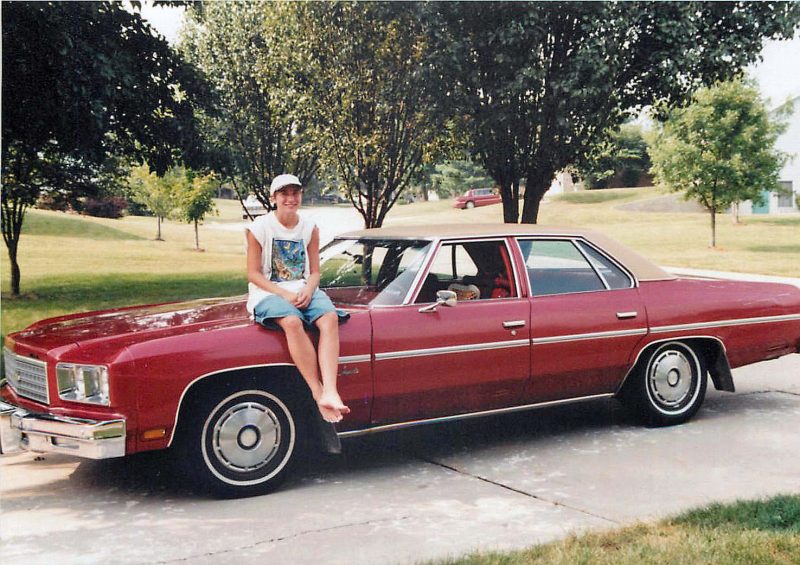
Kari got the cheapest car–a 1976 Chevy Impala with low mileage. Grandma Schroeder was no longer able to drive and Kari was her only grandchild (the youngest) who didn’t have a car of her own. Grandma generously gave her car to Kari as a gift. Grandpa Schroeder bought the car in 1976 because it was the last year Chevy was going to make such a big car. The 1977 Impala was about a foot shorter. This car had leg room beyond belief and a huge trunk! Kari drove the Impala for many years. When she finally gave it up, I think the car was probably looking forward to retirement.
Interesting note: Ted and I like driving a stick shift car and we always had one until 2011. Stick shifts have become hard to find and now require a special order. Technically, I can shift my 2011 car manually with the paddles on the steering wheel, but there’s no clutch and and it can’t choke, so that takes the fun out of shifting.
When we taught the kids to drive, we made them learn to drive both cars–the automatic shift and the stick shift. More than one of the kids was literally reduced to tears; all of them were frustrated and whined, “Nobody drives a stick shift. Why do I have to learn this?” Surprise! Jeff’s, Kathy’s, and Thom’s first cars all had a stick shift–by their own choice. I think Jeff and Thom still have stick shift cars. Grandma had an automatic shift. Sorry, Kari. At least your car was free.
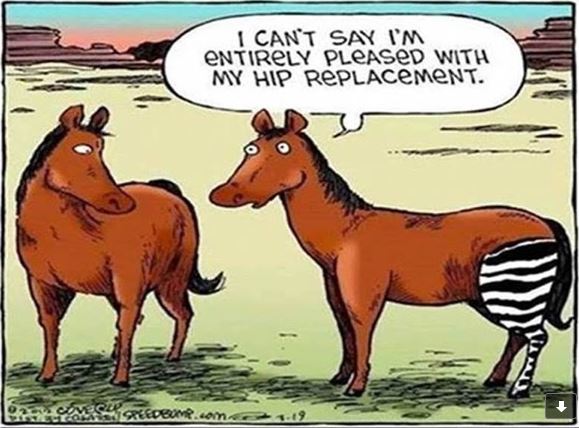
Again, thank you, Aunt Ruth for scrounging the internet for humor to make us laugh. Aunt Ruth and I are both natural blondes, so we’re allowed to share dumb blonde jokes.
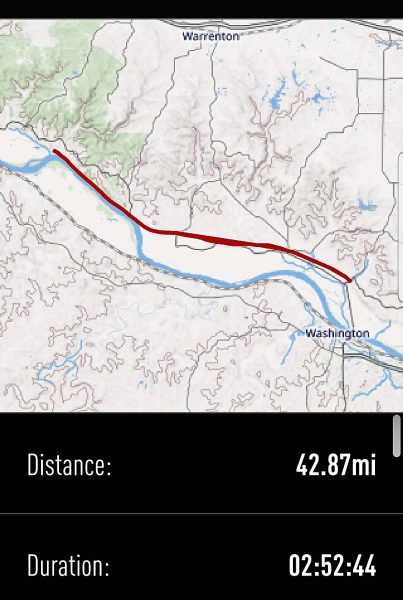
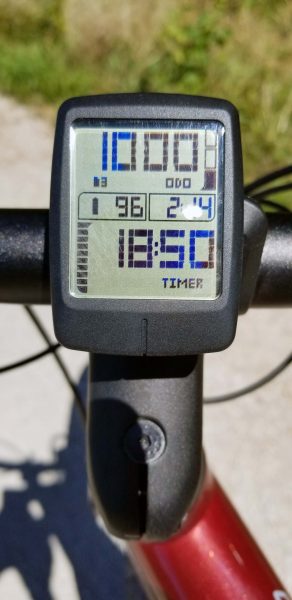
Ted’s and my bikes have a bluetooth app that allows us to follow our route on our cell phones. The app also collects data about the route, the elevation, the condition of our bikes, and lots more. A typical ride looks like this on the “My Ride” view:
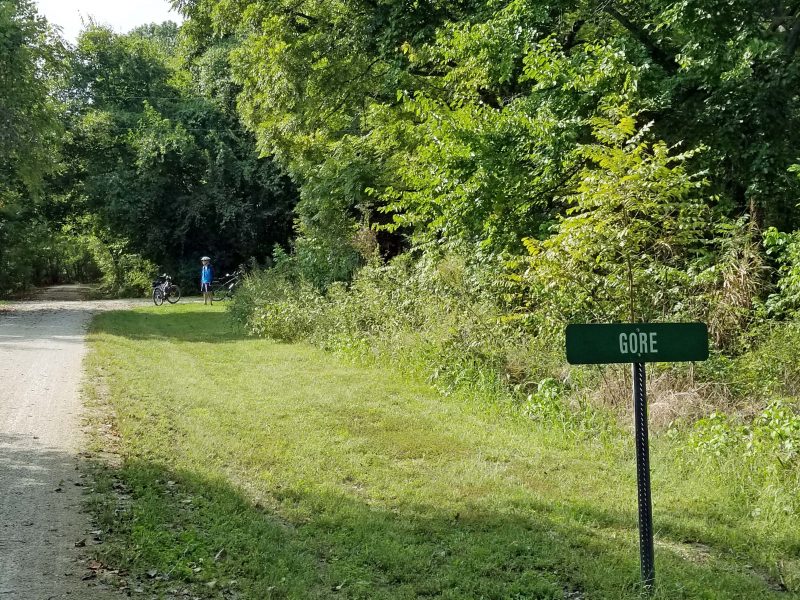
The Katy Trail, however, is more linear. Yesterday’s Dutzow to Gore ride on the Katy looks like this:
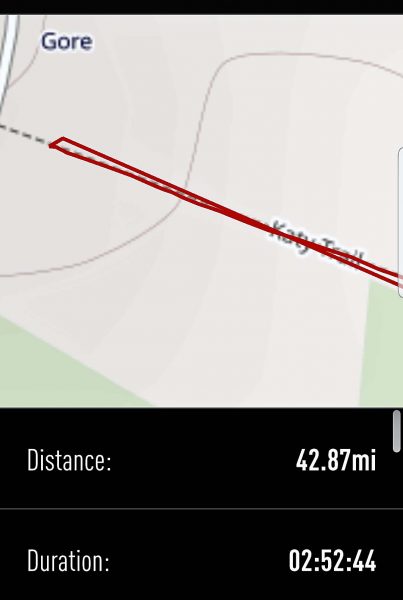
The GPS on the app is pretty darn good. I zoomed the above map to show our turnaround point. The Katy has a ground limestone surface. Two paths (one in each direction) are harder packed from traffic than the center, so bikers avoid the looser gravel in the center. You can see two lines on our route–one on each side of the trail going in opposite directions. The place where the lines converge was a bridge (wooden planks, not gravel), where we tend to head for the middle.
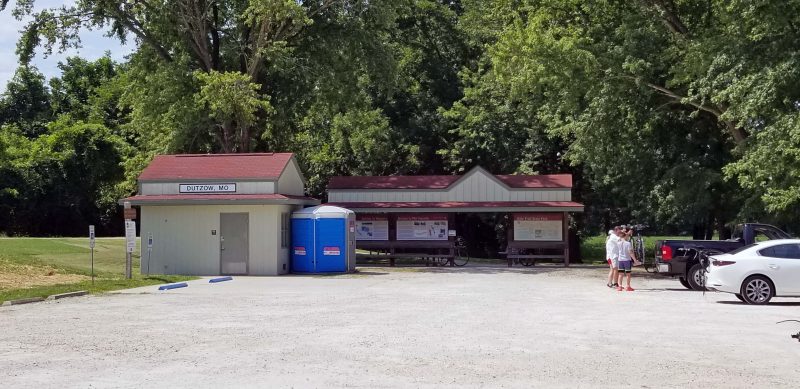
Today, Ted and I biked our next westward section of the Katy Trail and set a personal record: 42.87 miles round-trip. We started at Dutzow, where we ended on August 6, and headed for the Gore trailhead.
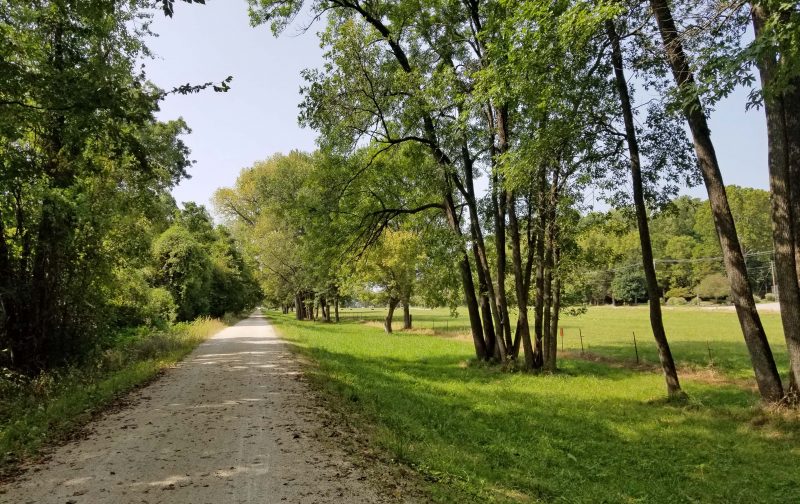
This part of the trail passes only two communities, so there are a lot of country scenes. There is also very little hiking / biking traffic on this part of the Katy so we had a pleasant, quiet, and mostly solitary ride today.
If you zoom in on the picture below, you can see black dots in the center. Those are Black Angus cattle, grazing between the trail and the road. We passed this point shortly after we started biking and, when we returned more than two hours later, I don’t think the cattle had moved. They were still grazing right where we left them. The same was true of a horse we saw standing at a fence beside the trail, still in the same place two hours later and still looking in the same direction.
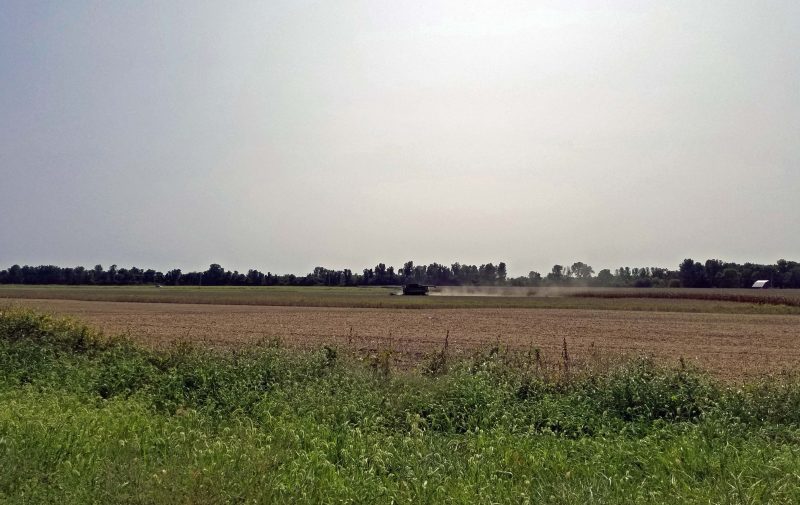
Here’s a farmer harvesting his soybeans on a beautiful sunny day.
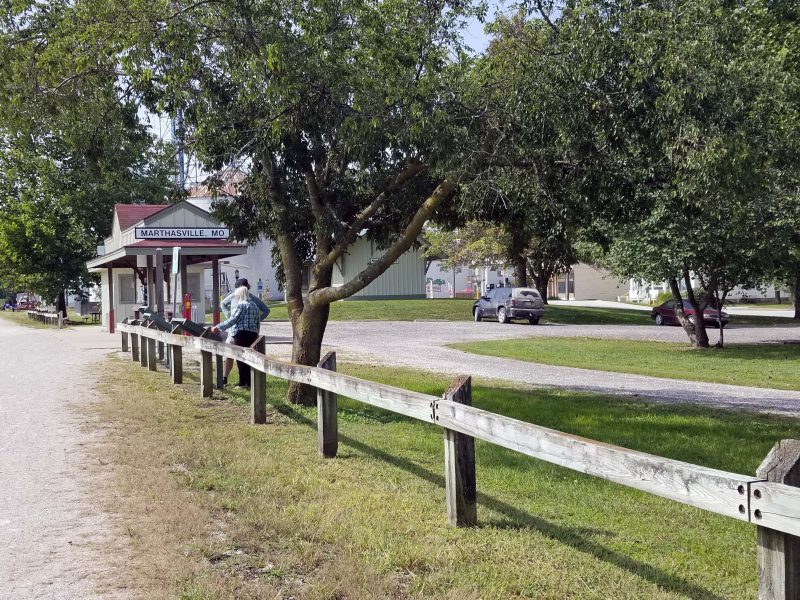
The next trailhead after Dutzow is Marthasville. It looks like a nice little village, but we had a distant goal, so we didn’t explore. We took a water break and moved on.
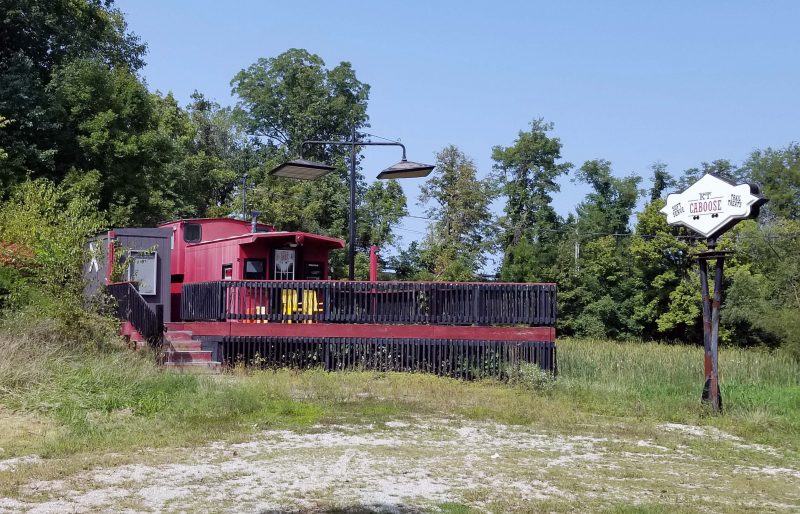
We passed the Caboose, a snack bar along the Katy. It doesn’t look derelict, but it does look deserted. Maybe closed for COVID this summer?
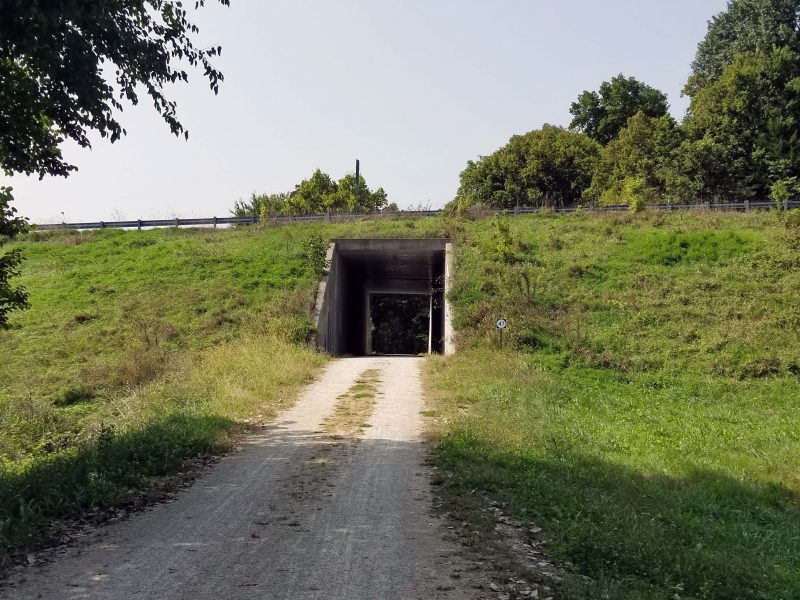
There are frequent over and under the road crossings on the Katy. Here’s an underpass that goes through the levee and beneath MO Hwy 47, as indicated by the sign on the right side of the underpass.
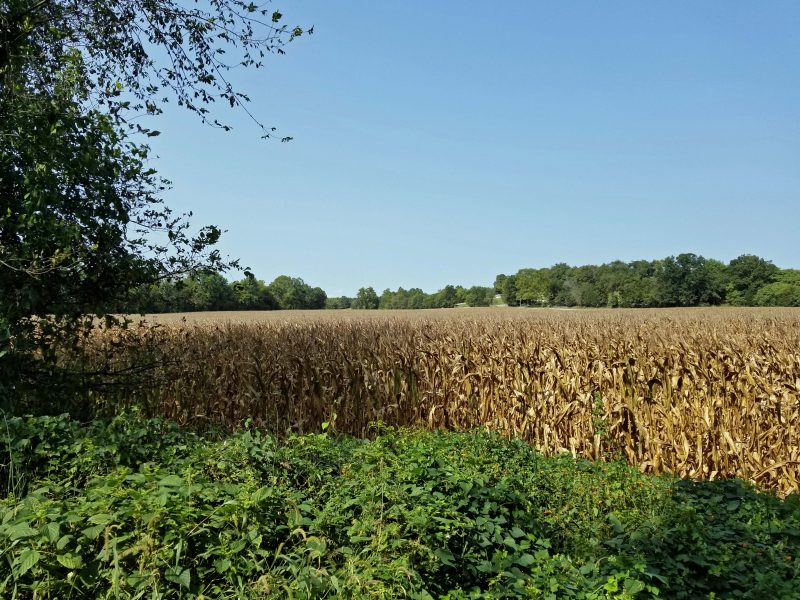
We’re still in the country. The corn is past its prime for human consumption, but the scene is pretty.
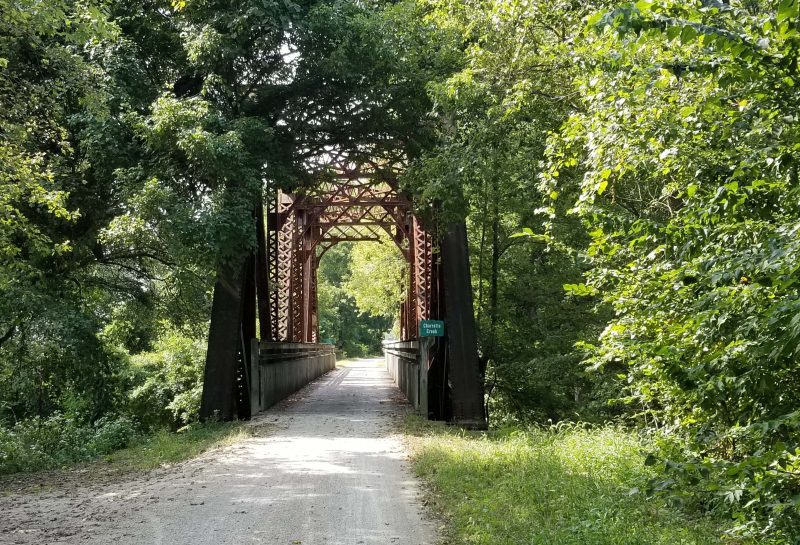
The Katy also passes over old railroad bridges. We rode across four of them on our route today.
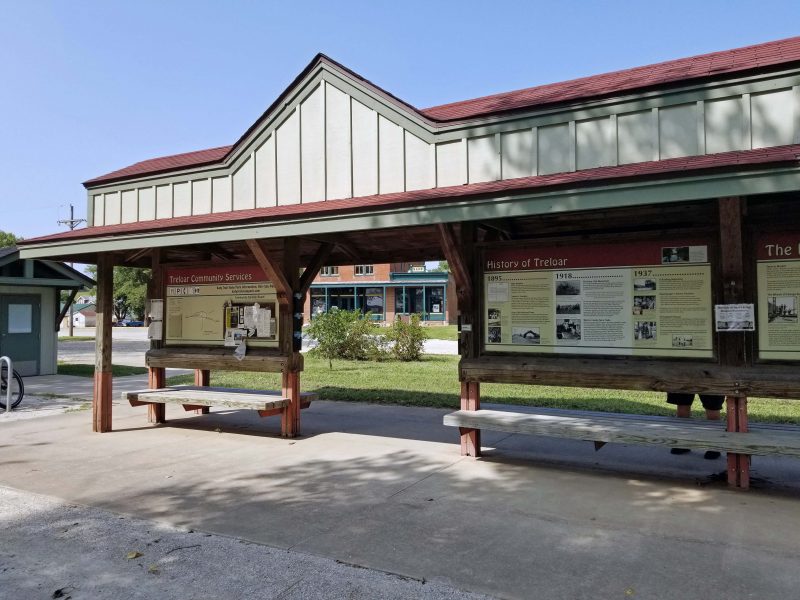
The other community along this route is Treloar.
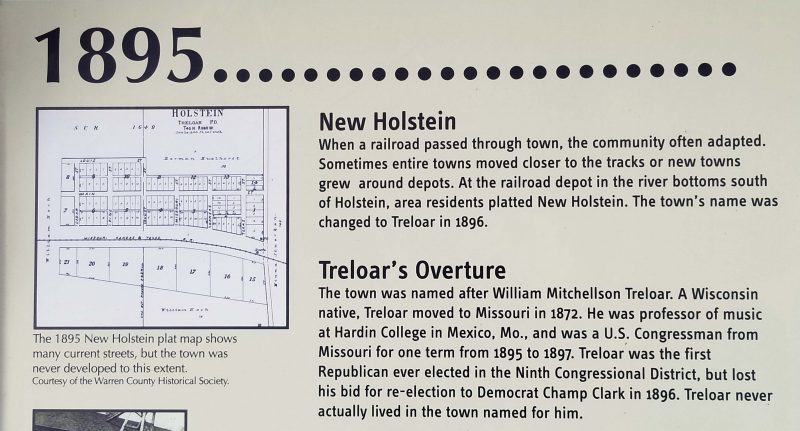
The information provided at the site was interesting to Ted and me. We learned that Treloar used to be called New Holstein. Ted grew up near New Holstein, WI. A year later, the town was renamed Treloar, after a man from Wisconsin.
The Katy Trail State Park is the longest state park and the longest rail trail in the nation. The trailhead depots all include a sign of pride.
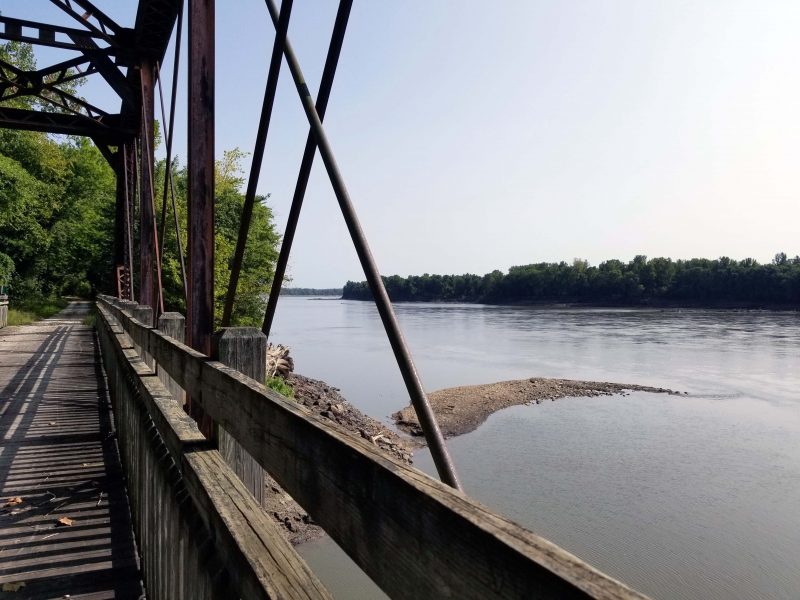
Because the Katy Trail generally follows the Missouri River, we always have some pretty river views on our rides. Here’s what we saw from one of the railroad bridges we crossed. We haven’t had much rain lately, so the river is low.
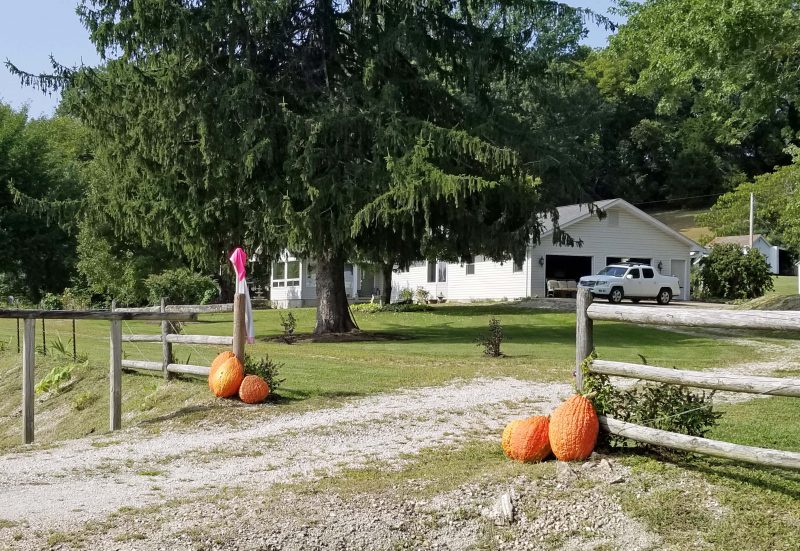
Residents along the trail sometimes decorate for trail users. Today we saw pumpkins at a farm and a flowerbed surrounding one of the trail benches (no photo of that).
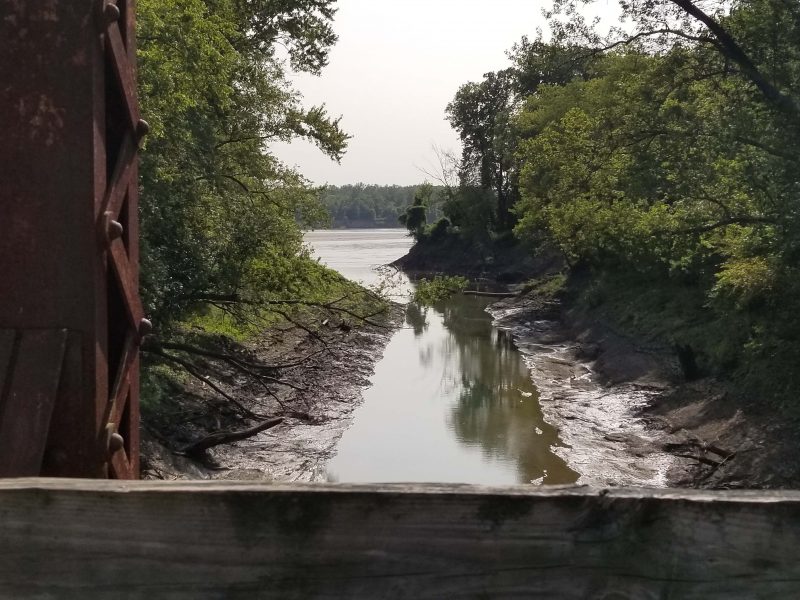
When I saw the sign for Lost Creek, my first thought was “We found it!” It flows under one of the railroad bridges into the Missouri River.
Ted and I picked Gore as our turn-back point today. It was 21+ miles from Dutzow, so we biked over 40 miles today–the farthest we’ve ever gone on a single ride. Our only regret was that we left some homemade cookies and apples in the car for a snack before heading home. We wished we had some cookies to eat at Gore.
If the weather holds, we’re hoping to make it another 20 miles west on the Katy this fall. That will take us about 15 miles past Hermann (McKittrick trailhead). Next year, we’re planning to pick up where we leave off this year and end our Katy Quest about 20 miles west of Columbia, MO. It’s a 90-minute drive to Columbia, and we don’t really want to drive farther than that for a bike ride. When the drive time exceeds the bike time, it’s time to do a multiple-day ride or find something closer to home.
“Where do you want to go today?” “I don’t know. I suppose the usual.”
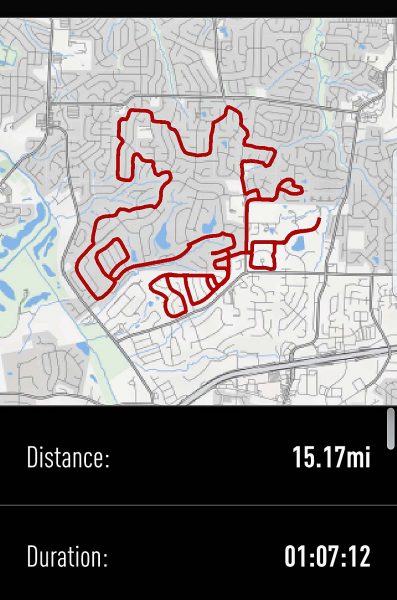
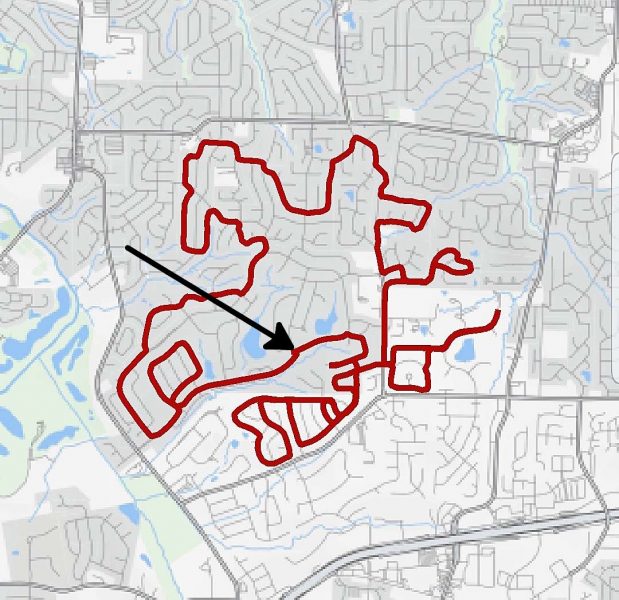
After that in-depth planning session, Ted and I set off on our regular 15-16 mile bike ride that we call “the perimeter route.” We’ve biked this route at least twice weekly all summer, and it gets old. We take the outermost roads of 10 adjoining subdivisions, including ours, plus a few odd streets, just for the fun of it. The arrow points to our driveway, the starting point.
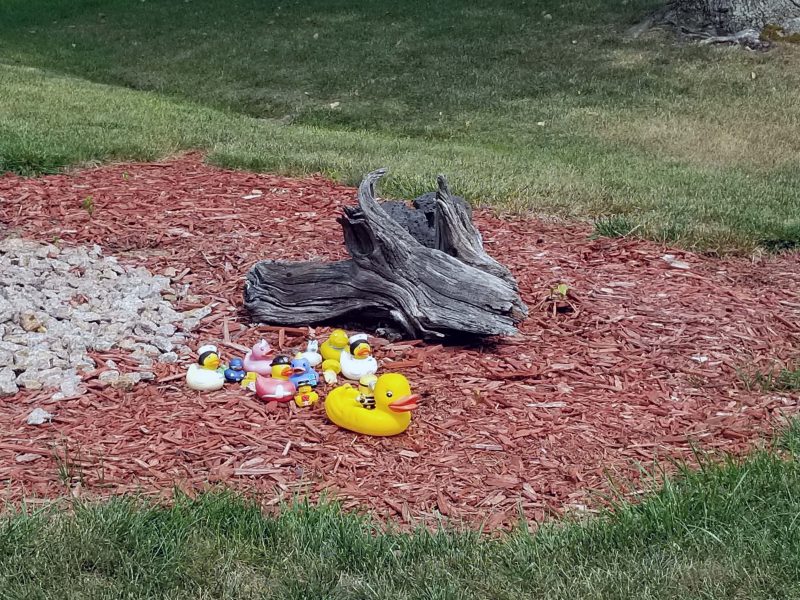
And yet, even on an old, familiar route, new things can happen. For example, one of the homeowners put out a cute display of rubber duckies. The big duck has a minion on its back.
Even better, we met someone. There’s a man along our route who waves at us every time we pass his house. He apparently sits on his front porch as often as we bike that route. The last time we saw him, I told Ted that if he’s outside the next time we ride by, I’m going to introduce myself and ask his name so we’ll both know whom we’re waving to.
The friendly man was outside working in his front yard this afternoon, so we stopped to introduce ourselves. He’s Floyd. Floyd Cline. Shocking! As soon as he said “Floyd” a little bell started going off in my head and when he added “Cline,” I recognized the house. He’s the father of Carrie Cline, one of Kathy’s best friends from her K-12 school years, and of Harvey Cline, who was in Kari’s grade. His response to us was “Are you the Schroeders? Do you still live on the corner in Park Charles?” Yes, and yes. We haven’t seen each other since Carrie and Kathy graduated from high school in 1991, so neither of us recognized the other. We spent some time chatting and catching up on what we and our kids are doing. Then Floyd went back to work in his yard and we continued on our bike ride.
Even when we ride the same old bike route, we have new adventures. The fun never ends.
I enjoyed listening to my favorite playlists on my iPod last April as I sewed face masks for Ted and myself. When I finished sewing, I cleaned up the project room and put everything away. Somewhere between the project room where I was listening to my iPod and the box in the kitchen where we keep our iPods and our device chargers, I lost my iPod.
It was unbelievable! Where could it go between (almost) literally, the top of the stairs and the bottom of the stairs???? Ted and I searched everywhere we could think of that he or I might have set it and then we searched in places that we were unlikely to set it. We looked under and behind furniture, in drawers, and in places I don’t remember throughout the house. No iPod.
When I went back to the project room to sew more masks for the family, I listened to music from Ted’s iPod. It was fine. The world kept turning. The sun kept shining. But it drove me crazy because I knew my iPod had to be somewhere in the house, and I couldn’t find it!
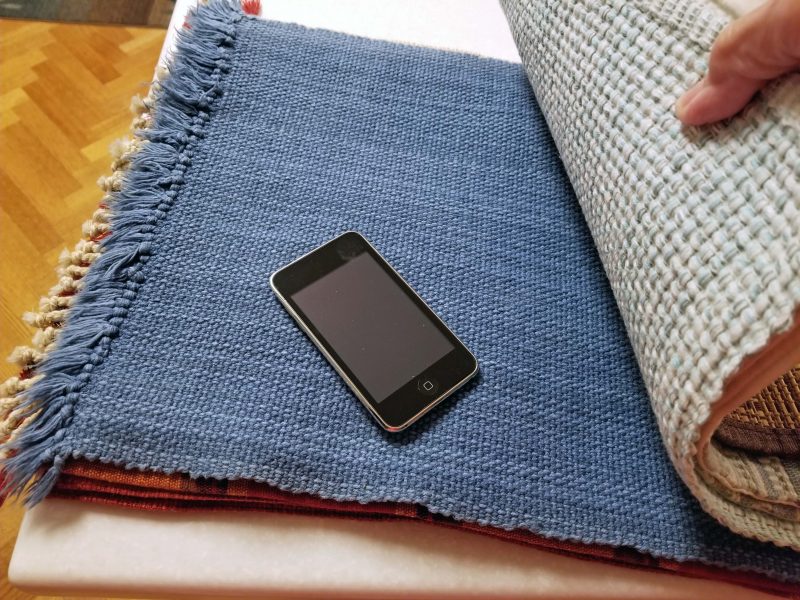
Tonight, I decided to change placemats for dinner because I’m tired of using the ones I’ve had out this week. I usually stack them on the shelf in pairs so I can grab two matching ones for Ted and me, but the blue ones I wanted were separated by several other place mats. I had to take the entire stack of placemats off the top shelf of the pantry so I could re-arrange them in pairs. When I got down to the blue one I wanted, I found my iPod! The battery was dead, but it’s rechargeable.
I was pretty excited about finding my iPod, but now it’s driving me crazy how, on its way from the project room to the charger box, it got stuck between the place mats on the top shelf of the pantry. 2020 is a weird year in so many ways!
Since we’re biking so much this year, Ted and I decided we should set a goal to ride all of the Katy Trail from its beginning to some point westward. We couldn’t ride the last two miles to the beginning of the trail due to trail repair, but we’ve now gone 44 miles from that point westward–and back, of course, for 44 more miles because there is no shuttle service to return us to our car. The entire trail (Machens where the trail is being repaired to Clinton near Kansas City) is 238 miles. There’s an organized 5-day summer bike ride from Clinton to St. Charles every year. Except this year, of course.
Today’s Katy ride was a fill-in to cover the 15 miles between the Busch Greenway and the St. Charles trailheads that Ted and I had not biked. It was another route with variety: river views, limestone river bluffs, farmland, subdivisions, and the big city of St. Charles.
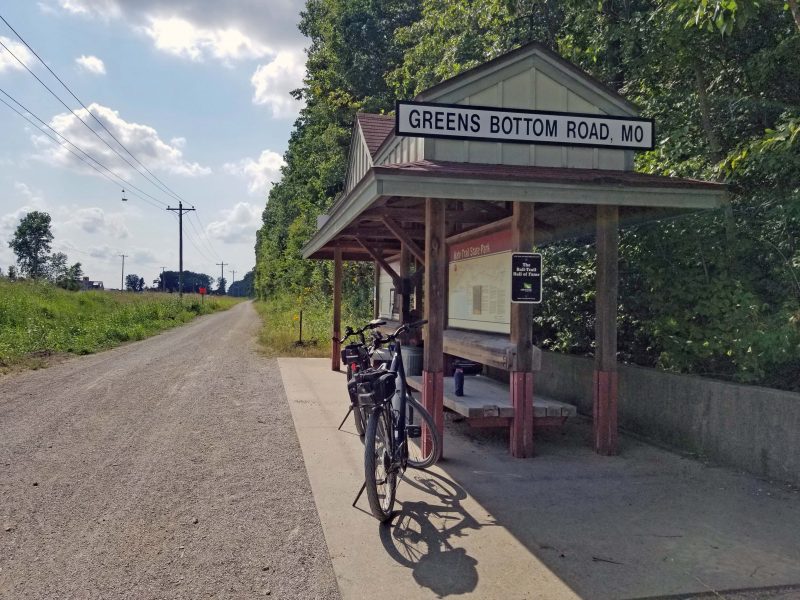
We entered the Katy at the Busch Greenway trailhead and headed east. The first iconic trailhead depot we saw was Greens Bottom Road. I’ve always thought Greens Bottom was an interesting name. A shorter trail leaves the Katy at this point and goes to Greens Bottom Lake. We’ll try that route on another day. This depot is located on a very long, shade-free stretch of the Katy. It was hot today (mid-90s), so Ted and I were glad to get back into the shade of the river bluffs and the trees.
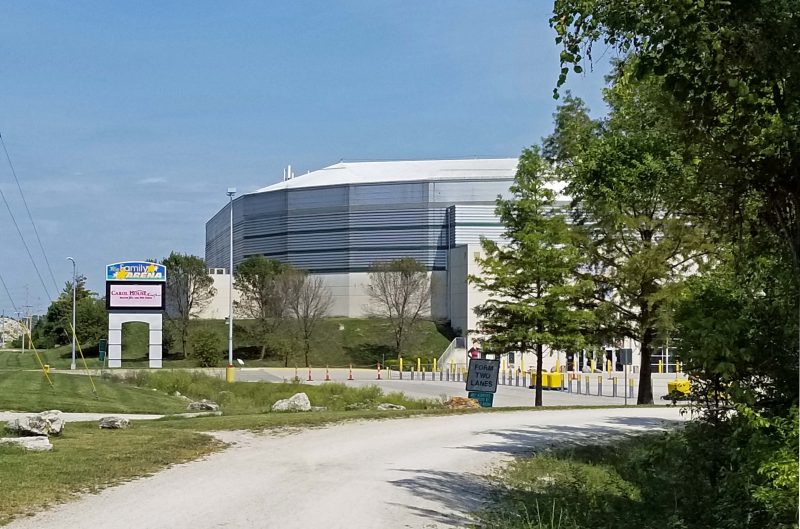
Suddenly, the views became citified. Here’s the St. Charles Family Arena where Ted and I saw performances by B.B. King and Frankie Valli.
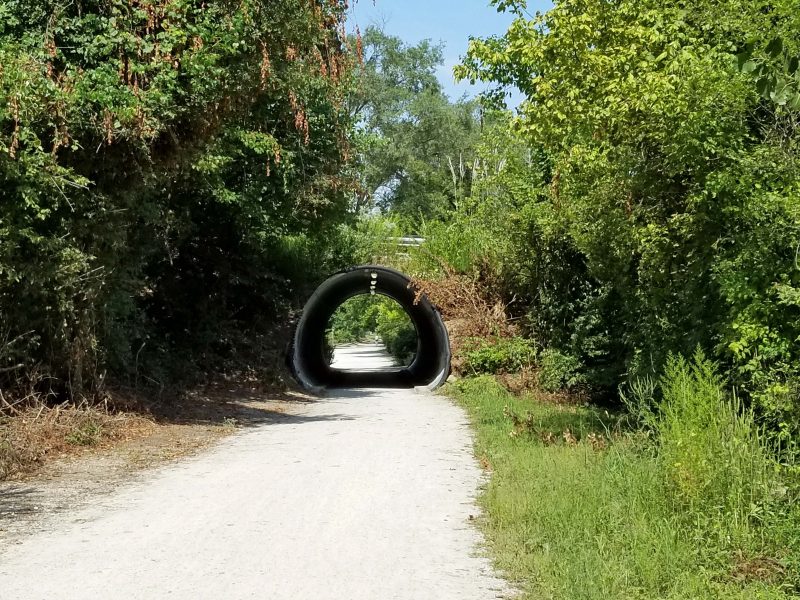
It was fun to zip through this little tunnel / underpass. The trail must be more level along this 15-mile stretch than others we’ve biked because our average speed at the end of the ride was 15+ mph and it’s usually closer to 13+. We really moved along today. As Kari once pointed out, the Katy is a fairly easy ride, but you never stop pedaling. There are no steep hills to climb–and, therefore, none to coast down.
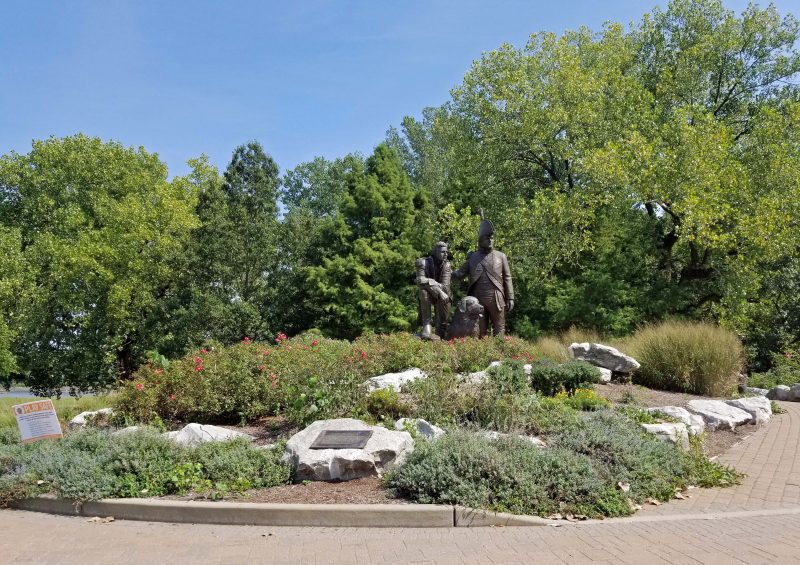
Here we are at the entrance to Frontier Park in St. Charles. It’s the Lewis and Clark (and dog) statue.
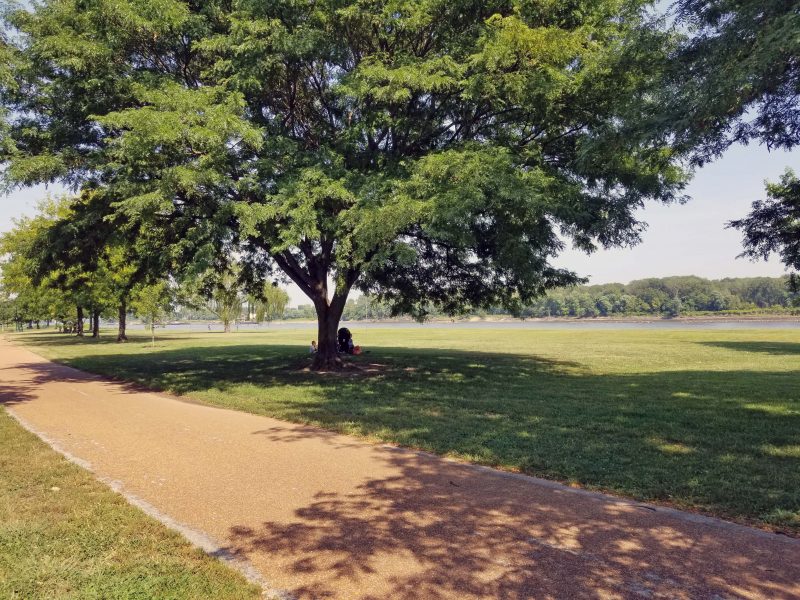
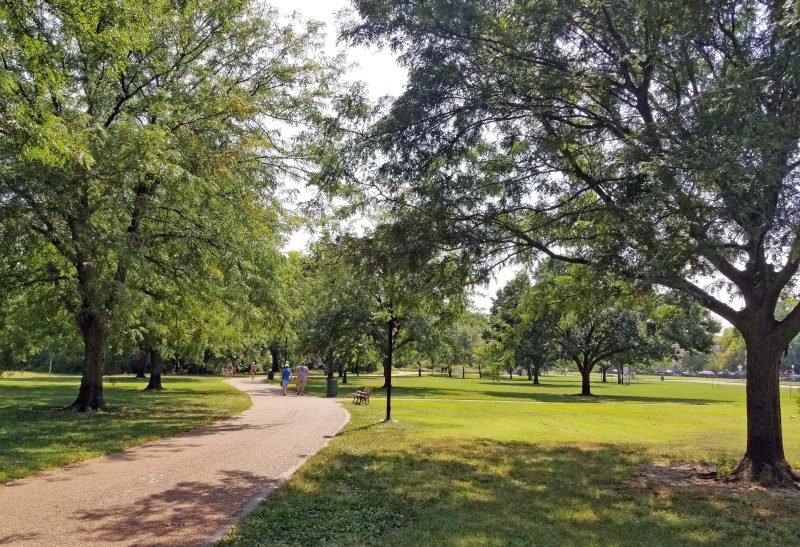
I’m glad we decided to bike from the Busch Greenway to St. Charles instead of going in the other direction. Frontier Park was a nice place to rest for a little while before we turned around for the second half of our ride. We enjoyed the shade and the peacefulness of the park and the Missouri River view. At the Busch trailhead, there’s nothing but a single park bench alongside the trail.
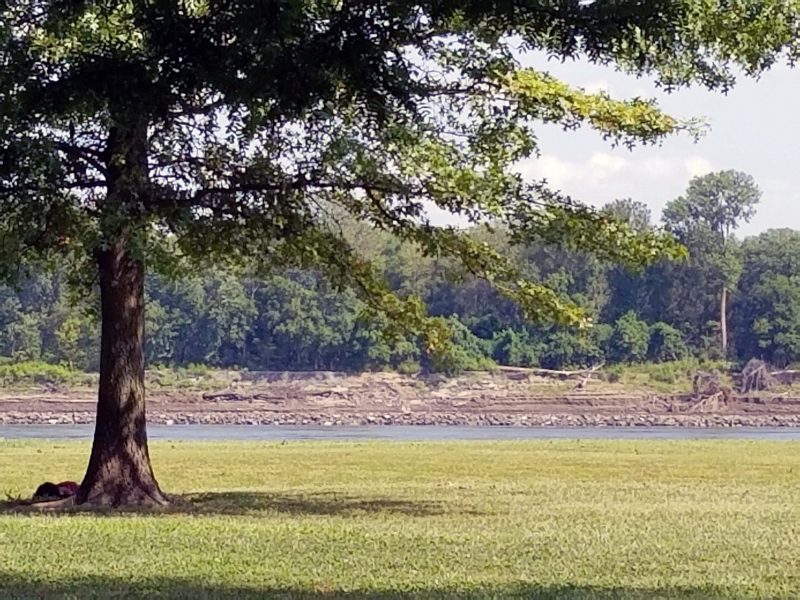
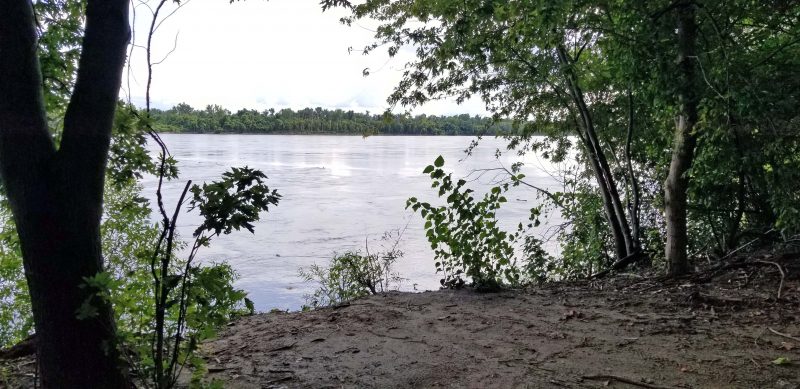
The river is low because the rain turned off about three weeks ago. After record rainfall all year, the weather has been very dry. The rivers were unusually high all summer until recently. Look at the opposite bank in the photo below. You can see a large log the river deposited at the top of the bank (center), as well as the grooves cut into the bank delineating the recent dropping of the water level to where it is now.
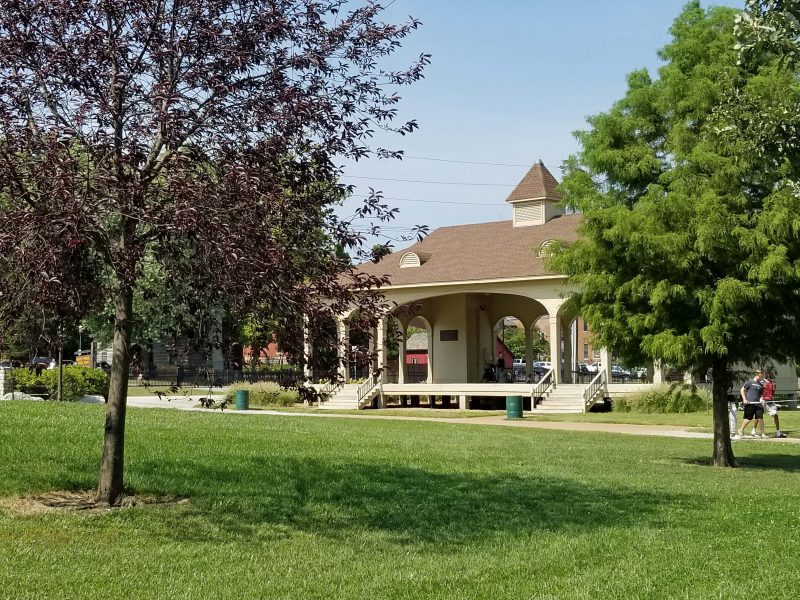
We biked the entire length of Frontier Park to the bandstand, our past starting point for our incompleted ride to the beginning of the trail at Machens. (Two miles to go after that section is re-opened.)
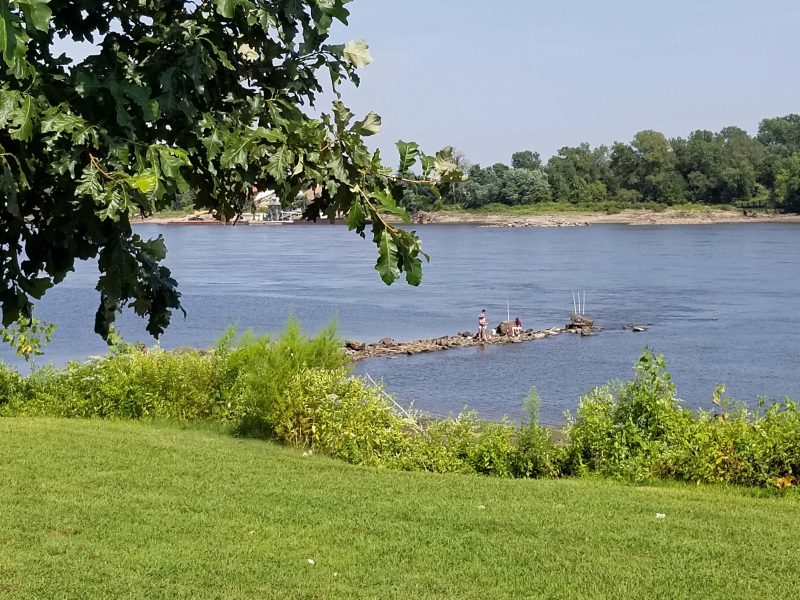
The river is low enough for the breakwaters to be visible. Some people are taking advantage of that to do some fishing.
We turned around and headed back through the park for our return trip.
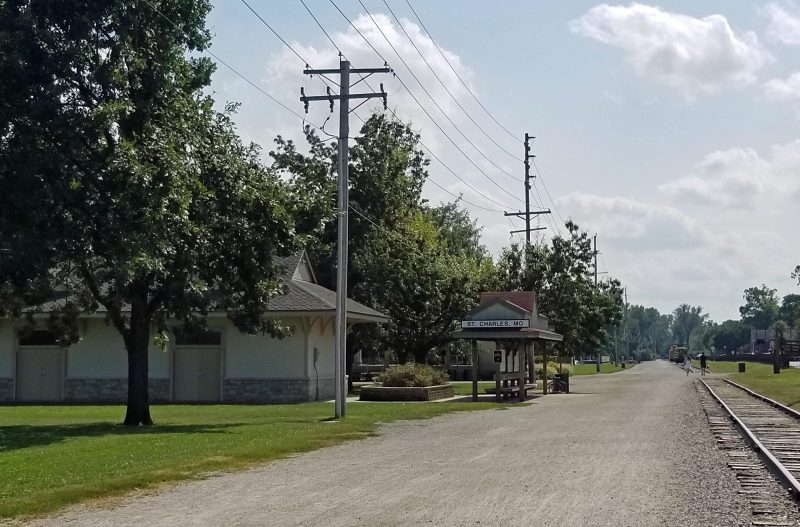
Here’s the St. Charles trailhead marker for this entrance to the Katy Trail.
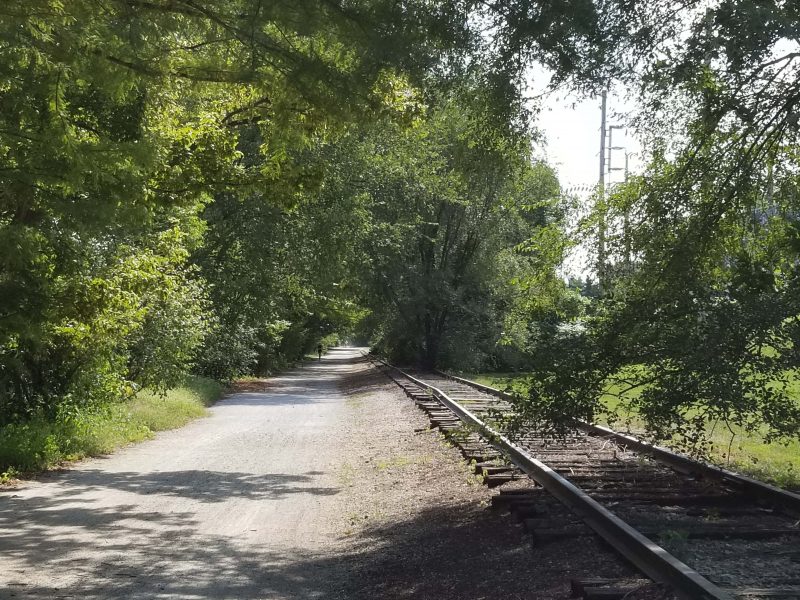
Just outside of Frontier Park, it’s a pretty ride between the trees on the riverbank and the original railroad tracks.
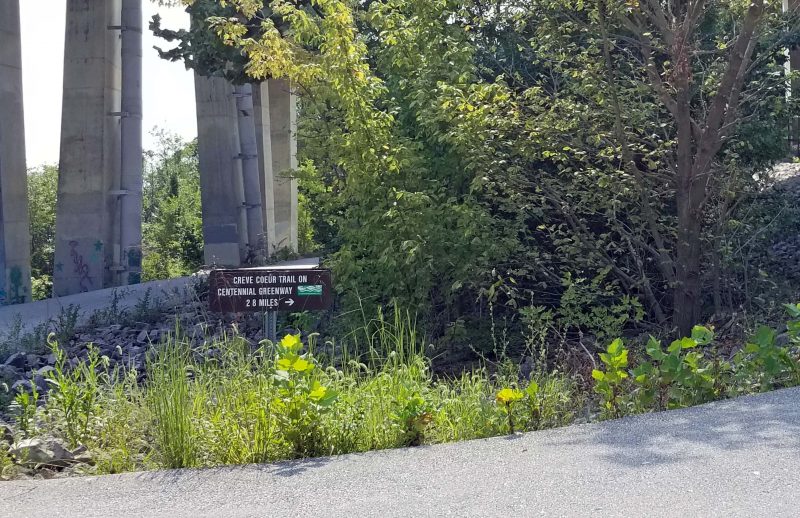
We biked past the Creve Couer trailhead that goes up to MO Hwy 364, which crosses the Missouri River. There’s a bike lane on the outside of the bridge that connects the Katy Trail to the Centennial Greenway in St. Louis County. That’s a greenway Ted and I want to ride–hopefully, sometime this fall.
There’s a similar bridge / bike crossing at the I-64 bridge that connects the Katy trail with the Monarch Levee trail in St. Louis County, another place Ted and I want to bike this fall. The Monarch Levee was the most severe of the levee failures during the Great Flood of 1993. That levee failure put the Chesterfield Valley under 20+ feet of water. Some damage to trees is still visible.
Yup. My bike looks like I rode it thirty miles on the Katy Trail. I have a clean-up job on my agenda.
But before we clean the bikes (lower right corner of the photo), Ted and I need to cool off in the pool. It was another great bike ride.
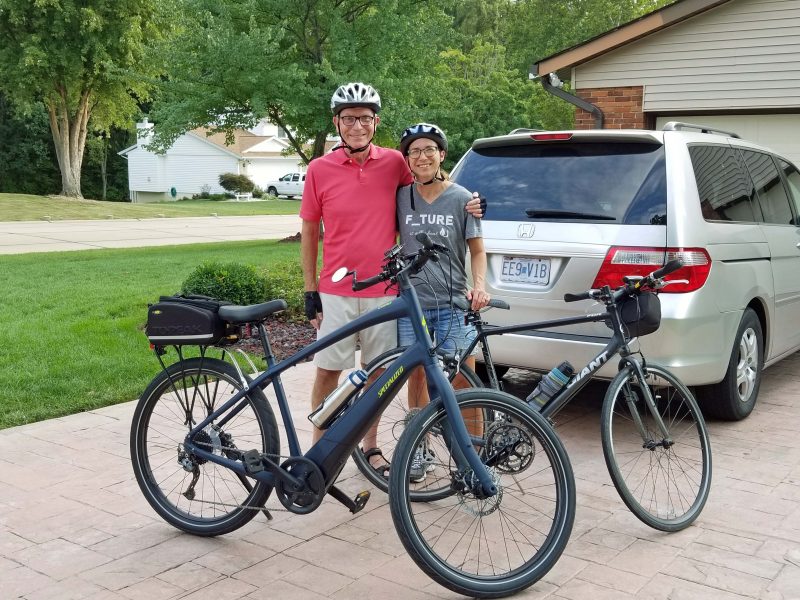
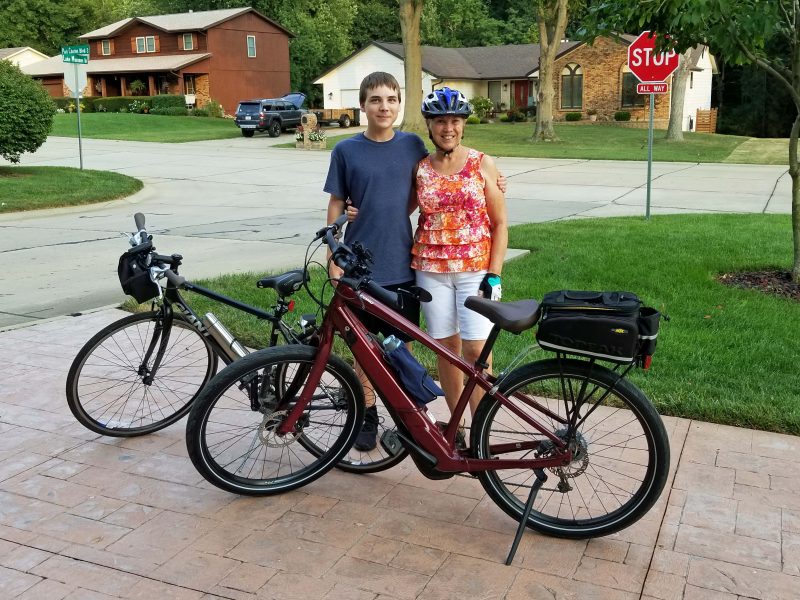
My readers know that Ted and I have been doing a lot of biking this year. We like biking on the greenways and on the bike trails, but most of the time we bike around our neighborhood. People along our most frequent route recognize us and one guy calls us his “neighborhood bikers.” It’s easy to put on 10-20 miles without crossing a major secondary road or a highway, but some variety would be fun. Kari and Dylan agreed, so we decided to bike each other’s routes for a change of scenery.
Last week, I went biking with Dylan. It was nice to ride through McNair Park, go into downtown St. Charles, and ride along the Missouri River instead of seeing the same old, same old on my usual rides. His route has a lot of hills. The original name of St. Charles wasn’t Les Petite Côtes (The Little Hills) for nothing.
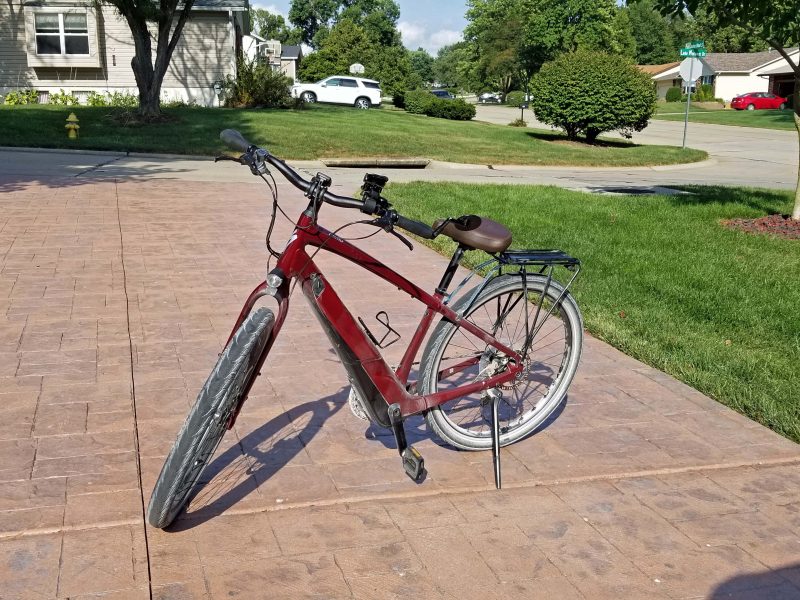
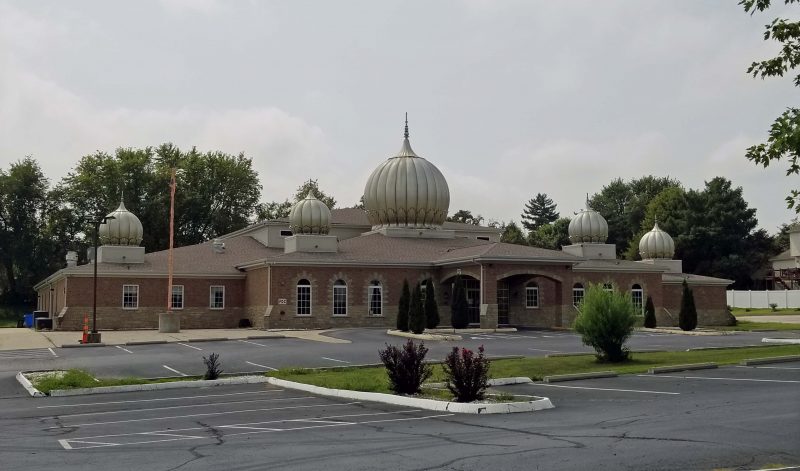
In exchange, Kari and Dylan came over to check out our route. It, too, has a lot of hills. That’s why Ted and I like our ebikes so much. Although our route has a limited variety of scenery, it goes through ten subdivisions circling ours and includes a Sikh Temple.
We all agreed that the change of route and scenery was fun. Kari has biked the Dardenne Greenway with us, and she suggested we ride there next time. Dylan hasn’t been on that greenway yet and we all think he’d enjoy it. Until then, here are the happy biking buddies. Notice that Dylan is now taller than I am. That leaves only Teddy and Sefton still shorter than their grandma.
This sad story begins on July 29, 2020–the day I took the picture below.
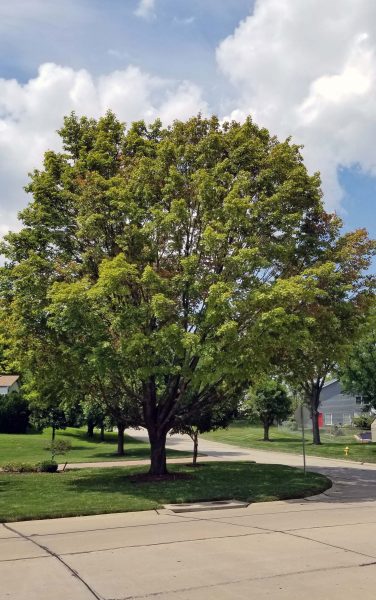
Ted and I noticed lots of leaves dropping from our sugar maple tree in July. When we looked up, we saw that the leaves on some of the branches were turning brown–not something we expected during mid-summer, especially with all the rain we’ve had this year. If you look closely at the picture above, you’ll see some of the leaves turning brown. I took a picture of the tree right away so I’d have a good memory of it before it got worse. So many leaves dropped so quickly (below), Ted had to rake the lawn before mowing it.
We called Russ, an arborist, who diagnosed the tree as fatally ill with a wilt disease and probably some weaknesses resulting from storm damage (ice, wind) several times over the years. While he was talking with us, leaves fell like large brown snowflakes. Russ said he’d never seen a tree deteriorate that fast. Because of all the tree removals he had already scheduled, Russ’s company couldn’t come until yesterday. I guess it isn’t my imagination that wherever I go this year, someone seems to be taking down mature trees.
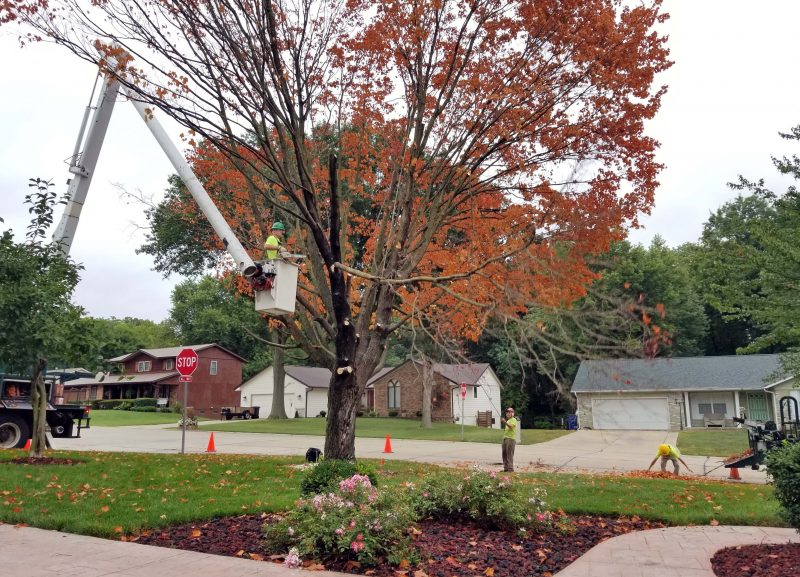
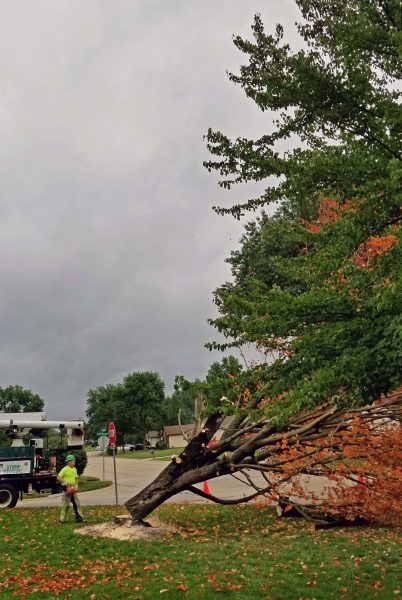
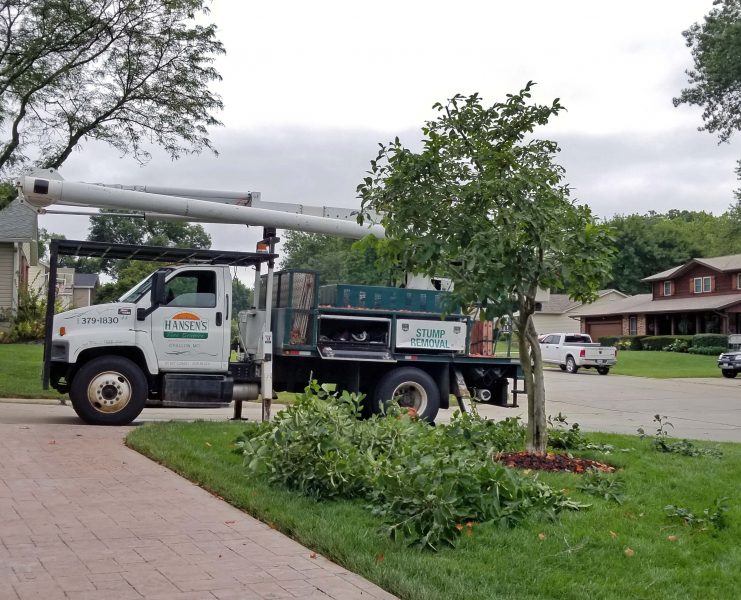
The tree removal crew showed up right after 6:30 a.m. and got to work. They powered up the cherry-picker and Doug climbed in, took it up, and fastened pulleys in upper branches of the tree. Then he strung rope through the pulleys for the guys below to pull, guiding the branches safely down. (See the guy in the center of the picture.) Sometimes the guy pulling the rope would walk it around the tree’s trunk to wind it tighter and keep it from slipping when a large branch fell. Compare how the tree looks to only 35 days ago in the first picture.
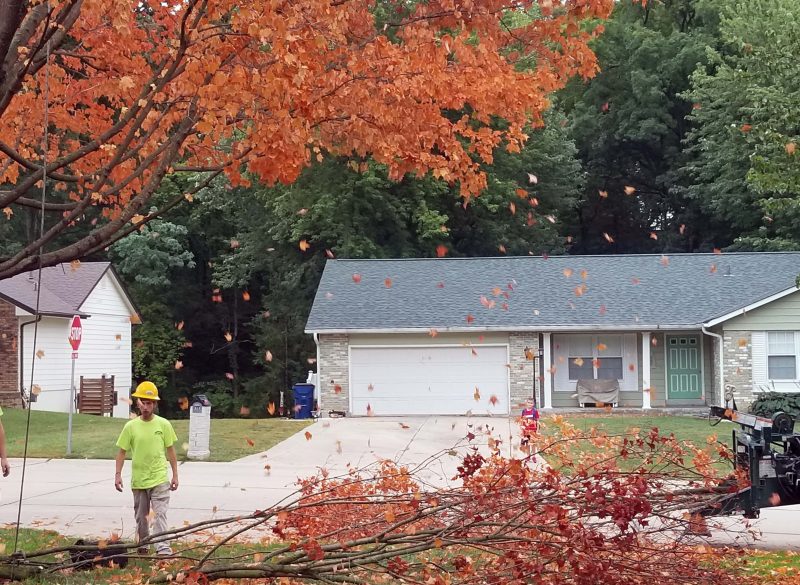
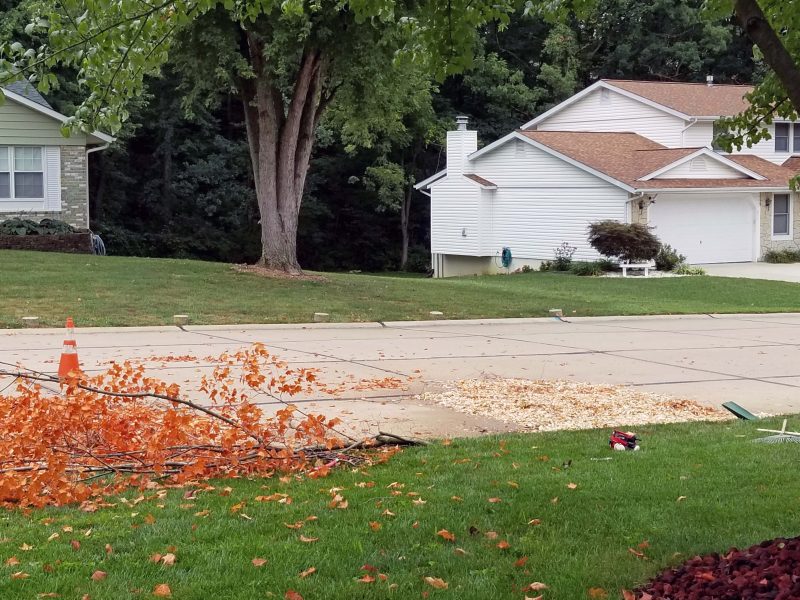
Notice what a pretty color the leaves have turned (below). I called the arborist two days ago to ask if there’s a chance the tree will live because it’s so nicely colored. Unfortunately, he said, that’s a definite sign it’s dying because the other maples in the area are not even beginning to show fall colors. As cut branches fell, the dead leaves created colorful showers.
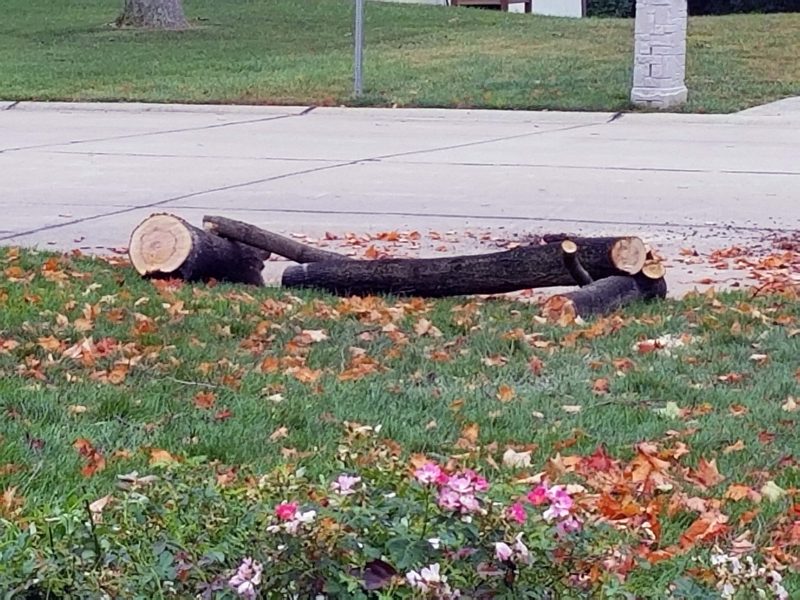
When the branches from the driveway side of the tree were stripped, one of the guys re-wound the rope in the rope-holder bucket. I wondered why he was doing that. Didn’t they need to use the rope to safely bring down the branches on the other two-thirds of the tree? They picked up some of the larger branches and laid them out as shown below. Ted suggested that maybe they were going to build a little fort. Instead, they sat on the branches and had a smoke break.
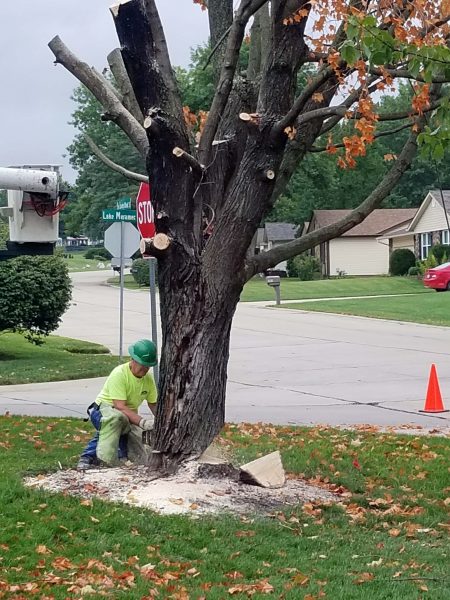
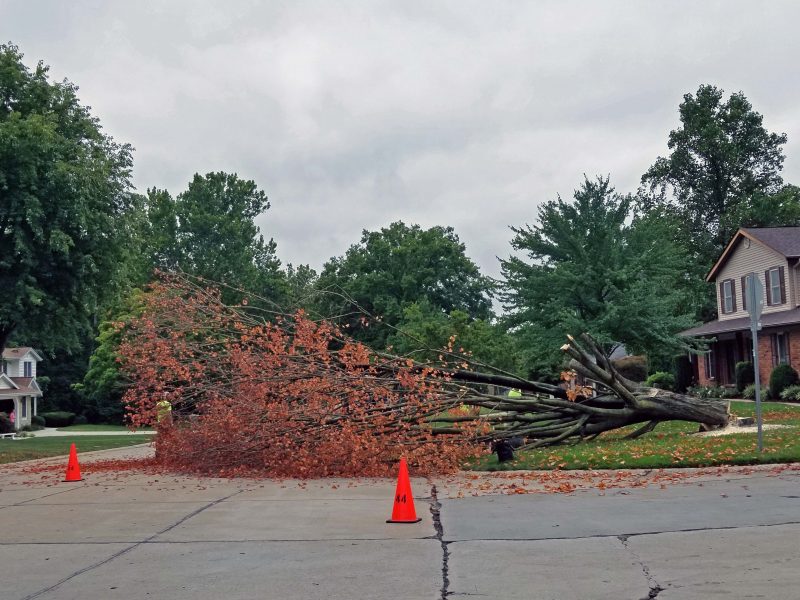
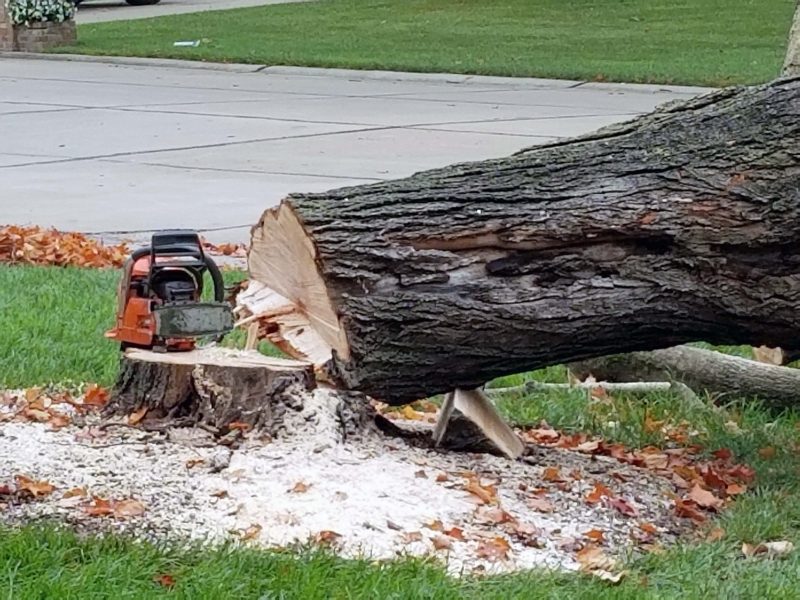
When Doug moved the traffic cones to block the street in front of the tree and then cut out a wedge at the base of the tree on the street side, the light dawned on me: they were planning to drop the rest of the tree across the street. They only cut off the other branches to avoid damage to our driveway and other plantings. Notice the split down the trunk where the tree twisted from wind storms and from the weight of ice storms over the years. In the picture below, Doug’s chainsaw is nearly all the way through the base of the trunk. Going . . . going . . . going . . .
Timberrrrrrrr!!!!
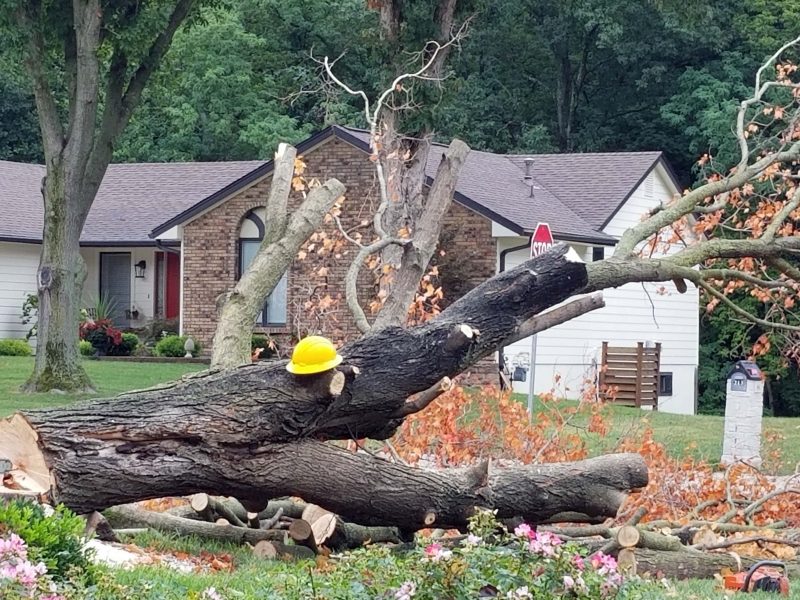
And it’s over. The log “fort” was a bridge to cushion the blow of the tree hitting the ground. I have to admit that I got a little bit choked up when the tree fell. This was one of the first of three trees we planted in our yard in 1980. At one point, for some unremembered reason, we talked about removing it, but Jeff pleaded with us to keep it because it was his favorite tree. Doug estimated the height of the tree at 50-55 feet. So sad.
The tree also landed right on the wedge Doug cut. He told me that was unintentional.
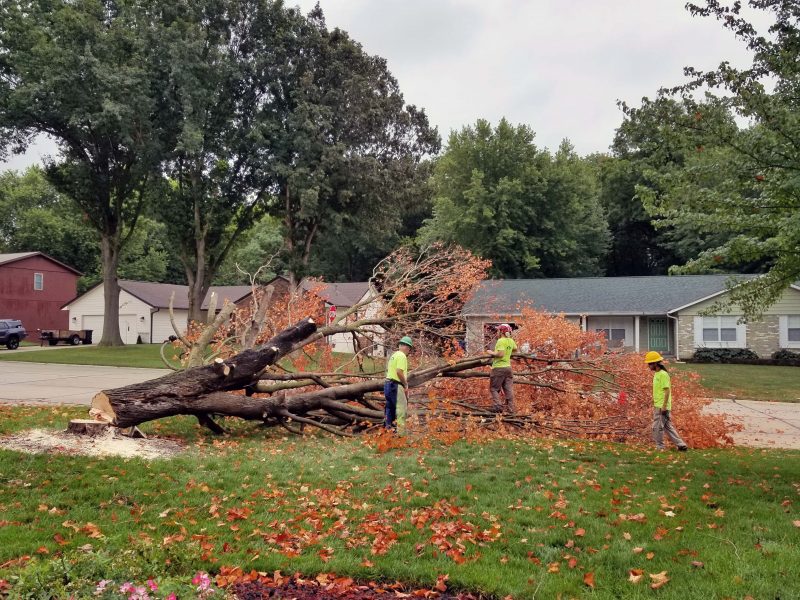
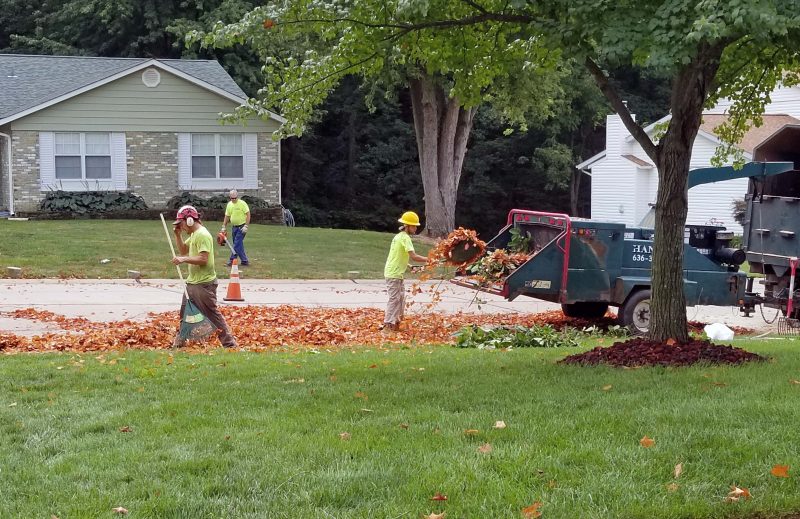
The guys got to work, cutting the fallen tree into manageable pieces, then hauling them to the mulcher. Doug, on the left, is the senior member of the team; the guy on the right is the junior member. He wasn’t allowed to use a chainsaw and was limited to picking up branches, feeding them into the mulcher, re-winding the rope, raking leaves, etc. The guy in the middle helped with everything except getting into the cherry picker bucket.
Things were going well until they weren’t. Doug smelled diesel fuel and found a leak in the pump line. The guys shut down the mulcher and had a little conference. Turning off the motor stopped the leak. It also stopped the work. The crew quickly covered the leaked fuel with sawdust and leaves to absorb it. The two junior members of the crew took the mulcher back to home base to exchange it for a working model. That took about 90 minutes. Doug had to stay with the tree because it was still blocking the road and wasn’t completely cleaned up. (Safety and liability, I assume.) You can see the pile of leaves and sawdust in the road. It looks inert, but it’s busily absorbing diesel fuel.
Break time while we wait for a different mulcher.
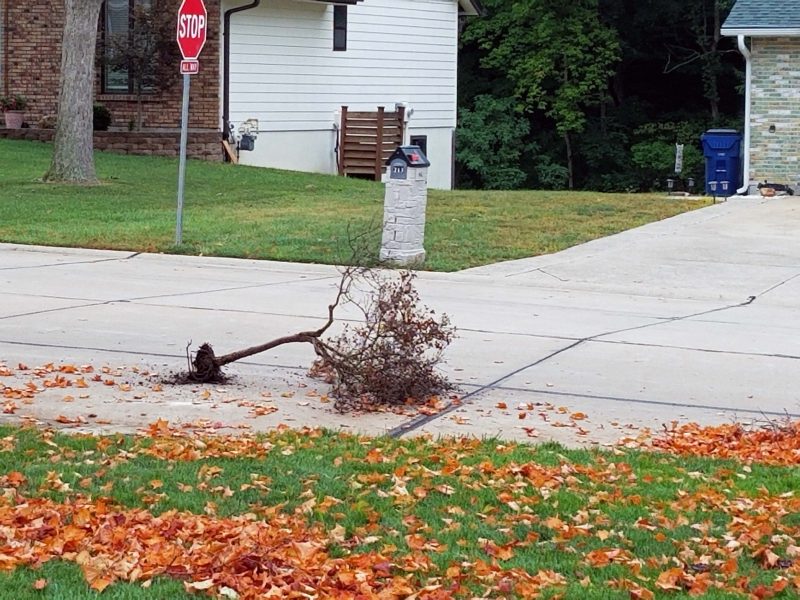
Our lilac tree also died this year and Ted recently uprooted it. I asked Doug if he’d mind running the lilac tree through his mulcher. He told us to bring it out. It looks so small compared to the sugar maple.
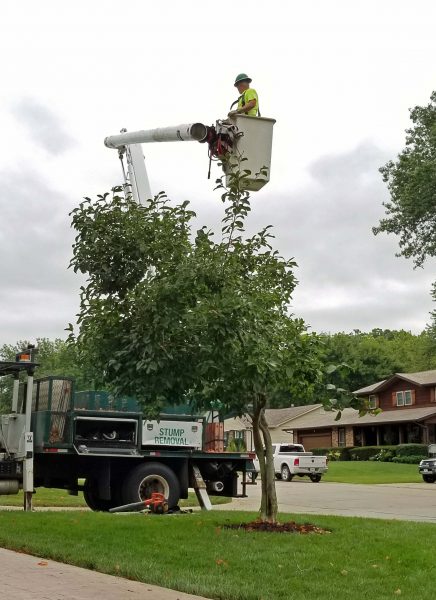
While waiting for the replacement mulcher, Doug got to work on the magnolia tree. Because it grew in the shadow of the sugar maple, the side next to the sugar maple didn’t fill out as well as the side next to the driveway. Doug evened it out. He took the cherry picker up for a bird’s eye view of the tree’s shape and then he went to work.
The tree is smaller now and Doug said it won’t bloom next year, but it should grow faster and more evenly since it now stands alone.
The clean-up work resumed when the guys came back with a working mulcher. They totally cleaned up our lawn and the street and even went across the street to clean up Jim’s lawn and driveway where a lot of leaves had fallen.
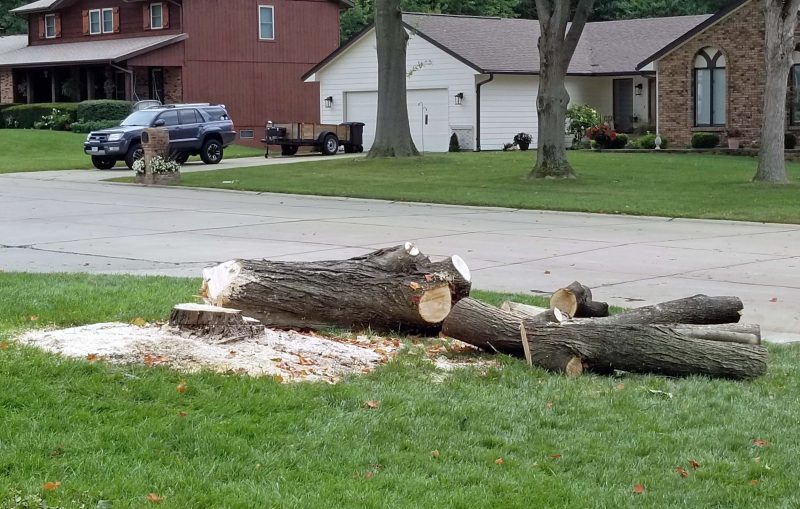
When they left, this is all we had of the tree. They told us the crew with the forklift would probably arrive later today, and definitely this week. They were here in less than 30 minutes.
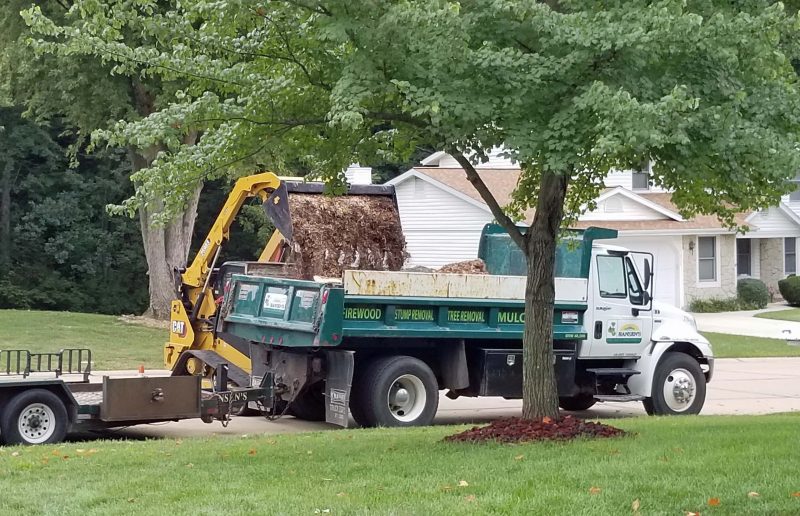
The tree company has a good thing going. Their trucks advertise that they also sell firewood and mulch. They charged us to take down the tree, then they took away a truckload of mulch from shredding all the branches, and now they’re taking away big logs that will make firewood for them to sell. It’s kind of a commercial version of The Giving Tree. Hopefully, this contributes to reducing the cost of tree removal.
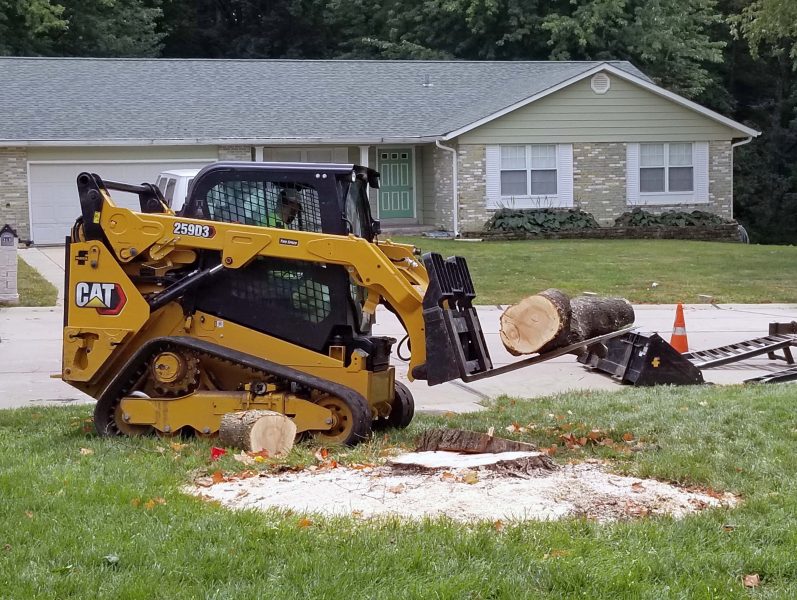
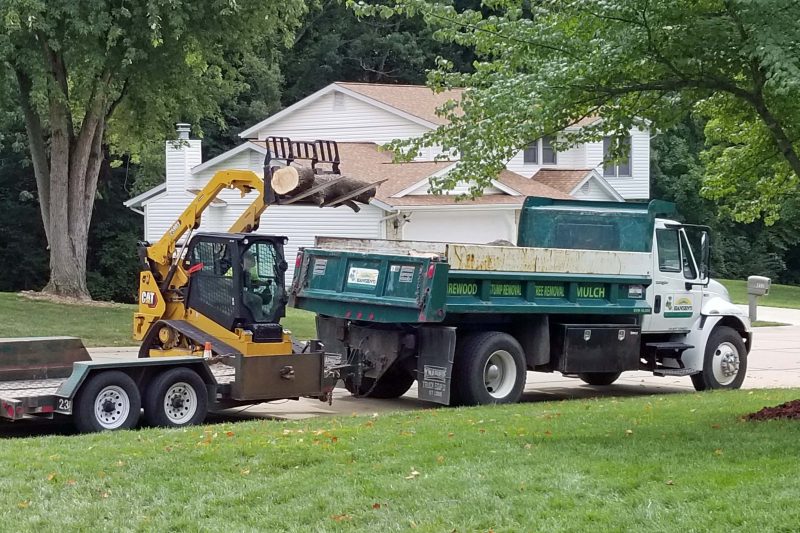
Here goes some of the firewood-to-be on the forklift. Up on the fork, then down into the truck.
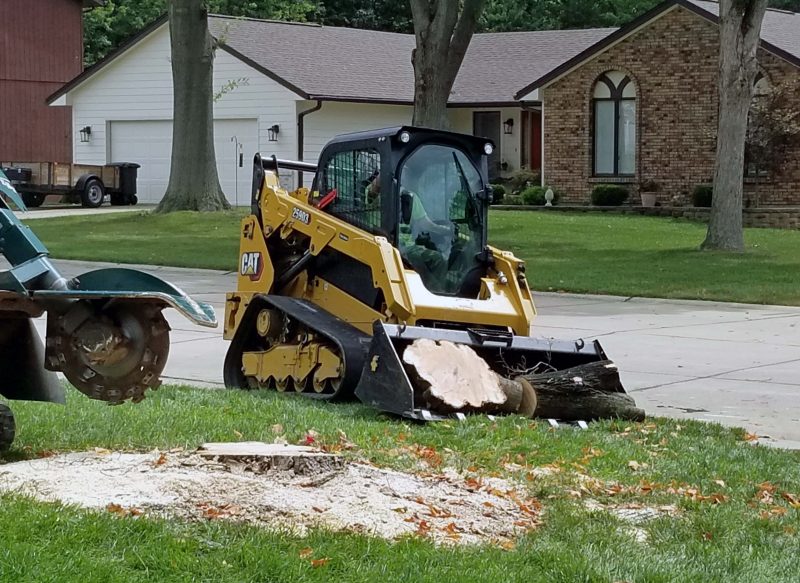
The guys cut the stump lower for grinding (stump grinder approaching from the left) and that’s when I saw what an interesting shape the tree trunk had.
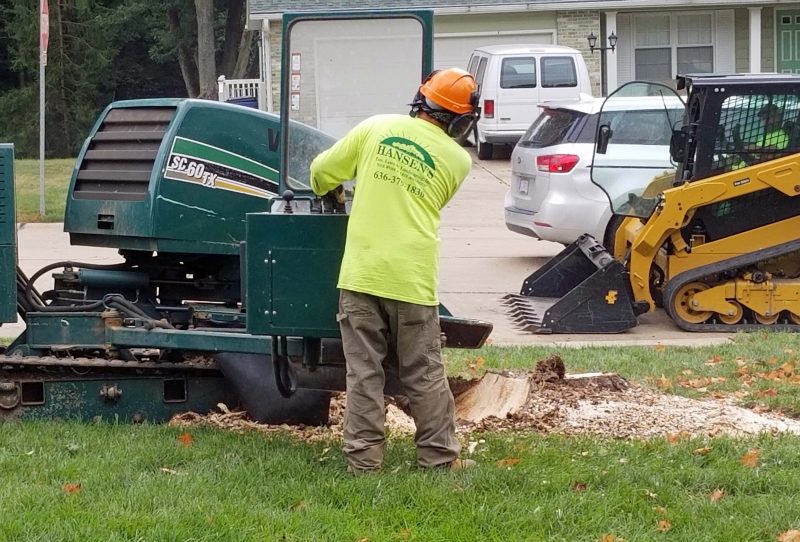
The stump grinder guy needs lots of patience. The equipment moves very slowly into position. The blade is speedy, but he has to move it slowly over the upper edge of the trunk, then slowly back, then drop it a bit, and then repeat–over and over until he gets all the way through the stump. It took him about 30 minutes to grind our stump. It looked like a boring, but dangerous job. When he finished, he very slowly directed the machine back to his truck.
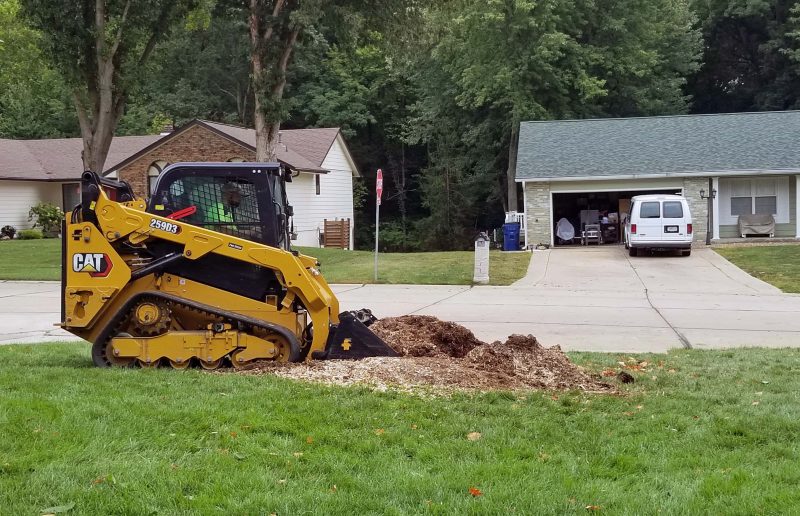
The forklift returned to the scene of the damage to pick up the piles of mulch created by the stump grinder. From the stump, into the truck, and then for sale as mulch.
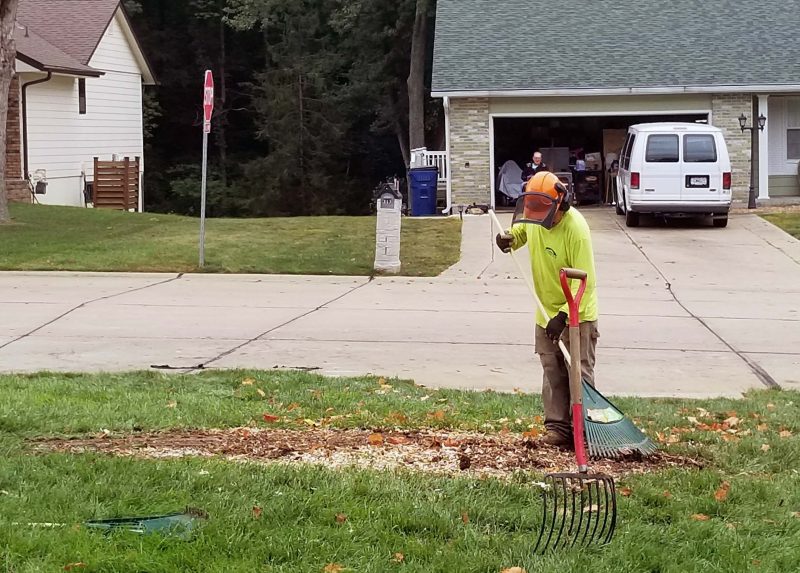
The guys raked everything smooth before they left. You can see our neighbor, Jim, watching the fun from his garage.
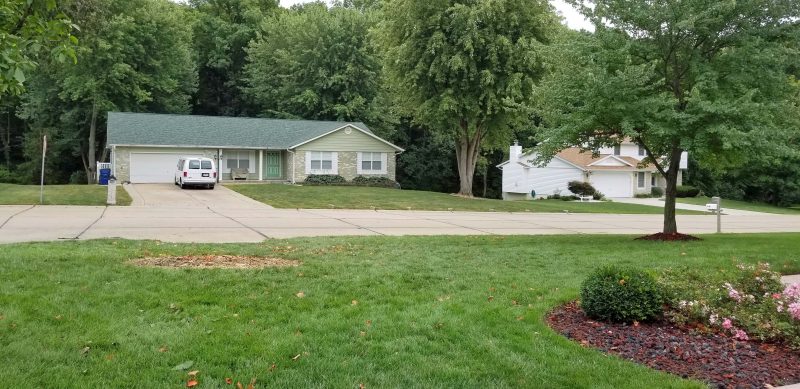
When the yard, the street, and the neighbors’ yards were clean, the crews left this for us.
Here’s our new look.
While the tree crews were working, Ted and I were sitting in the driveway watching them. Neighbors and strangers stopped to tell us how sorry they were to see this tree go. Several mentioned what a beautiful tree it was and how much they’ve enjoyed it every fall. One lady even said she always thought the fall colors of the tree perfectly complemented our house. After 40 years of watching our sugar maple grow and turn color, we’ll never see it again. I’m glad I took this October picture last year.
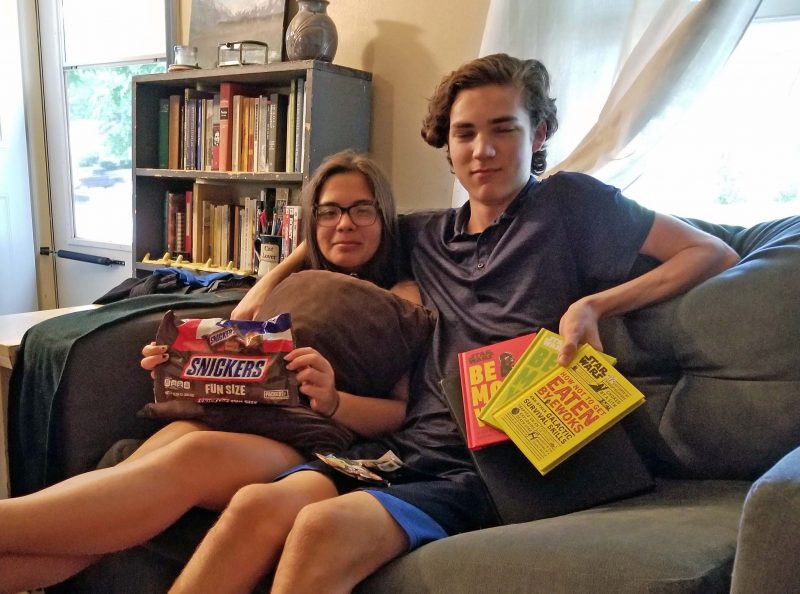
Yesterday was Sky’s birthday. He invited us to join him and the family for dinner and the evening. What do you buy a 17-year-old boy? Sky sent us a list of things he likes and–surprise!–that’s what we bought for him.
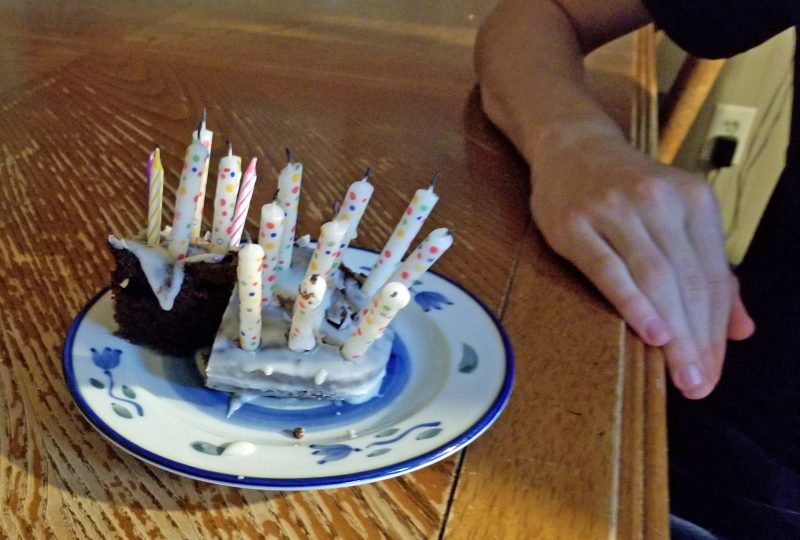
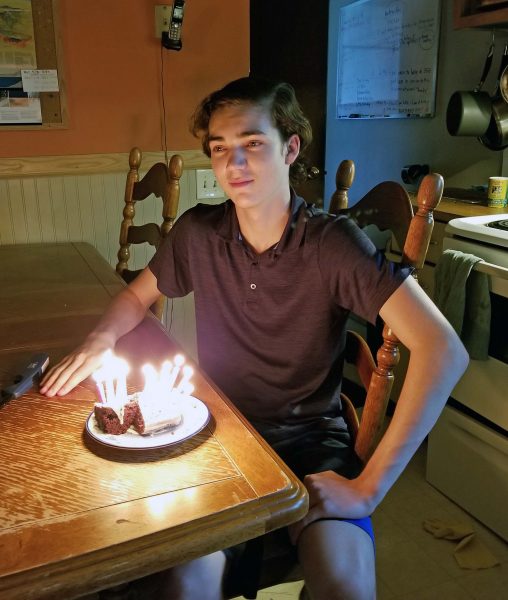
We had a delicious dinner followed by birthday cake made and frosted by Sky and June. Kari cut a piece of cake to hold the candles so that when Sky blew them out and possibly spread germs and spit on the cake, the rest of us would be COVID-safe. She couldn’t get all the candles on one piece, so she had to cut another.
The closely-spaced candles created quite a blaze of light. The spacing also made it easy to blow them all out on the first try. When Sky took the candles out to eat the cake, it looked like it was perforated to break into small pieces.
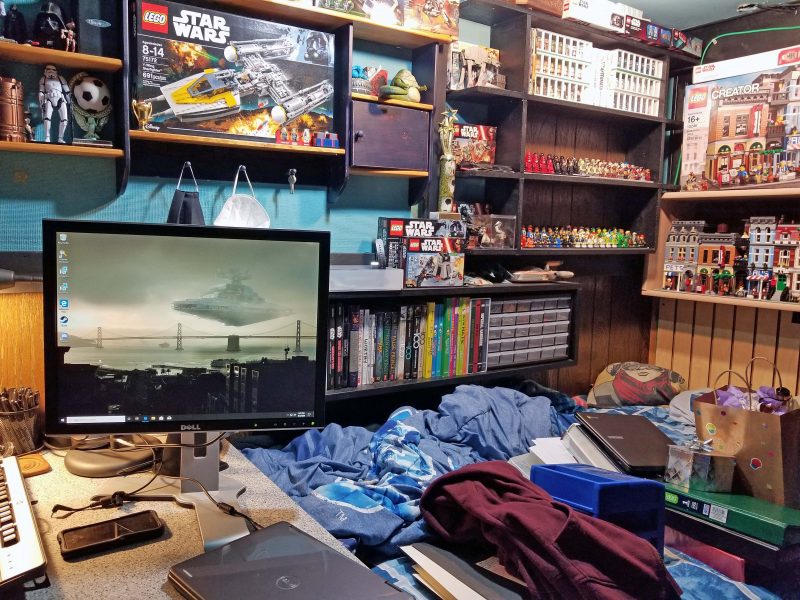
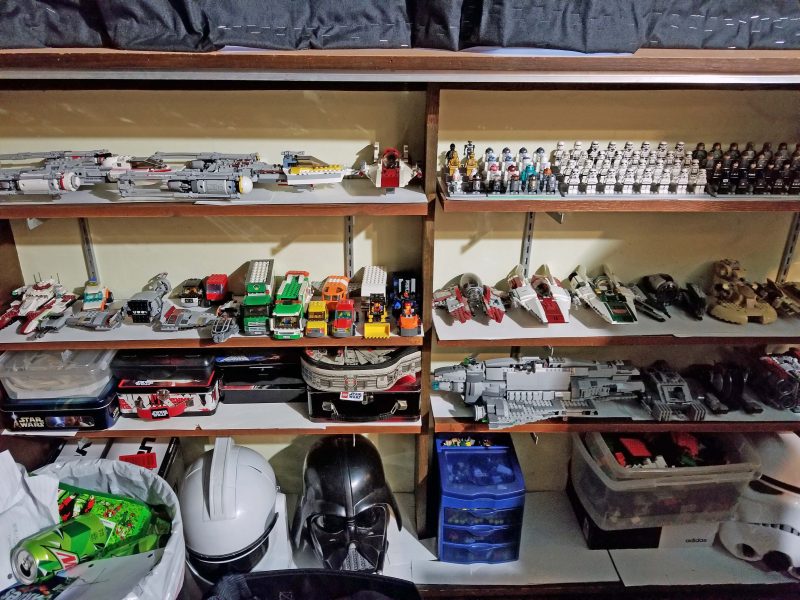
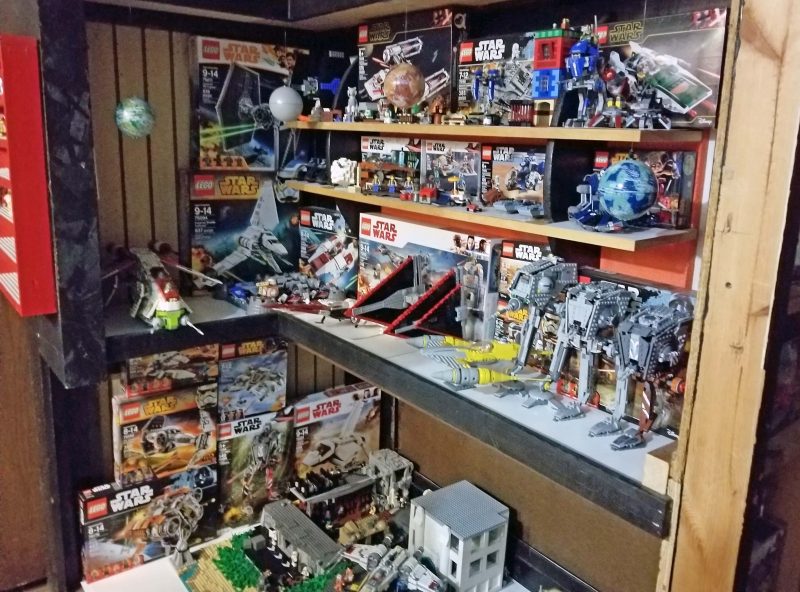
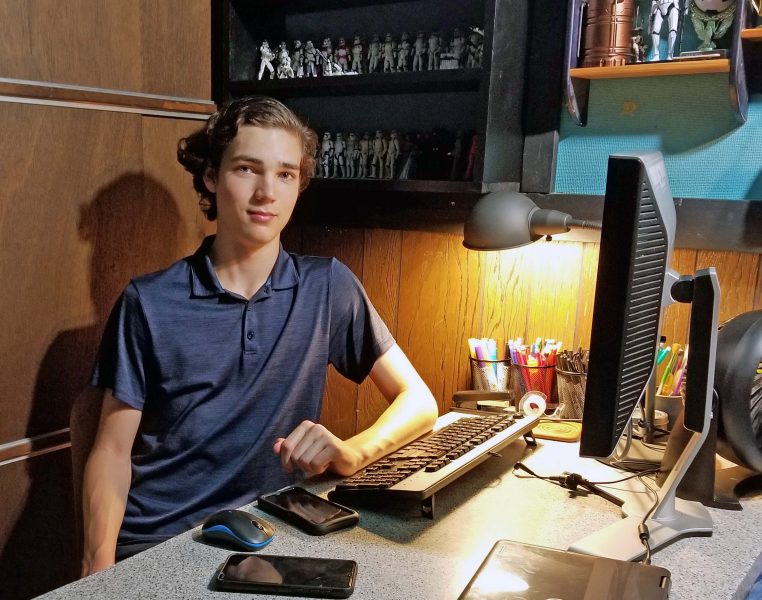
The evening included a tour of Sky’s room and his presentation of the new computer he received for his birthday. He says a full PC set-up will make his online school work easier to do than a Chromebook or a laptop. There’s a definite theme to his room. Check out the background picture on the PC monitor and items on the shelves. Sky explained that the bed is messy because the table on which he keeps all those items was pressed into service for dinner.
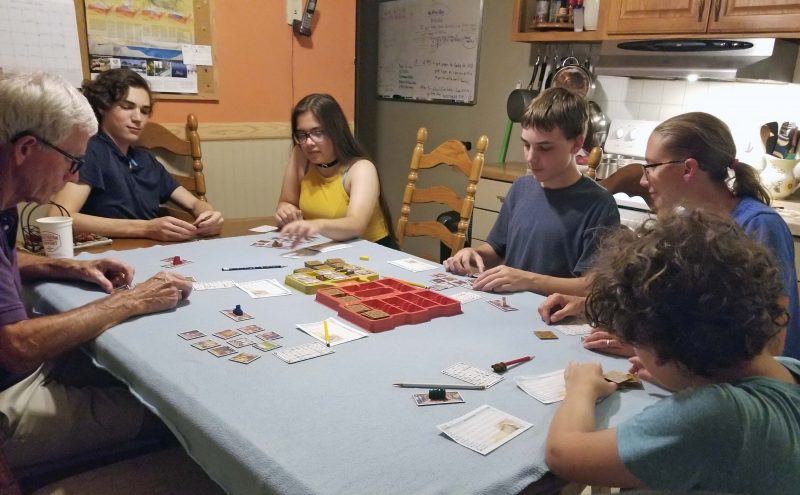
We finished the evening with two rounds of “Between Two Castles,” a board game of Dylan’s in which players help design castles for Mad King Ludwig. It was fun and easy to learn.
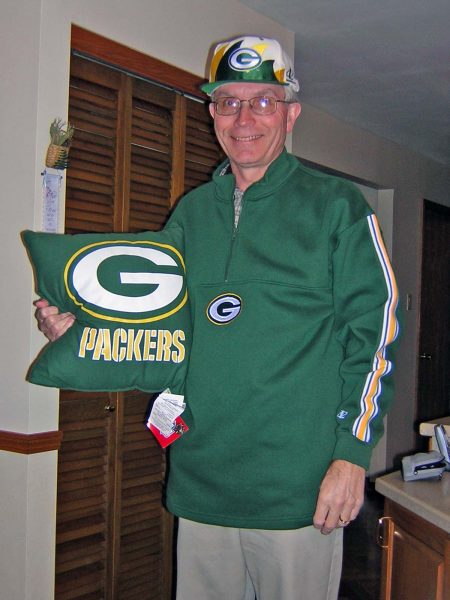
I was looking for a photo and found this while I browsed. It’s from Christmas 2003 and I think all that green stuff was from Kathy and Annette. Go Pack!
My Aunt Ruth spends a lot of time on the internet and finds a lot of funny cartoons. I enjoy seeing and sharing them. Read on, smile, and maybe even laugh out loud.
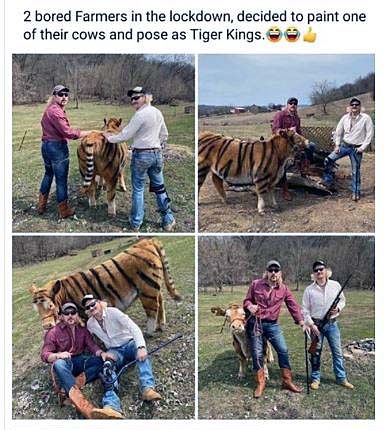
Here are some COVID-themed smiles.
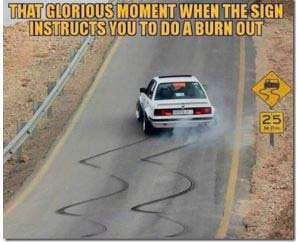
Correction: That “tiger” is a heifer, not a cow (not fully grown, no udder) but I guess the photographer didn’t know the difference. Here’s some non-COVID humor.
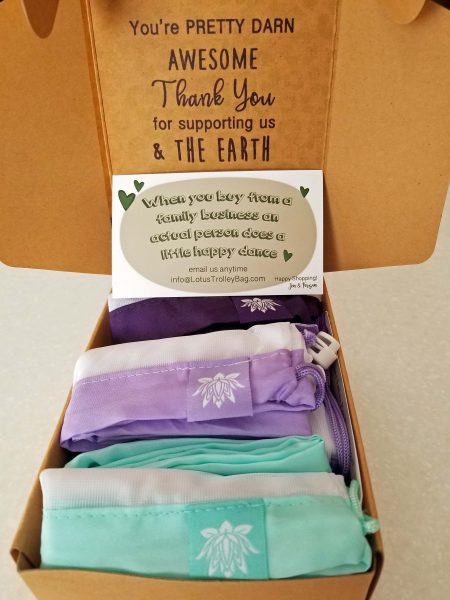
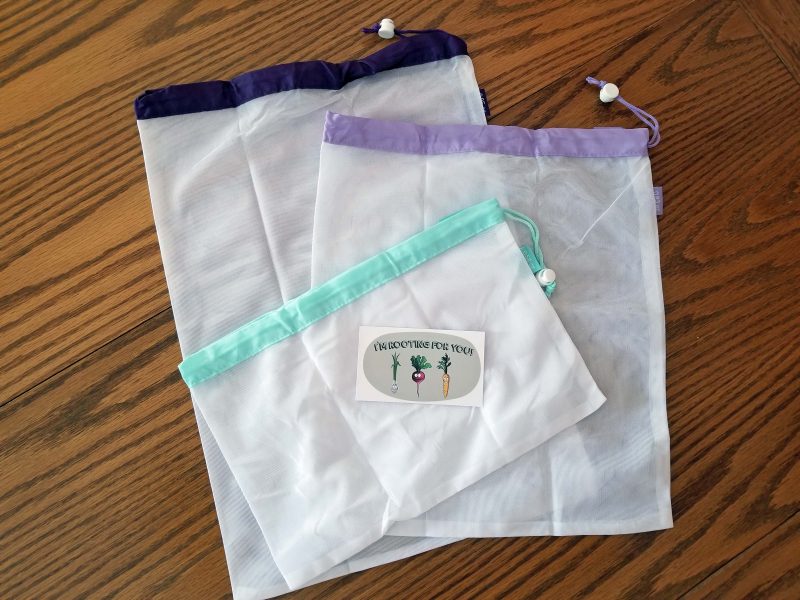
Kari generously shares the fruits of her garden with us, usually in one of her produce bags. She said she bought the bags at the grocery store and uses them when she buys produce, rather than putting it in a store-provided plastic bag. I thought it would be great to have bags of my own, but I couldn’t find them at the grocery stores. Enter online shopping. The bags just arrived and I’m a happy customer.
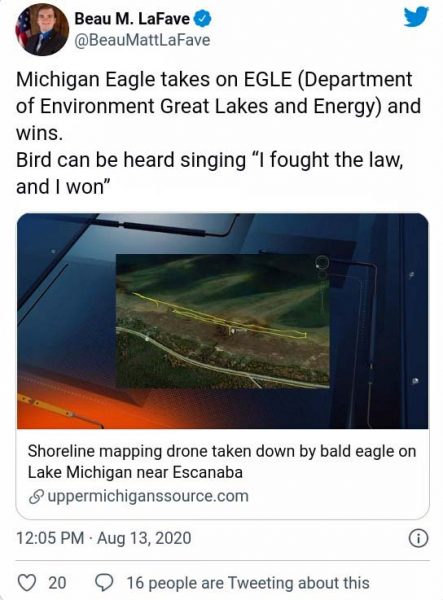
USA Today reported that a pilot from the Michigan Department of Environment, Great Lakes, and Energy (EGLE) was using a drone to map shoreline erosion on Lake Michigan when he began having reception problems. He pressed the button to recall the drone and his video feed showed the $950 drone coming back to him when its propeller suddenly came off and the drone dropped from 22 mph to 10 mph before plummeting into the lake.
The pilot spotted the culprit: a bald eagle “flying from the scene of the crime.” The motive for the attack is unknown, but the leading theories are territorial disputes and hunger. EGLE reported there is little that can be done legally about the attack because the Michigan Department of Natural Resources “has no mechanism or authority to issue corrective action notices against wildlife.” The good news is that Michigan has a thriving bald eagle population. There were only 79 nesting sites in the 1970s. That number grew to 849 in 2019.
The pilot was unable to find the fallen drone, and reported it is “resting comfortably” on the bottom of the lake. State Representative Beau LaFave tweeted the following:
Ted and I finally went more than 20 miles from home! Yippie! We drove to Kirksville to spend a day with Kathy and Annette. The weather was absolutely gorgeous and we had a nice drive and a wonderful day together.
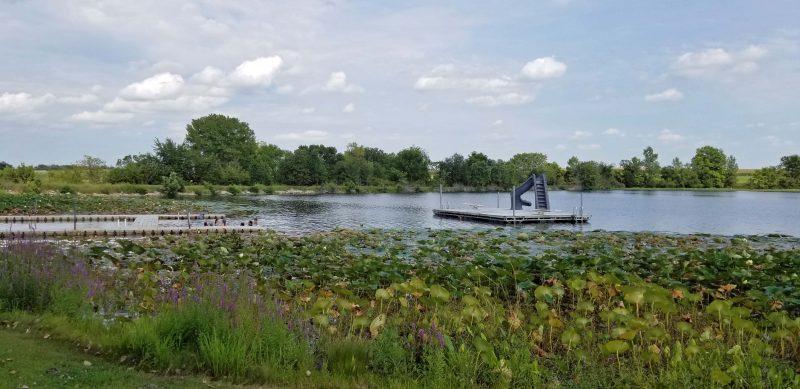
We had lunch at the house and then headed for Santa Fe Lake and spent the afternoon there. There were a few other people at the lake, but they were all watching their children play in the sandy beach area and on the raft which has a great slide. Splash!
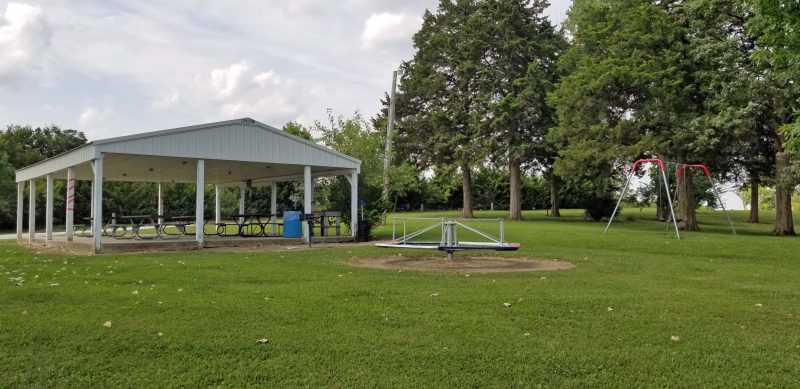
Later in the afternoon, a group came to celebrate a birthday in the pavilion. We saw them cutting and passing the cake around, but they didn’t offer any to us.
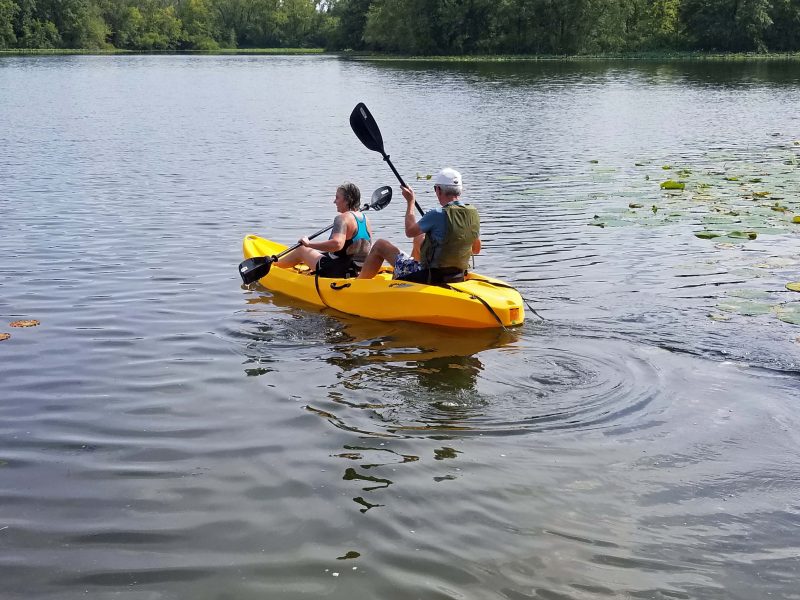
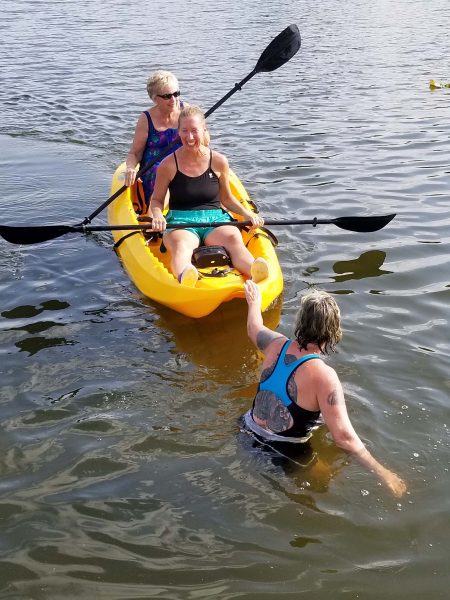
Annette and Ted took the first turn paddling the kayak around the lake. It was about a 45-minute circuit, but the timing depends on the paddlers’ moods. Shall we just stop and admire this view for awhile? Shall we follow the shoreline all the way or cut across this little cove?
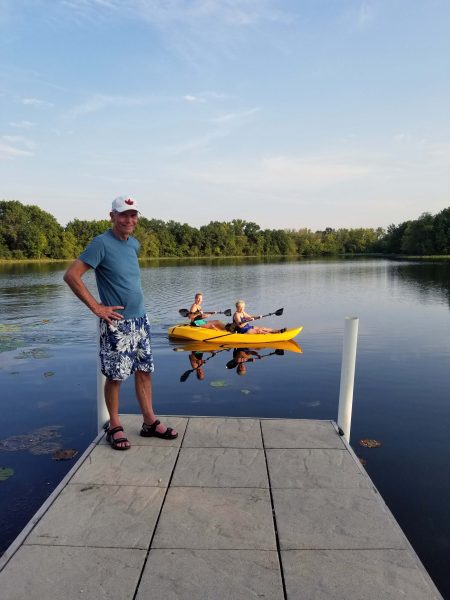
Luckily, there was a lookout posted to spot Kathy and me when we returned to the pier.
Annette pulled us up on the shore to stabilize the kayak before we climbed out.
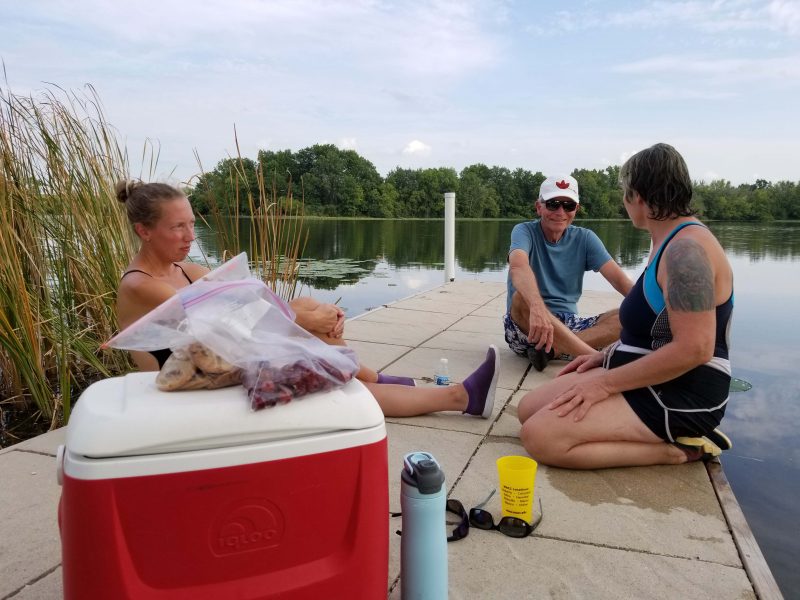
The girls packed an ice chest full of snacks. We all agreed that for some unknown reason, being on the water always makes us hungry. There was plenty of food, so no one had to go hungry. Whew!
We had a pizza dinner at the house and some more visiting time, before Ted and I headed home. After being home for six months, it was wonderful to escape for a day!
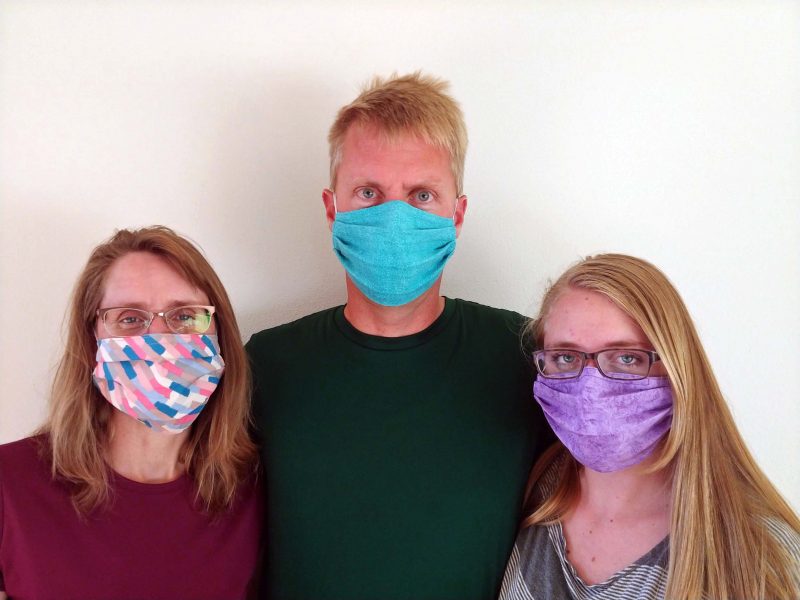
I thought I was finished with my Family Mask Project, but it returned due to popular demand. Jeff saw my blog post about the masks I’ve made and asked if I’d make some for him, La, and Kyra. Well, of course I will!
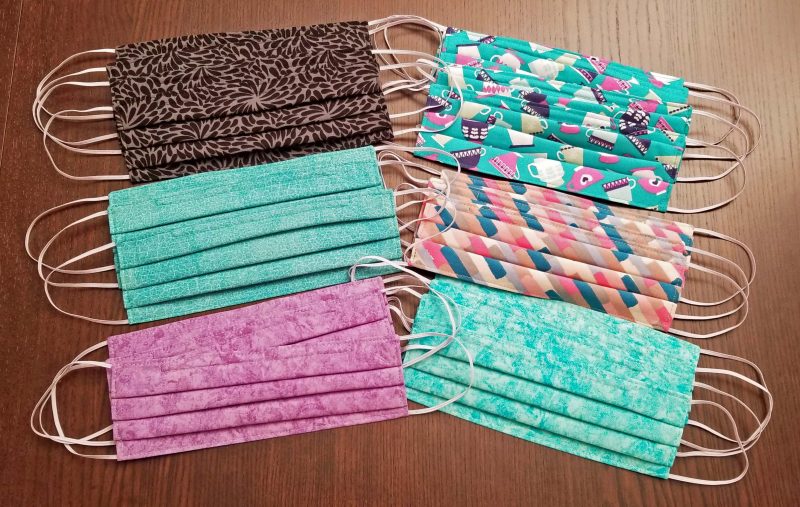
I bought some more fabric, got approval from Jeff’s family for six of the seven fabrics I chose, and went to work.
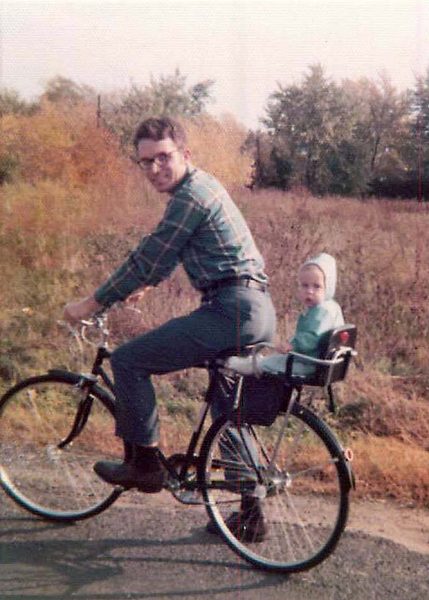
I’ve had bikes on my mind (see previous posts)–probably because Ted and I have been biking so much during the past six months of our COVID-limited activities. Our recent bike activity reminded me that Ted and I have always biked, and I remembered a picture from October 1972. Jeff is eight months old and is already a bicycling veteran. After Kathy was born the following spring and was able to sit, we bought a matching baby bike seat for her and mounted it on my bike.
Compared to today’s baby bike seats and baby bike helmets, this doesn’t look very safe, does it? No helmet for Ted (or me) at that time either.
I made a few face masks for Ted and me and for Kathy, Annette, Kari, and Teddy in early April. In mid-June, when COVID-19 case numbers started spiking following the Memorial Day holiday, it became apparent that we’d be needing face masks for more than a few weeks. I decided to embark on a Family Mask Project as my contribution to fighting COVID-19. My previous recipients were happy to have me make more masks for them so they wouldn’t have to wash theirs so frequently.
Finding fabric was never a problem, but I couldn’t find interfacing, thread, or elastic in April and had to use what I had in stock at home. I had a large box of leftover thread from previous sewing projects, two yards of sheerweight interfacing, and a few yards of elastic on hand. When the elastic ran out, I substituted wide rubber bands for ear bands. The number of masks I made was limited to the yardage of interfacing I had. By late June, the supply chain was catching up to demand. I found elastic and interfacing online, bought some more fabric, and returned to my box of leftover thread.
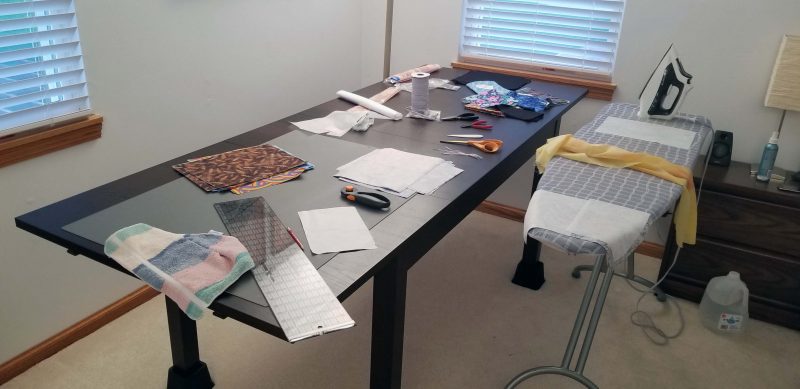
I love my project room. I extended my table to its full length and spread out my supplies and work area. It was handy to leave everything in place between sewing sessions and not have to pick up the mess because I needed the space.
See how handy the ironing board is to the table? One day, I reached across the ironing board to place an ironed mask on the table and bumped my inner left arm on the iron. Ouch! According to the internet, irons reach 400 degrees. It was a bad burn, but is healing well. After that, every time I picked up the iron–even weeks later–the burned spot actually tingled in fear of repeating that experience.
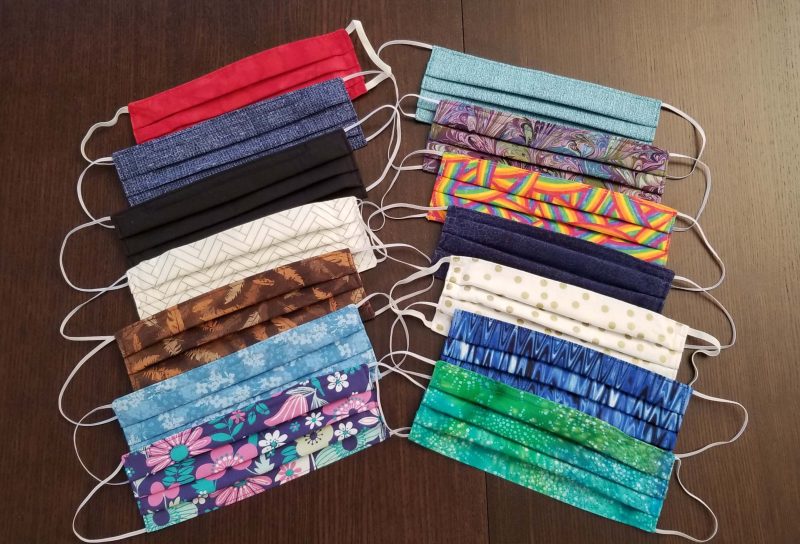
I bought a variety of fabric patterns, sent photos of swatches, and asked everyone to make their choices.
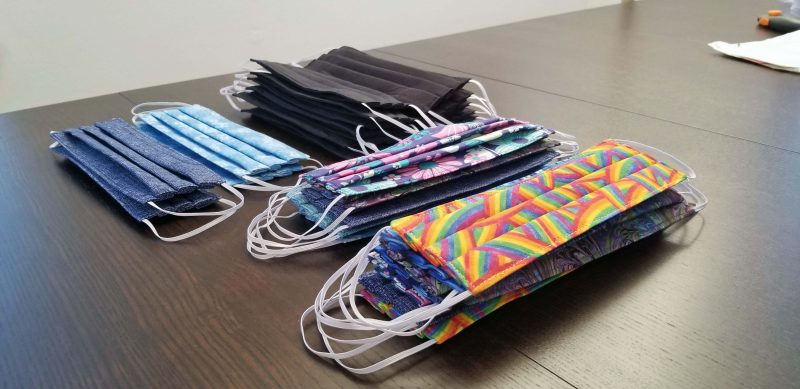
My total mask output from April through today was 92 masks. Ted’s and mine are already put away and some of Kari’s family supply has been delivered. These additional masks are ready for distribution. Sky and Dylan chose black; Kari and Teddy have the blue piles; and the other two piles are for Kathy and Annette. I’ll deliver those when we visit Kirksville August 22.
I enjoyed having a sewing project and I really got to know my new (?) sewing machine. The machine is three years old, but I’ve used it mostly for minor mending. The Family Mask Project taught me that my sewing machine has some very nice features. I’ll have to think of other things to sew so that I can use it more often.
Simon Cowell fell off his ebike and made national headlines, including a public warning from the NBC Nightly News anchor. Because “elderly people” (ask people over 60 how they feel about that term) make up a large part of the ebike market, we were warned to “be very careful,” because ebikes go “10-15 mph faster than regular bicycles.”
Say what??!! Ted’s and my ebikes don’t go faster than our regular bikes. They only go as fast as we pedal. The pedal-assist feature on our bikes makes climbing hills easier, but if we don’t pedal, we don’t go.
When I went to the bike shop to pick up my replacement bike bag I asked Brad about the NBC News warning. He pointed out that there’s a difference between a no-pedal throttle-control ebike and our pedal-assist ebikes. Brad said pedal-assist ebikes “require effort to go 20 mph” and I agree. (Not counting downhill.) My research on ebikes revealed that they don’t require an effort great enough to train for extreme bicycling, but they provide a good workout, especially since ebike riders tend to ride farther and more often than regular bicycle riders.
I don’t think Ted and I need to worry about exceeding the legal speed limits on our ebikes.
******
Author’s note: The “elderly” (age 60) Simon Cowell was riding a throttle-control ebike. On that type of ebike, the rider either twists or squeezes the throttle and the bike takes off. Throttle-control ebikes can go up to 60 mph. No pedaling is required. Cowell might have expected more of a bicycle experience than a motor scooter experience and was caught off-guard. Unfortunately, his injuries were serious and required six hours of surgery and the placement of a rod in his back.
If not, too bad. The worldwide bicycle shortage is apparently a long way from over.
Ted and I went to the bike shop today to have Brad, the owner, look at my bike bag. The lining on the main top pocket regularly gets stuck in the zipper teeth. It was a relatively expensive bag and it looks like I might get a replacement. Brad said he’d get back to me on that by Monday.
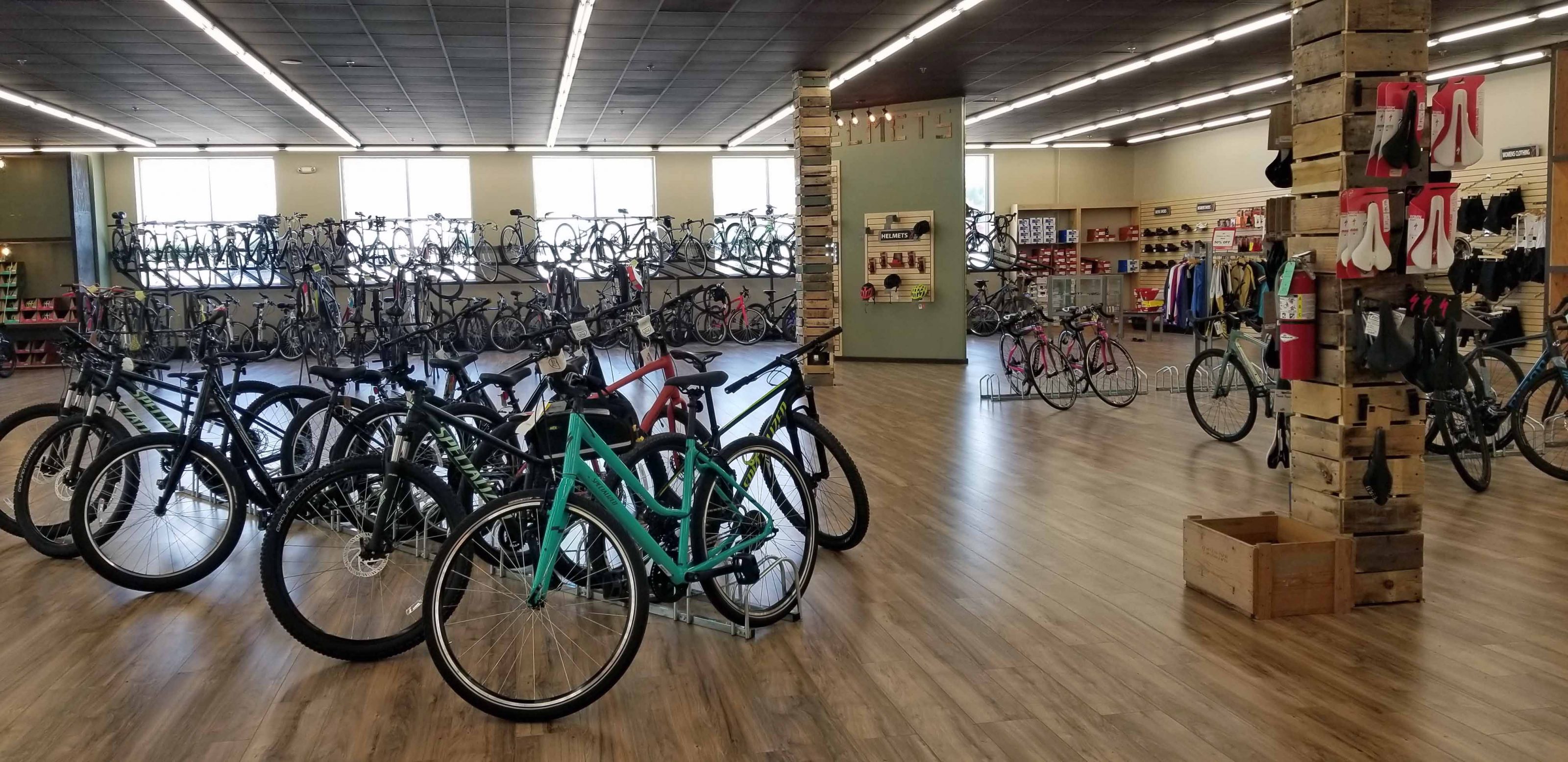
While I was waiting for Brad to finish with another customer, I talked with Tony and I asked him how many bikes they have for sale now. Tony pointed to a small collection of bikes in a corner of the showroom–a few e-bikes and a few kids’ bikes–and then waved his arm over the rest of the showroom. “All of these other bikes you see,” he said, “are here for repair.” He told me people are raiding their basements, garages, and attics to find old bikes they can fix because the wait time for a new bike is so long.
These are some of the bikes waiting for repairs. Note that the line of bikes along the window wall is two rows high.
When I asked Tony what the wait time is for a new bike right now, he laughed / snorted and reached for a handful of papers. He had eight sheets of 45 names per page of people who are waiting for a test ride on a bicycle. Each line on the page includes the customer’s name, contact information, and the bicycle model the customer wants to test ride. When that model becomes available, the first customer on the list wanting that bike will be able to test ride it to see if he / she likes it enough to buy it. Wow!
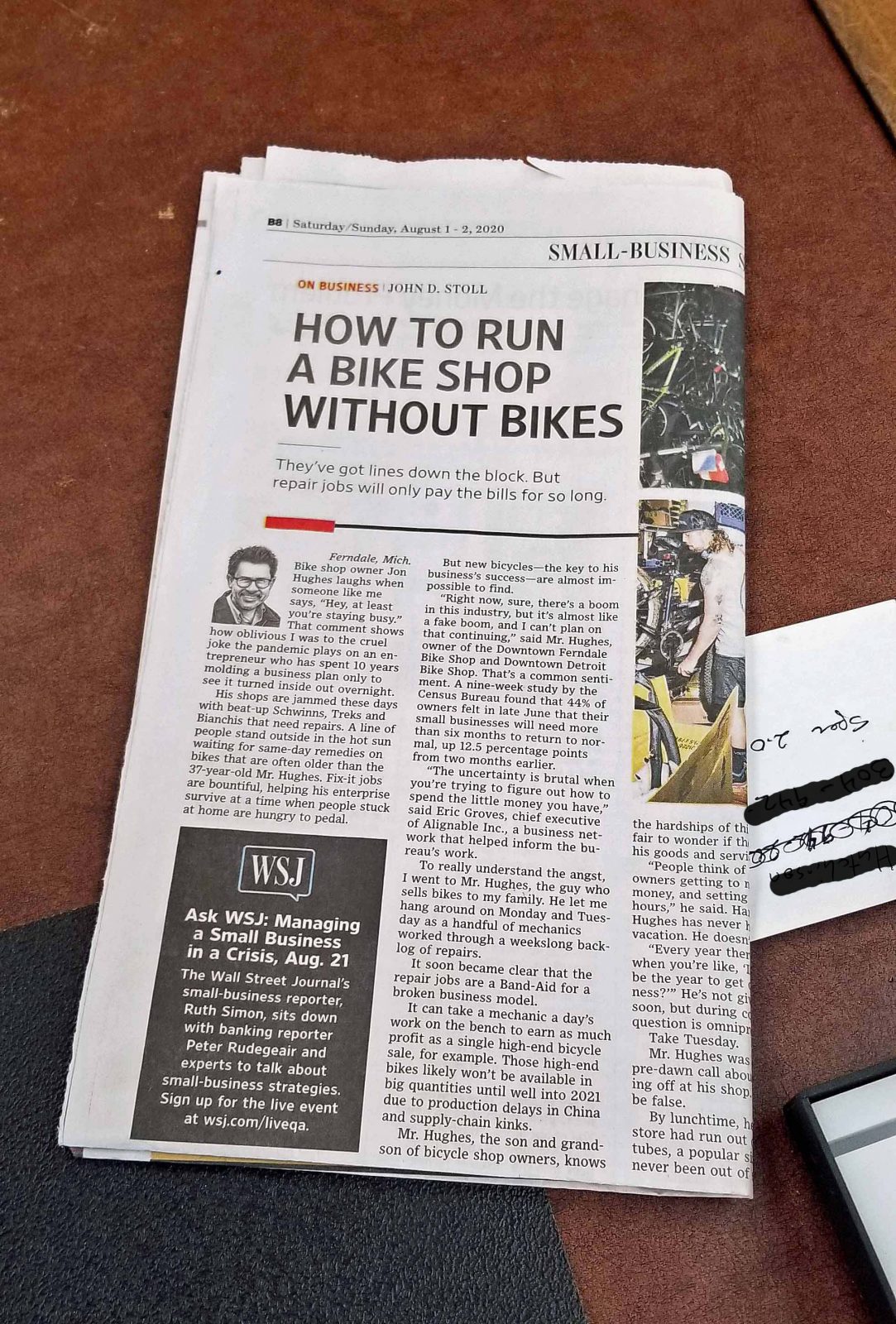
Tony wasn’t finished. He went over to the counter, picked up a copy of the August 1-2, 2020 Wall Street Journal and showed it to me. The article mentions that it can take a bicycle mechanic an entire day to earn the equivalent of the profit on a single high-end bicycle sale. Also, repair shops are running out of parts and there is a weekslong backlog for repairs.
Ted and I are so-o-o-o glad we bought our bicycles last August!
Ted and I rode the Katy twice this week: once to the north from St. Charles and once to the west from Defiance. The Katy Trail follows the railroad track of the Missouri-Kansas-Texas Railroad, and my always-active mind wondered why it’s called the Katy instead of the MKT. I checked online, where all questions are answered. Yes, it was the MKT Railroad, but the Kansas-Texas division of the railroad used “KT” as its stock exchange symbol, and KT soon evolved into the nickname “the Katy.” Now we know, so back to the bike rides.
Katy to the north
In the past, we’ve only biked a few miles north of St. Charles. Our goal this time was to ride to the beginning of the trail at Machens, 12.6 miles, according to our trail map. We almost made it.
We started at Frontier Park in St. Charles.
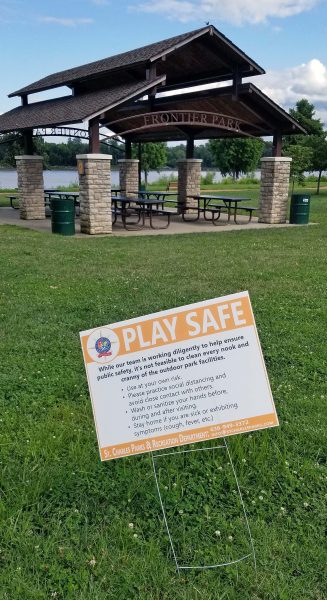
Thanks to COVID-19, there was a warning sign at the park. I guess it’s a sign of the times. (I know. Bad pun.)
We continued on our way. The trail wasn’t crowded, but after leaving St. Charles 2-3 miles behind us, we met fewer than a dozen other bicylists the rest of the way.
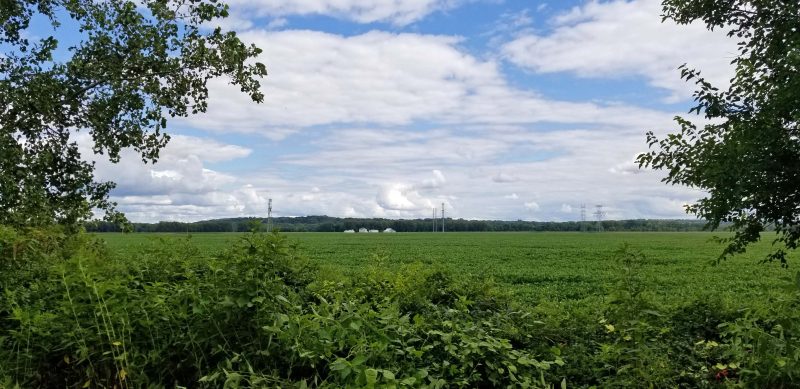
The river views were scarce, but still beautiful. Since we were biking toward the confluence of the Missouri and Mississippi Rivers, and since St. Charles County is very narrow at this point, we wondered if this was the Missouri River or the Mississippi River. How can you tell without a map? Answer: Check the direction of the flow. Even after living here for 47 years, it still seems wrong to me that the Missouri River flows north. The Mississippi River does the “right” thing and flows south. The water in this picture is flowing north.
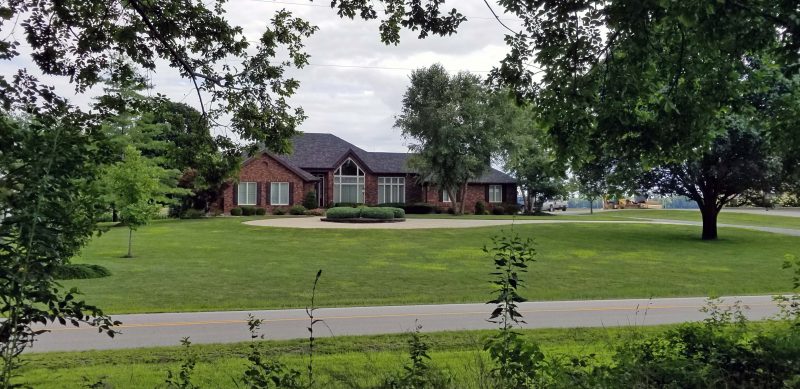
I love this house, especially the center window wall.
Was this a picture-perfect day for a bike ride? Absolutely!
We biked through lots of heavily shaded areas on the trail. After one such area, the trail curved and had a short rise. Suddenly, we were riding in the open on top of the levee. It was a little bit exciting to find ourselves almost instantly elevated above the corn.
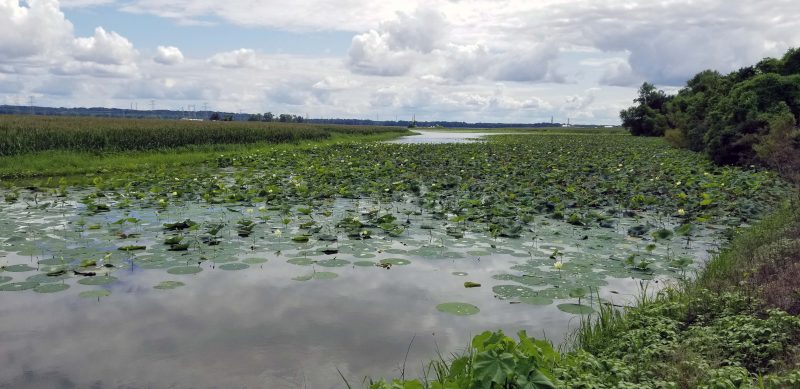
We saw lots of water lilies in a tributary of the river. You can see beds of water lilies all the way to the distant curve of the tributary.
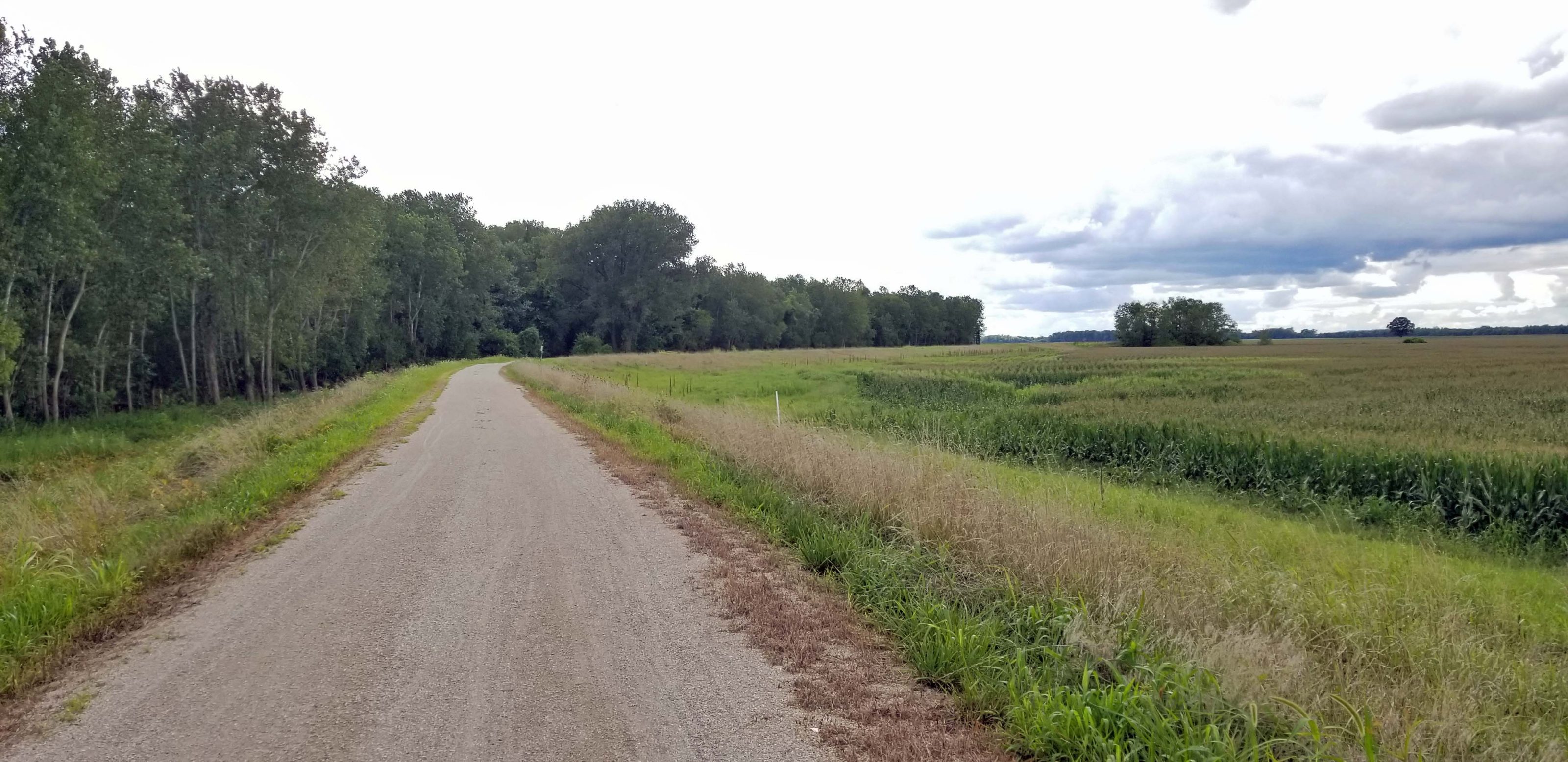
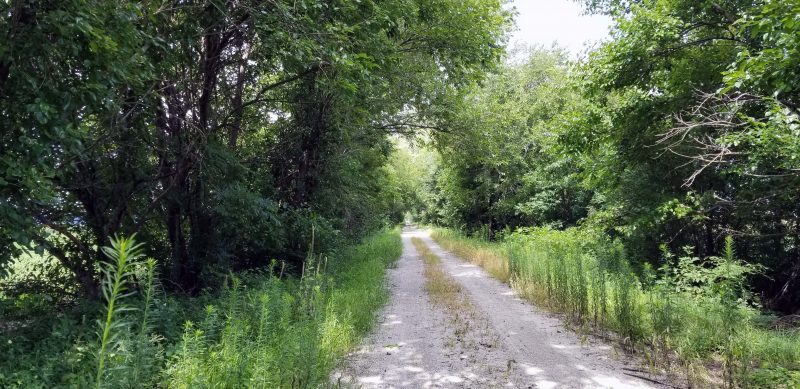
The farther we biked, the less frequently-traveled the trail became. It started to look more like a country driveway than a biking trail.
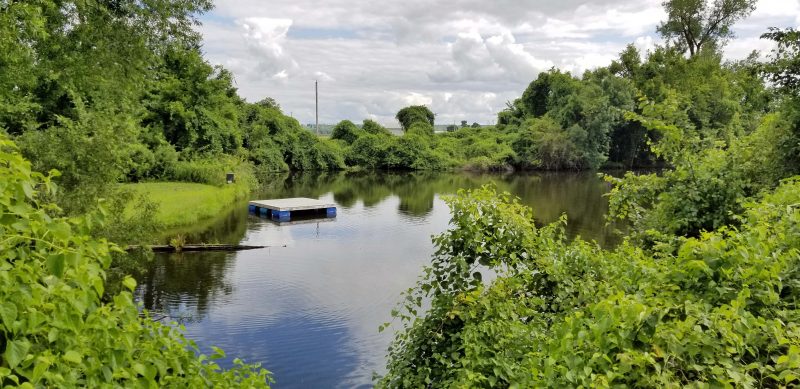
One family had a raft in their little river tributary. It brought back childhood memories of swimming in Wisconsin’s inland lakes. All the lakes with a public swimming beach had a raft and we always said, “Let’s swim out to the raft.” It was a perfect place to sit, sunbathe, or jump/dive into the water.
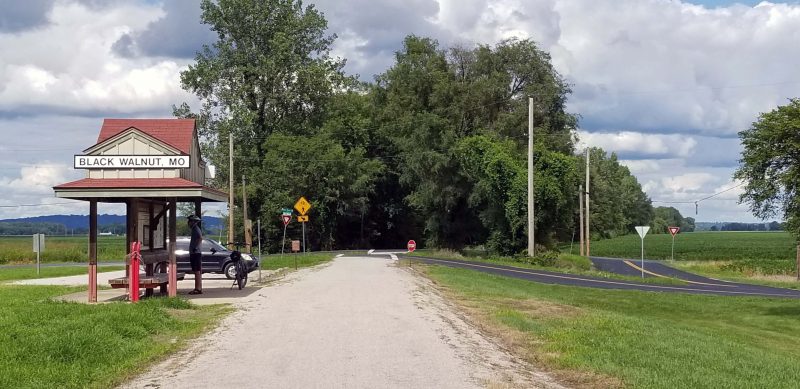
When we reached Black Walnut, we knew we were only three miles from our destination of Machens at the beginning of the trail.
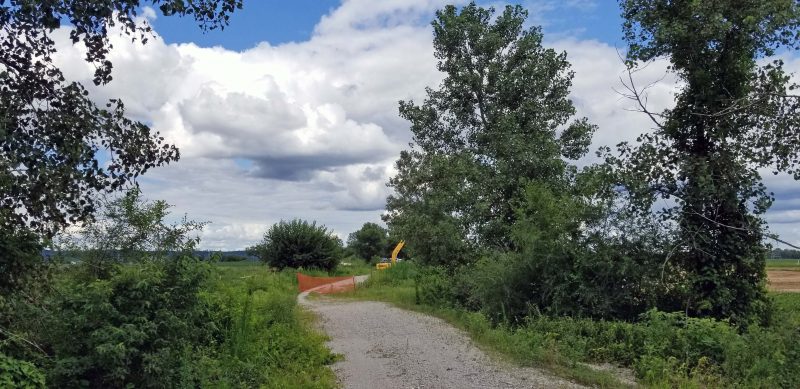
And then we were abruptly stopped.
With only a little more than two miles to go, trail maintenance workers had closed the trail. We’ll give them some time to finish their work, but we still want to make it to Machens so we can say we went all the way to the beginning of the Katy Trail. That’s a plan for another day.
Katy to the west
The weather has been cool all week, and definitely unusual for August in Missouri. The normal high temperature is 89 degrees, but we had highs in the upper 70s plus low humidity for several days. We needed another long bike ride.
We enjoyed our recent bike ride from Defiance westward so much that we wanted to do it again. Not to mention that we were disappointed we didn’t make it all the way to Dutzow last time. We thought it was about seven more miles one way, but found out later it was only two miles from where we stopped and turned back. Let’s do it!
It was another pretty day and another pretty bike ride.
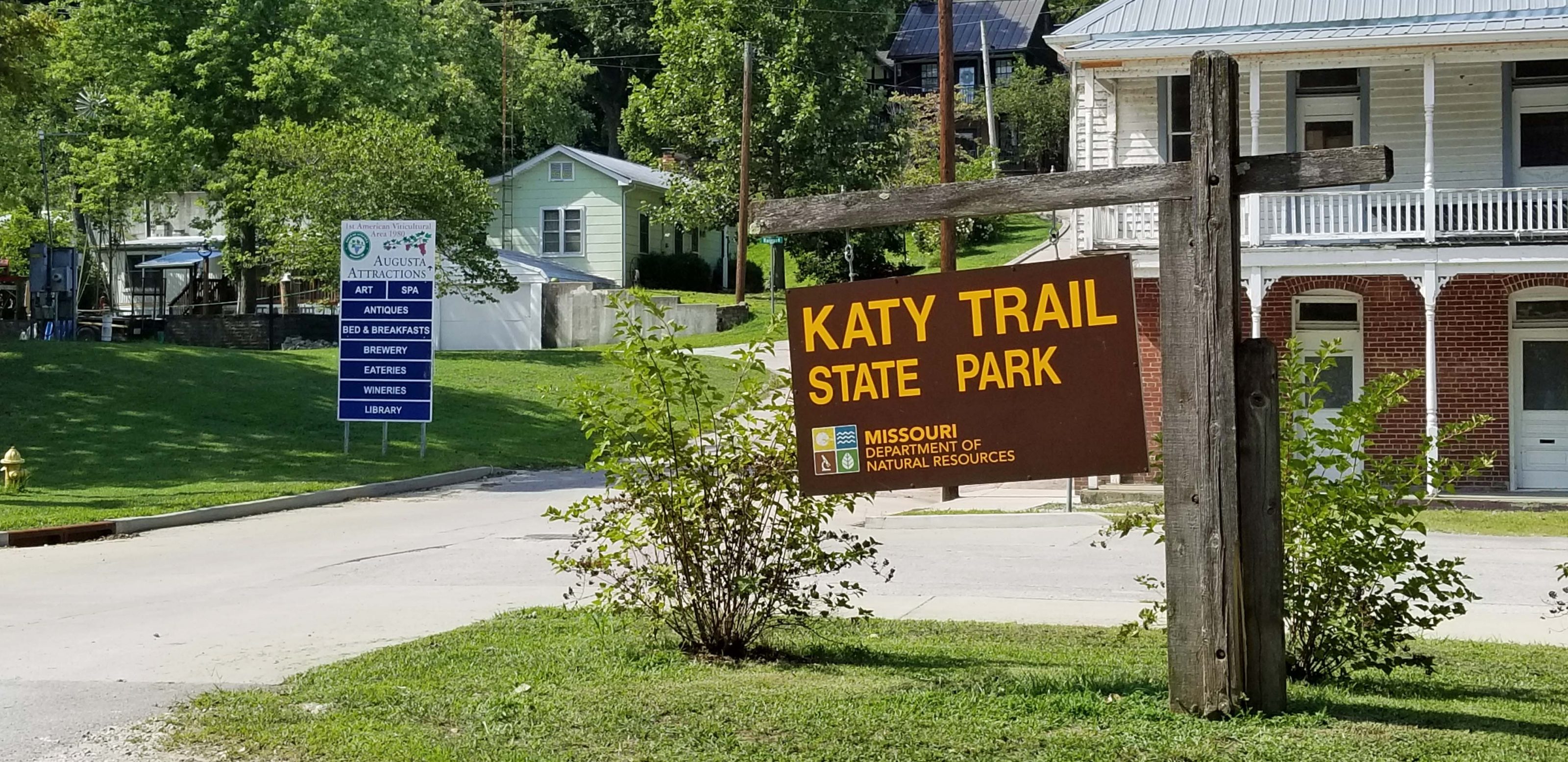
We passed Augusta again. All the highlights of the town are listed on the blue sign, but the sign is at the bottom of a steep hill and the crossroad at the top of the hill goes upward even more to the right. We need to check out Augusta a little more before we decide to tour it by bicycle.
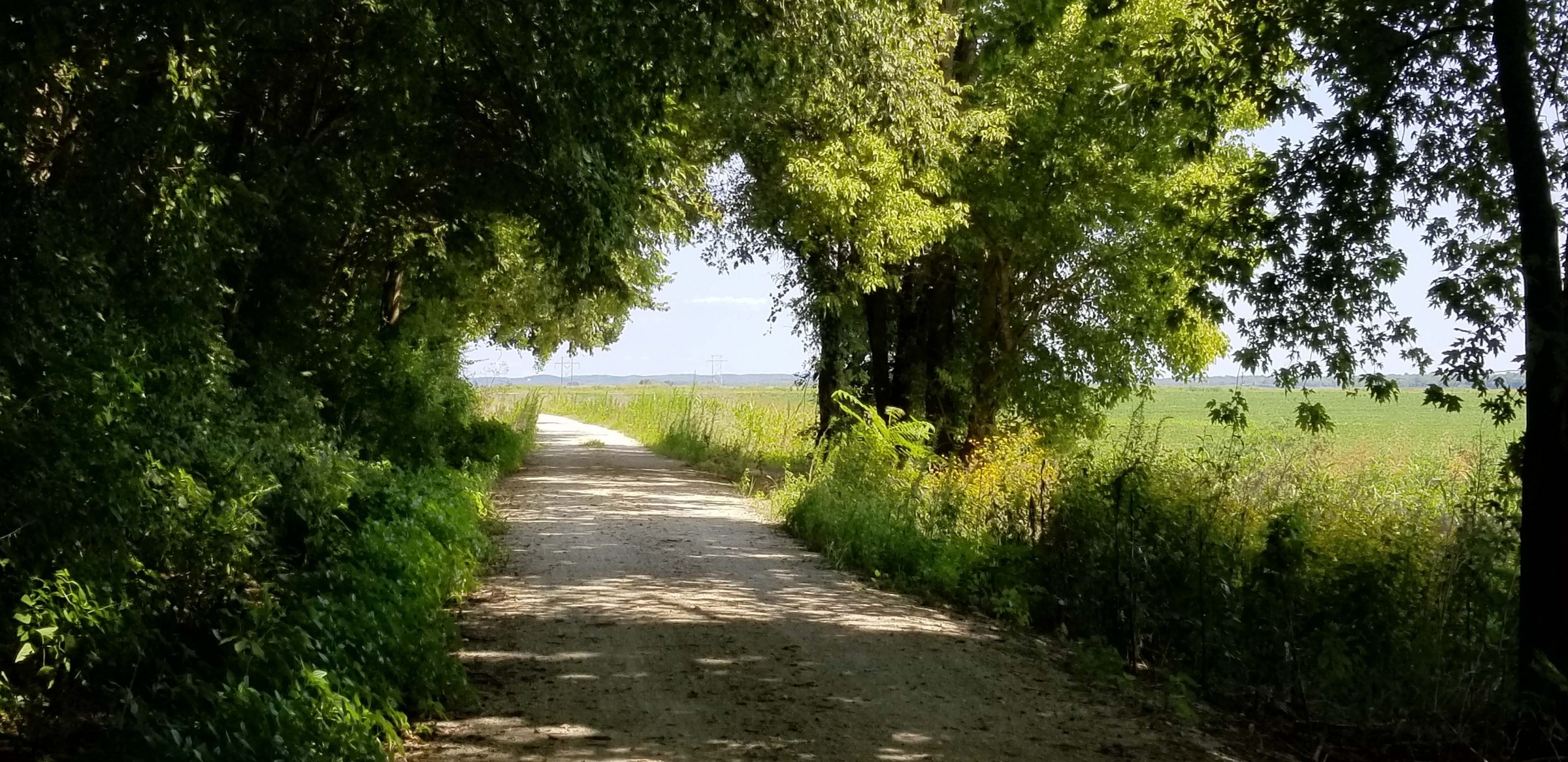
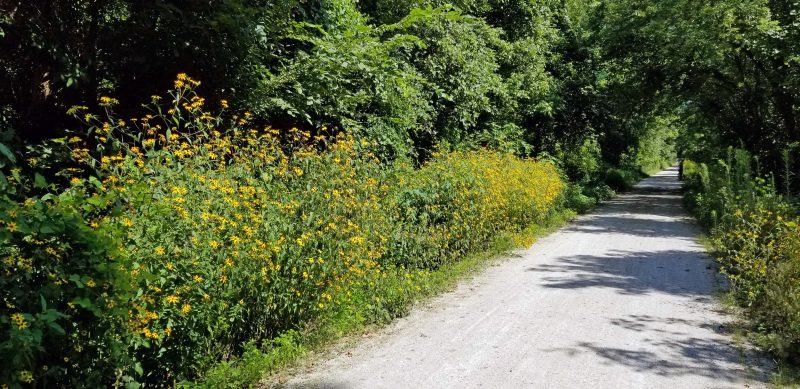
Wildflowers were blooming along the trail.
This time, we made it all the way to Dutzow–16.2 miles one way. Mission accomplished!
Next week is expected to be hot and humid again, but Ted and I have several trail rides planned for the next set of cooler days.
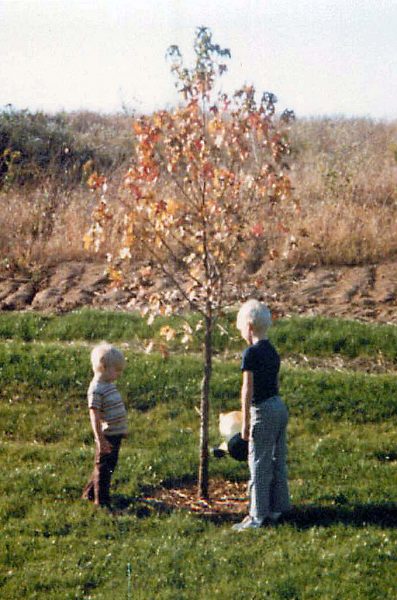
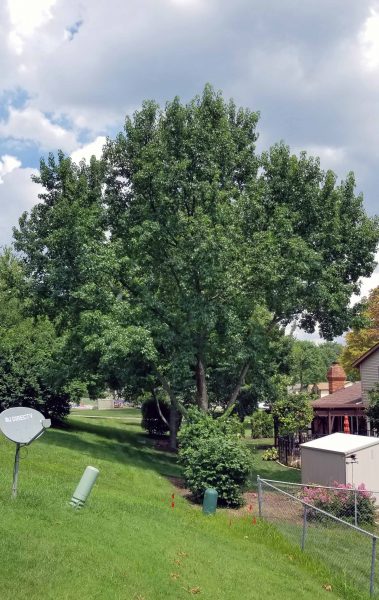
We moved into our present house in July 1979. The following spring, we planted three trees in our yard: a sugar maple, a green ash, and a sweet gum. We purposely chose the sweet gum tree for its fall colors, but didn’t give a thought to the @#%&*! gum balls it would drop from late fall to early spring. Fortunately, we planted that tree on the far back corner of our lot where we had the vegetable garden and where we now have Ted’s “brush pile” area, so the gum balls aren’t as much of a problem as they’d be if they fell in a higher traffic area of the lawn.
Here’s a picture of Jeff (8) and Tommy (4) watering the sweet gum tree in October 1980, . . .
. . . and here’s a picture of the sweet gum tree today.
The tree has grown so much that I had to walk all the way to the other side of our neighbor’s back yard to fit the tree in my picture. Good work, boys.
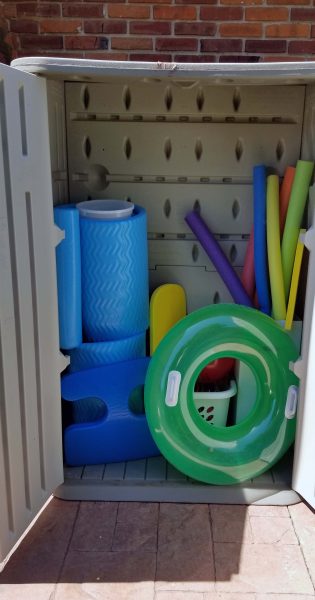
We have an outdoor storage cabinet that holds a variety of pool toys and floats.
The white basket holds balls, snorkels, kickboards, etc.
Guess what Dylan and Teddy always choose to play with.
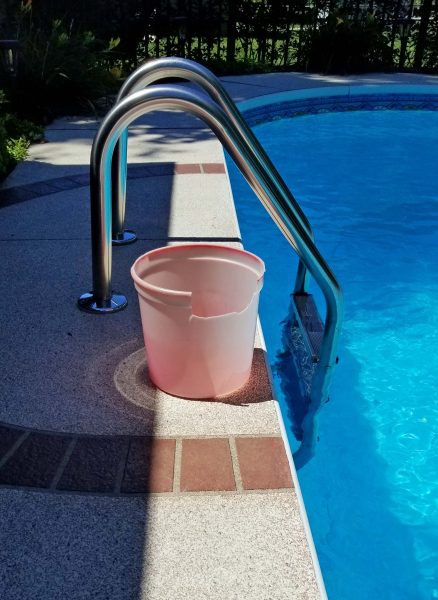
The bucket used to be bright red and unbroken, but heavy use in the pool took its toll.
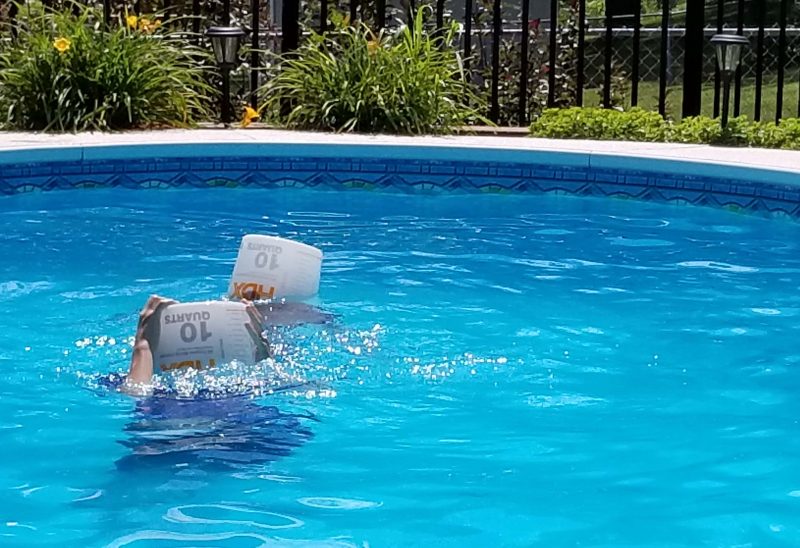
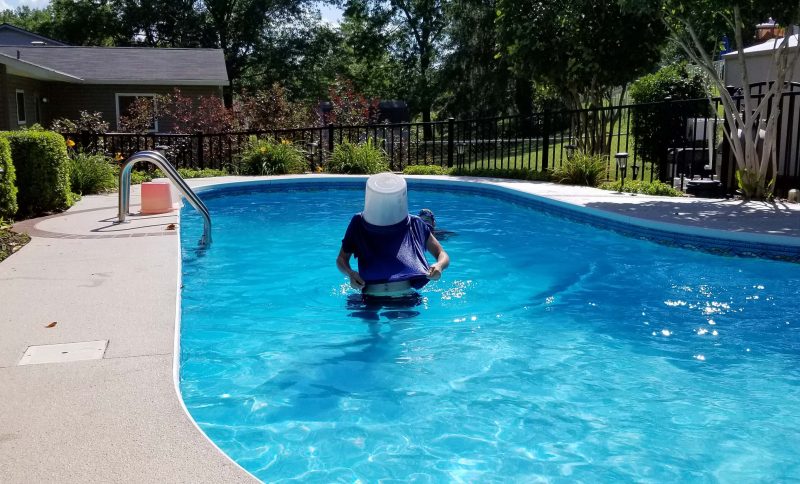
The red bucket is the equivalent of the cardboard box on Christmas morning, and the kids have worn it out. In an act of generosity and mercy, Ted went to Home Depot and spent $3.00 on a new bucket. The boys were taking turns with it, so Ted went back and invested in another one. It’s amazing what can be done with a bucket in a pool. The boys have a variety of activities they do underwater with the buckets inverted over their heads, including talking with each other and trying to set underwater endurance records.
The most recent game required two people and two buckets. While Teddy was underwater with an inverted bucket over his head, Dylan (above the surface) prepared the second bucket by inverting it and pushing it underwater to Teddy. When Teddy ran out of air in bucket #1, he held his breath a few seconds and switched to bucket #2, remaining underwater. Then the process was repeated for this endurance test.
Teddy was underwater so long, Kari and I were a bit worried. Kari kept asking Dylan if Teddy was still ok and she eventually suggested it was time for Teddy to re-surface. Teddy’s first words were, “I could’ve stayed under longer.” He was underwater for 13 buckets of air. I have a hunch they’re going to try to break that record next time.
Getting ready to go underwater.
Dylan thought if he stretched the neckline of his shirt around the bucket, it might make a better seal, allowing him to stay underwater longer. It didn’t.
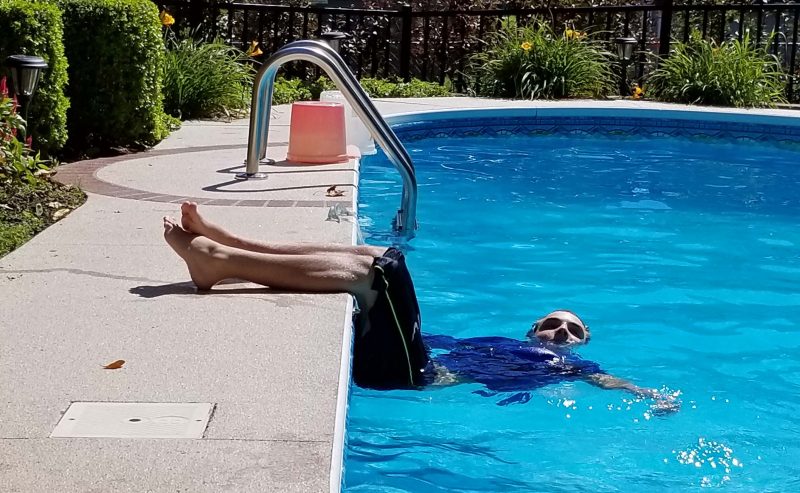
Relaxing before going back to bucket activity. Even with two new buckets, the red one was hauled out for more action.
Although selective information regarding educational budgets at the state and federal levels may indicate increased funding, those figures do not include adjustments for inflation.