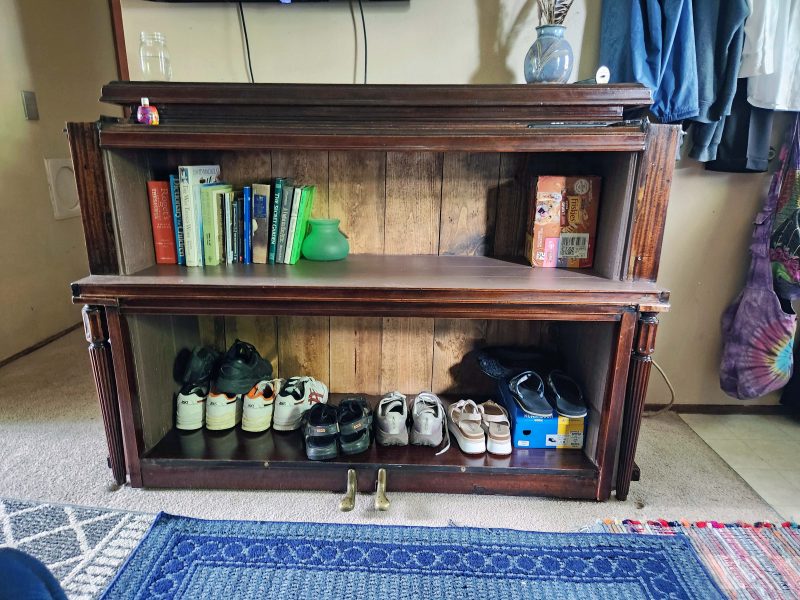
Theo, our seventh grandchild (of 9), graduated from high school this May. Kathy and Annette came to town for the event and we all met at Theo’s home for lunch. The first thing to do was admire the bookcase Dean crafted from an antique piano that would have required a major re-build to restore it to working condition. Kari couldn’t use the piano, but she didn’t want to get rid of it, so Dean disassembled it and used the pieces to build a bookcase. The soundboard forms the back of the bookcase, the piano legs decorate the front, and the flat surfaces of the piano provide shelves. The project isn’t completely finished, but Kari is happy to have a place to set shoes when people enter the house, a shelf for some books, a surface for display and, still, the essence of her piano (see the pedals).
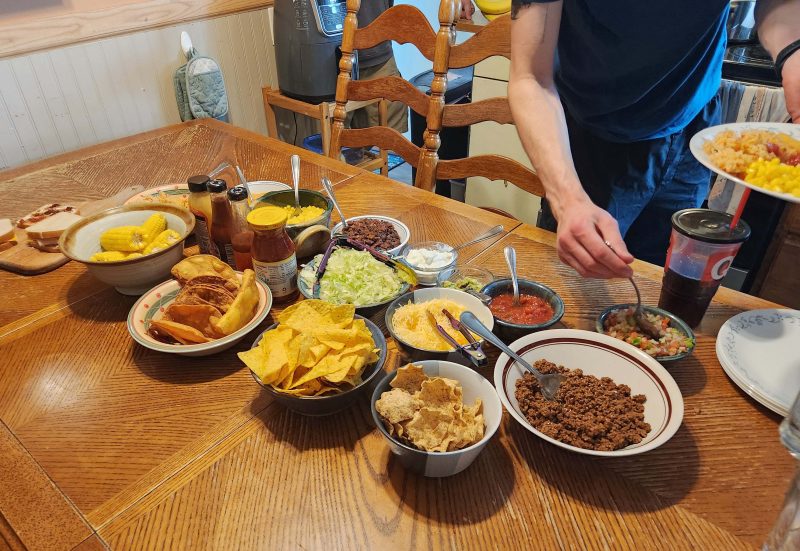
We started our time together with lunch, prepared by Dean, who provided the group with a taco bar.
May is graduation month, but it’s also a great time for our family to celebrate Mother’s Day, Father’s Day, and a bunch of birthdays that occur between late April and mid-May. On this day, we celebrated birthdays for Kathy, Dean, Kari, and Theo, Mother’s Day, Father’s Day, and Theo’s graduation. Whew! There were gifts for all of those events, and we opened them and shared conversation after lunch.
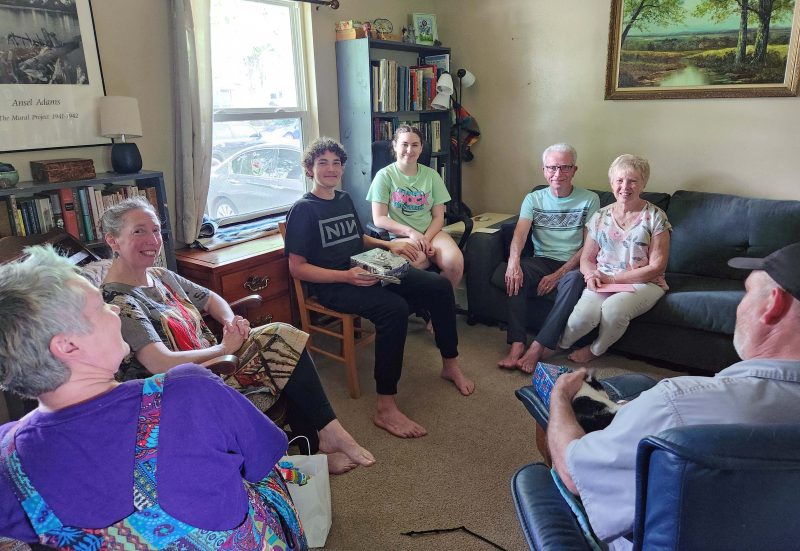
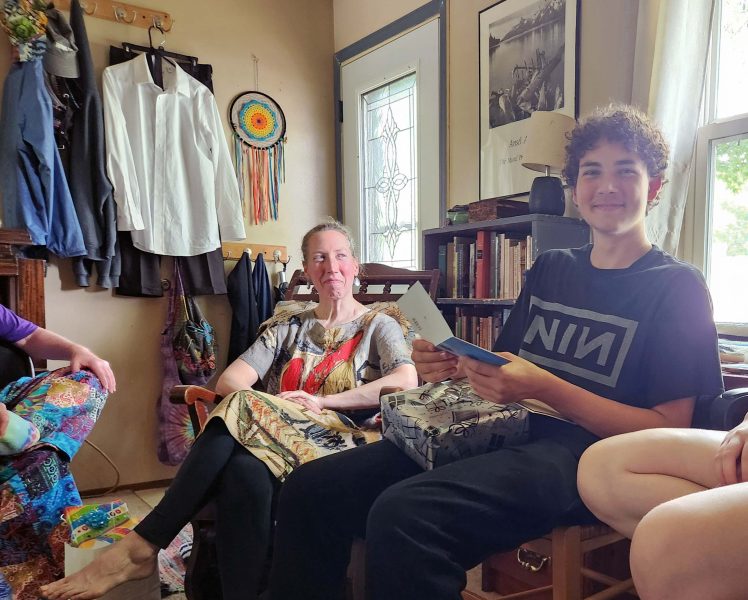
Here’s the guest of honor for the day, opening a birthday or a graduation gift. (I can’t tell from the photo.)
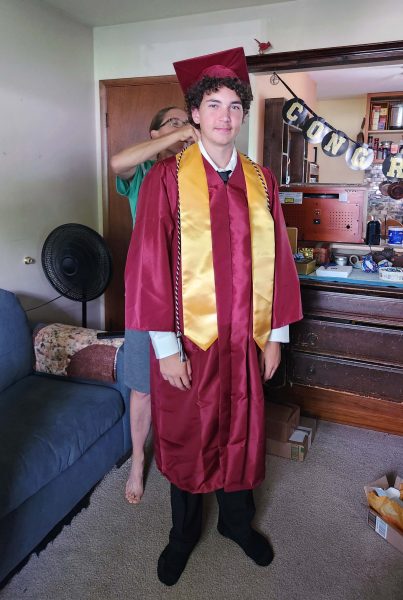
Before long, it was time for Theo to put on his graduation robe and head for the high school. Kari helped him adjust the stole and his honor cord. Theo graduated summa cum laud, and his honor cord signified that one of his teachers selected him as the best student of the year.
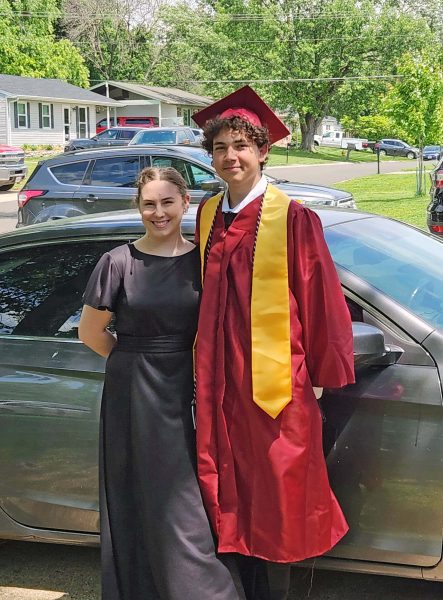
Theo’s girlfriend, Lizzie, needed to leave early as well because she’s in the school orchestra and was going to be playing for the graduation ceremony. The kids are ready to leave and take their places at the high school.
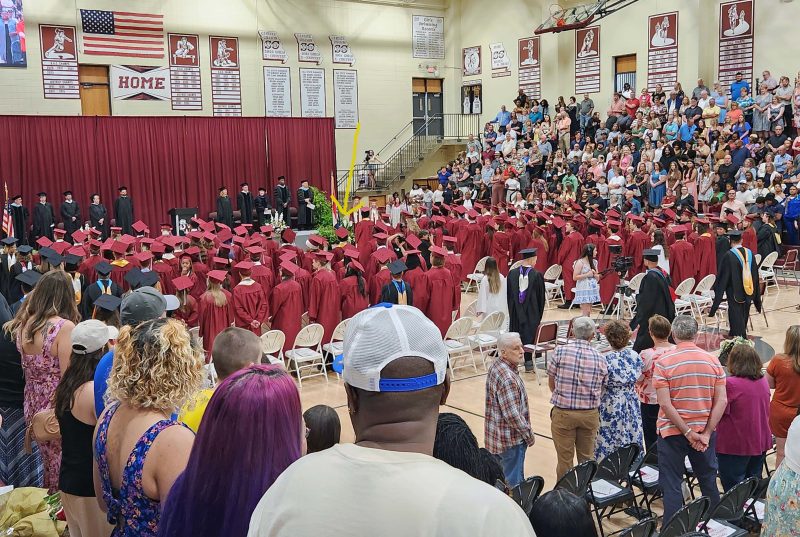
The grads are seated and we’re all standing and ready for the national anthem before sitting on the hard, backless benches for the next two hours. I don’t have anything new to say about graduations. As the speaker at my doctoral graduation said, “No one remembers graduation speeches”–and that’s all I remember from his speech. There were a lot of speakers today–School Board members, faculty members, students, etc.–and I don’t remember anything any of them said.
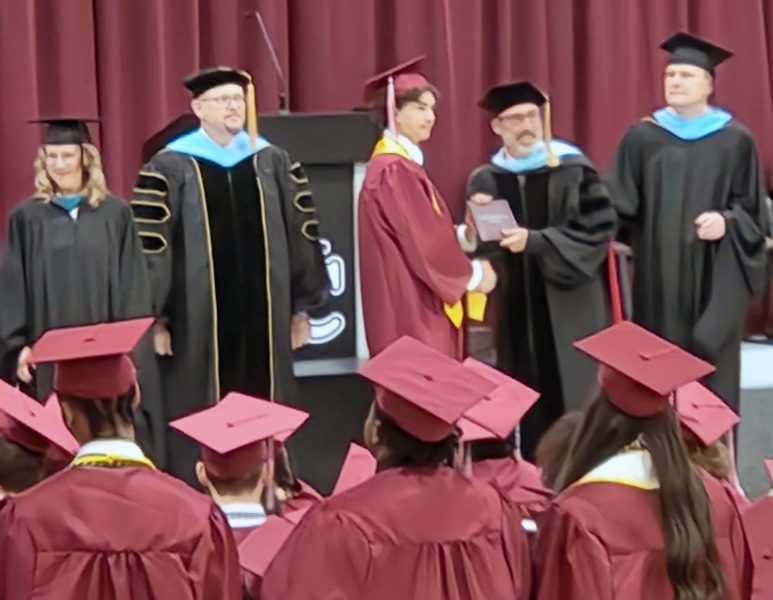
Finally, it was time for the Big Show, when the students receive their diplomas. Here’s our favorite student of the day.
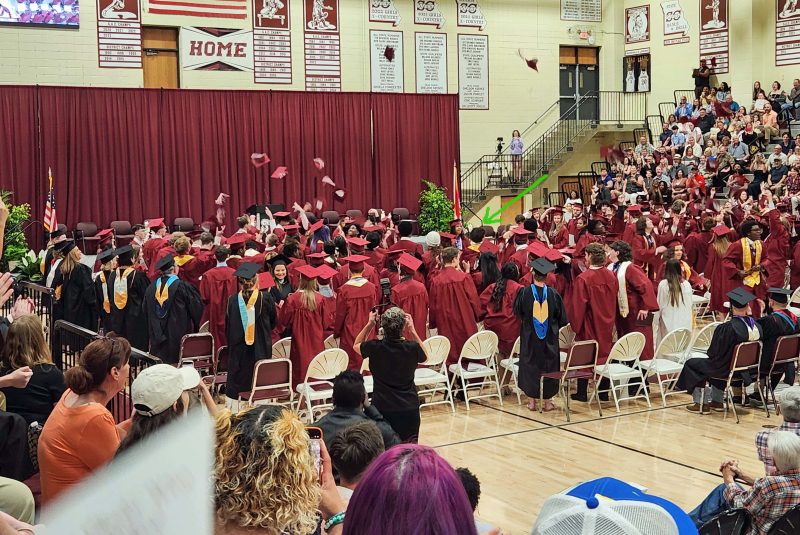
I think the most fun of any graduation ceremony is the celebratory feeling of throwing the mortarboards in the air at the end of the event. I taught GED and supervised a four-county GED program and, every June, we had a graduation ceremony, complete with robes and mortarboards, for those who had achieved a GED certificate during the previous year. After one of those ceremonies, one of the students said to me, “I just want to throw my cap in the air so-o-o-o bad!” I told her to go ahead, so she and all those around her did it and whooped with joy, just like these high school kids. High school graduation–at any age–is a milestone in our lives.
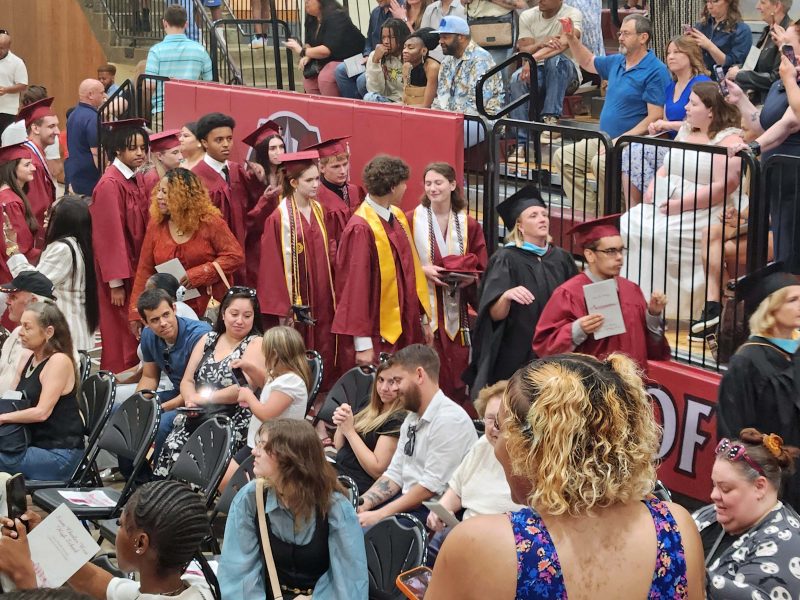
We were close enough to easily see Theo leaving the gym, but with all the noise, he couldn’t hear our group calling his name while he talked with a friend.
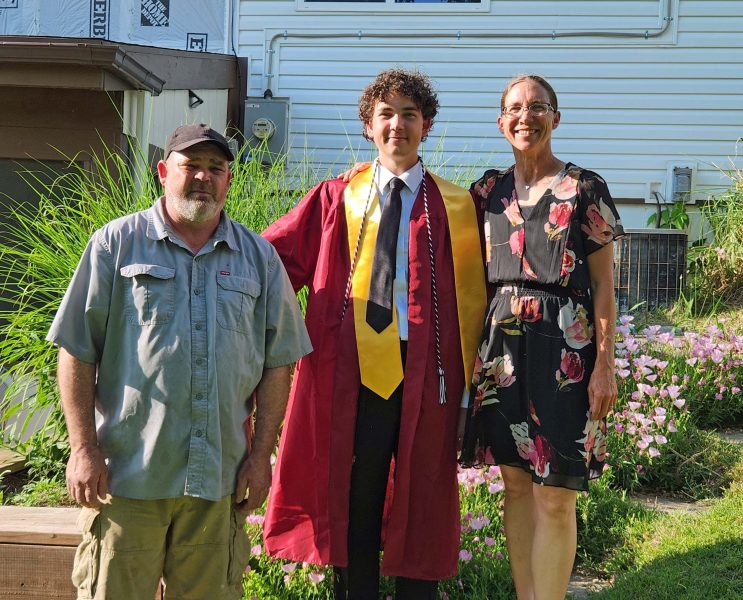
Back at the house, it was time for the traditional pictures. Here’s Theo with his proud parents, . . .
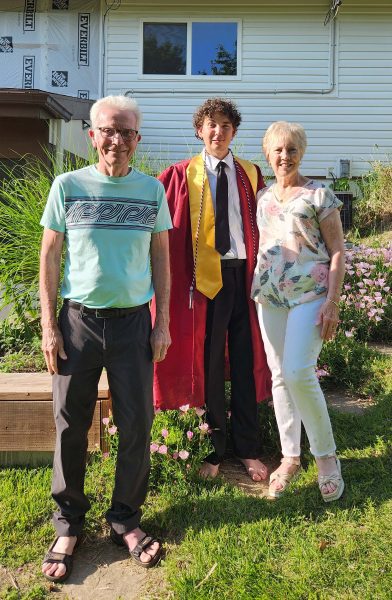
. . . his grandparents, . . .
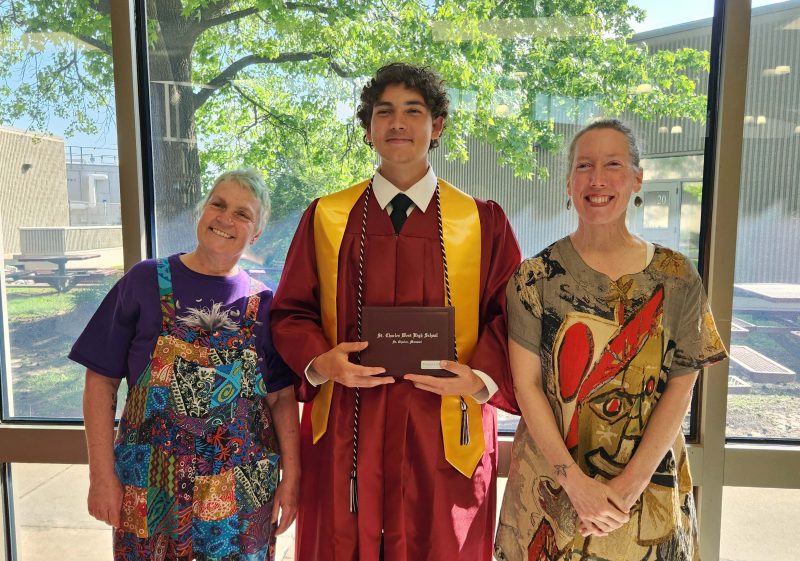
. . . his aunt Kathy and Annette, . . .
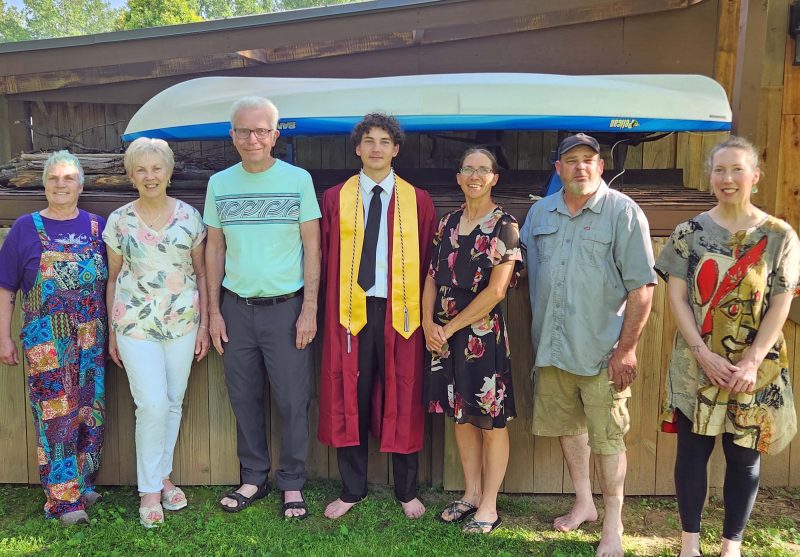
. . . and, finally, with the whole group. Theo’s brother, Dylan, took the picture.
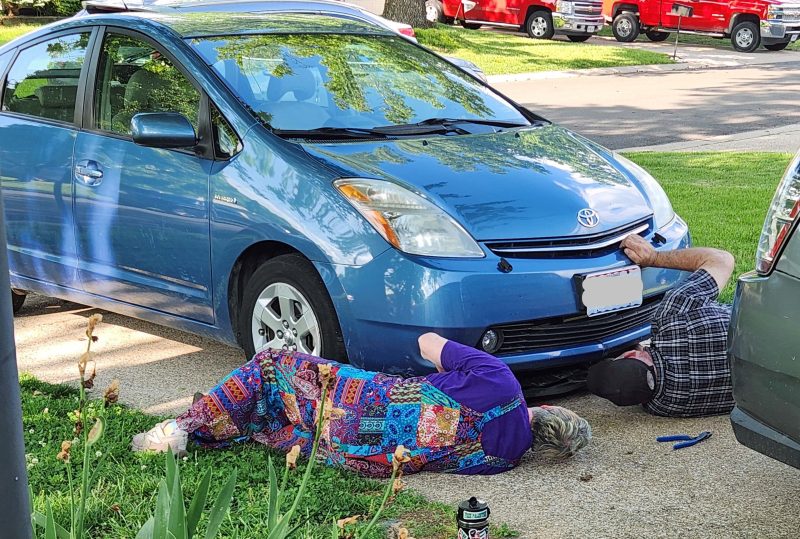
There was some down time before we enjoyed the after-ceremony dessert, so Annette and Dean got to work on Kathy and Annette’s car. The air dam below the front bumper partially fell off while the girls were driving today. The piece is not essential to operating the car, but it reduces wind resistance, improves fuel efficiency, and enhances high speed stability. Since the piece was already partially disconnected, Dean and Annette took the entire thing off. Now the girls won’t have to listen to it dragging on the road while they drive home.
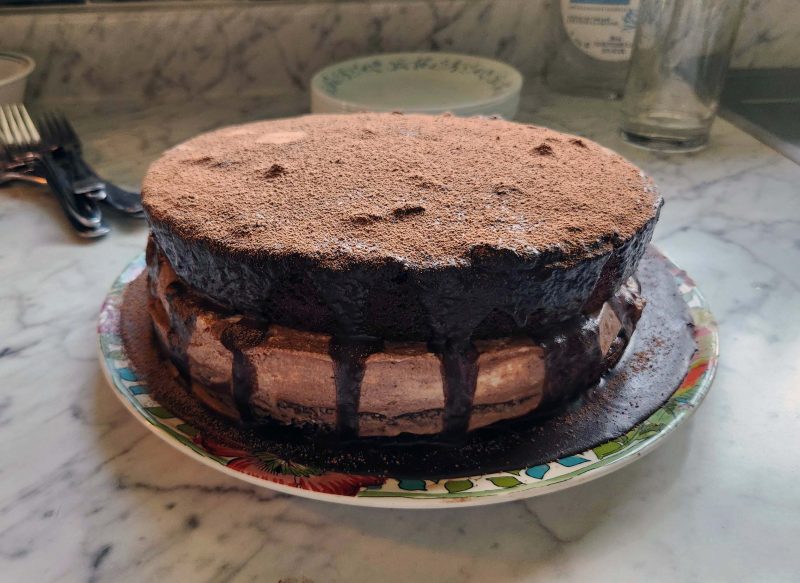
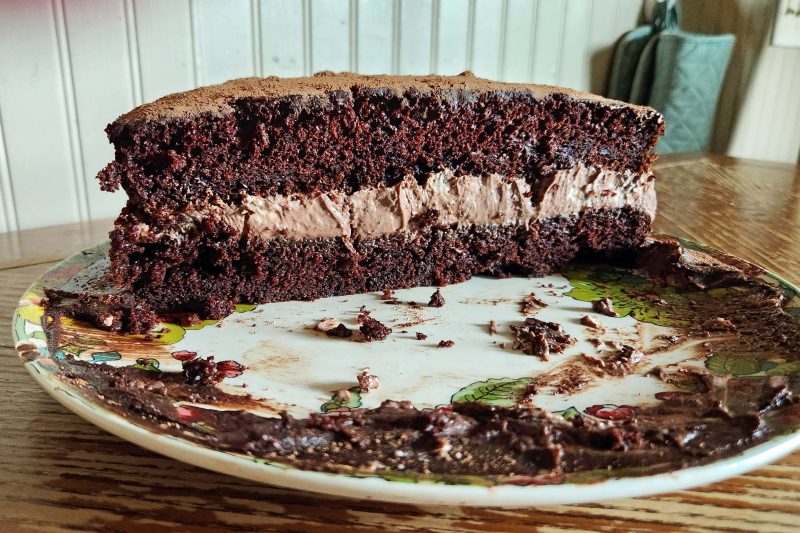
Then it was time to eat cake! Theo baked a made-from-scratch chocolate cake and added a gnache chocolate filling. Mmm-mmm good!
Kathy and Annette needed to leave for home (a three-plus hour drive); the rest of us enjoyed a graduation dinner at Fratelli’s restaurant. It was a delicious end to a wonderful celebration for our seventh grandchild.

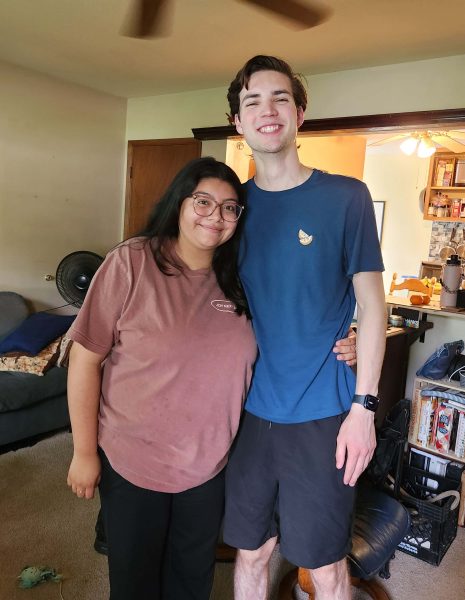
The following weekend, Theo’s brother, Sky, came home for a weekend visit, so Ted and I had another opportunity to visit with Kari’s family. This was the first time we’ve met Sky’s girlfriend, July (pronounced like Julie). The boys have good taste in girlfriends–all of us gave both girls (Lizzie and July) our stamps of approval.
Family fun is always the best way to spend our time. Our eighth and ninth grandchildren are currently 9 and 4 (almost 5) years old, so we’ll have other kinds of family fun before they graduate from high school. We’ll start by seeing Kathy and Annette again in June while they’re here for a conference, and in July, we’ll spend five days with Jeff’s entire family (Jeff and La, their three children, their daughter-in-law, and their two grandchildren). Good times!
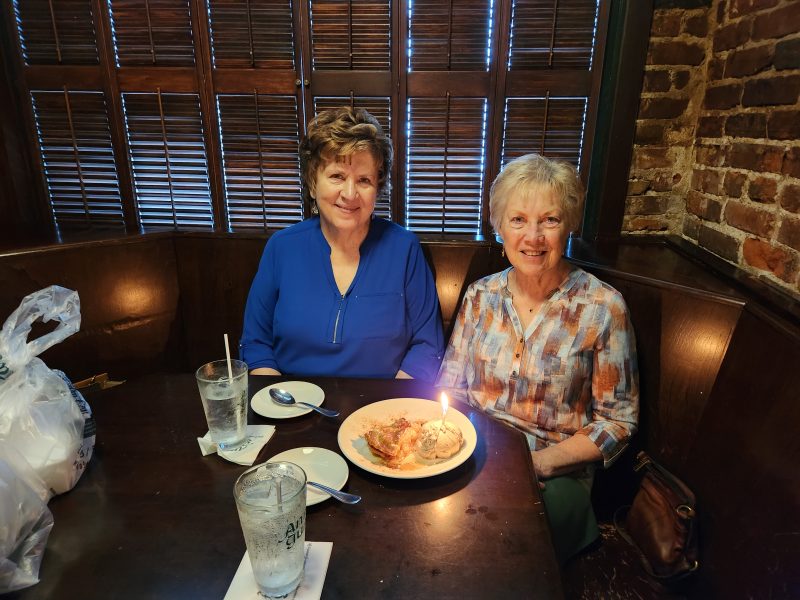
As usual, I had a birthday “season” this year. It started with lunch with my BFF, Liz. We never know what to give each other for our birthdays so, several years ago, we decided to treat each other to an upscale restaurant that we both like. That was a great idea. Now we never have to wonder, “What shall I give her for her birthday?” Instead, we say, “When are you available to go to Annie Gunn’s for your birthday lunch?” We choose a weekday, when the restaurant is less busy, then we have a delicious lunch and spend 2-3 hours talking with each other at the restaurant. We both love it.

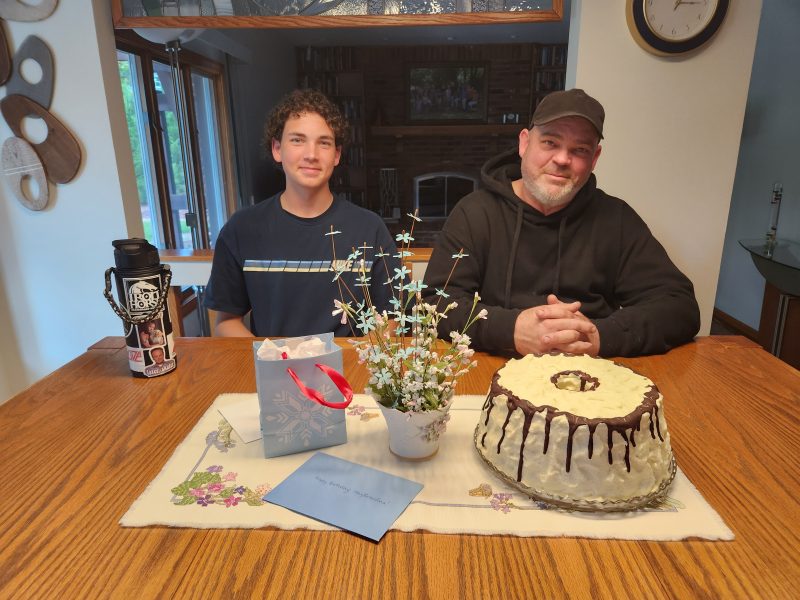
The next event was sharing my traditional birthday Vienna Torte with Kari’s family. (Recipe from Grandma L.–thank you, Grandma!) Vienna Torte is a chiffon cake with a custard frosting, and it’s a little tricky to get the butter at just the right temperature for the filling to “set” properly, but I love that dessert so much, it’s worth the effort. A chiffon cake is far too much for Ted and me to eat, so it’s great to share it with other people.

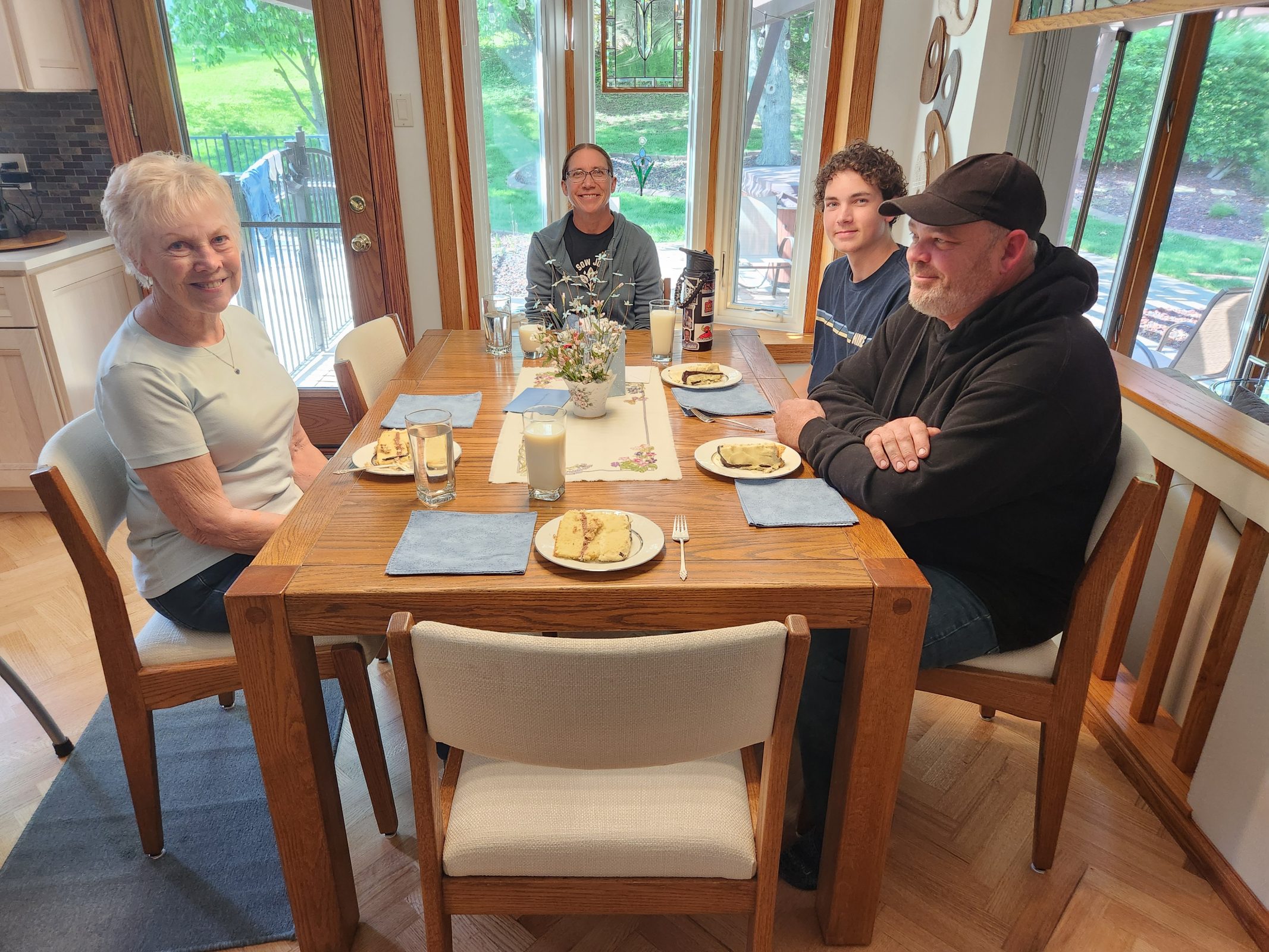
Here’s a picture of almost all of us ready to eat my birthday cake. Ted’s piece is at the end of the table, waiting for him to take a picture of us.

My last birthday celebration this year was with Kathy, who met me for what we call one of our “Columbia days.” Our Columbia Days go back 15-20 years (we haven’t been counting). Meeting in Columbia means we each drive only half the distance to each other’s houses. Over the years, we’ve established some loose traditions: one of us treats us to lunch and the other treats us to dinner. In honor of my birthday, Kathy treated me to the day. We start with lunch at Bob Evans (our meeting point) and spend at least two hours talking there. If you’re familiar with Bob Evans, you know they have a big breakfast/lunch crowd and are deserted by 12:30 or a little later, so we aren’t keeping anyone else from being served while we catch up with each other.

After that, we park in downtown Columbia (we always bring a supply of quarters for the parking meters) and walk the length of the downtown area and back, stopping to browse in each of our favorite stores. This time, there was a new store with all kinds of kitchen things, and we probably spent 30-45 minutes getting to know what they have and even buying a few things we’ve each been looking for but hadn’t found elsewhere.

When we’re tired of walking and browsing, we finish with a stop at The Candy Factory, where they make their own chocolate for the delicious candies they sell. Armed with a few pieces to eat immediately, and more to take home for Ted and Annette, we head for the mall, where we spend the rest of the afternoon sipping a cold beverage from the food court, eating our selected pieces of candy, and talking some more.

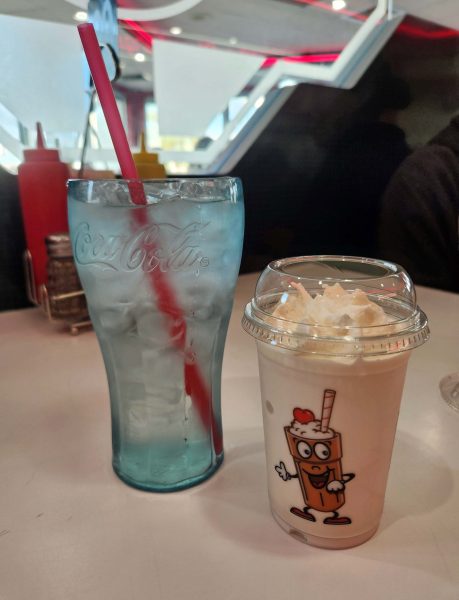
The time flies and, even though we’ve never run out of things to talk about, we eventually realize that we better get some dinner and start driving home if we want to be home by 10:30-11:00 pm. This, time, we were running late, so we decided to get something fast at Steak ‘n’ Shake. Their food is still the same and the prices are still reasonable (i.e., “relatively inexpensive”), but their small shakes have been greatly reduced in size! Large shakes used to be the size of the water glass in the photo and the small ones were about half that size. These were barely one-third the size of the large shake. We had ordered two small shakes, but they were so small, we each ordered a second one.

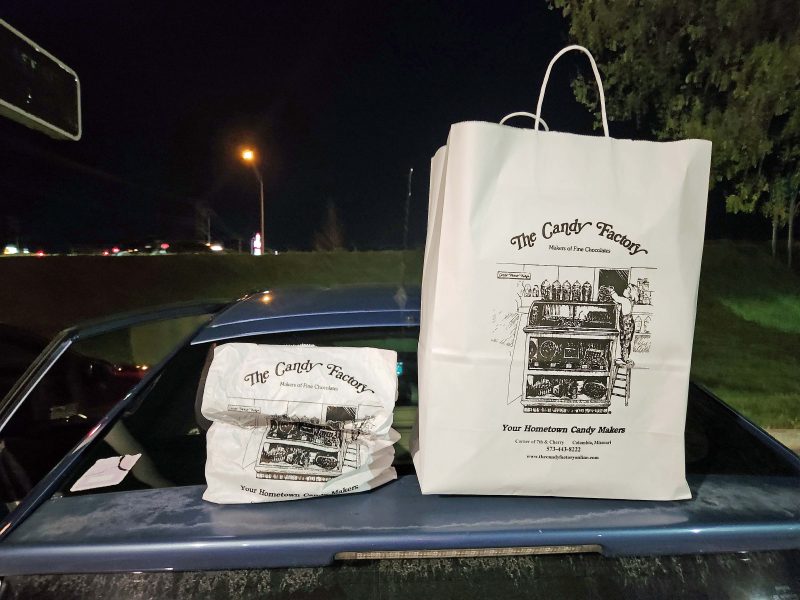
Annette came along with Kathy this time and visited with her son while Kathy and I spent our Columbia Day together. Annette met us at Steak ‘n’ Shake, where we compared how much candy we’d bought at The Candy Factory. Kathy’s bag (including the candy for her and for me) is the small one. I guess Annette was really hungry for good chocolate!

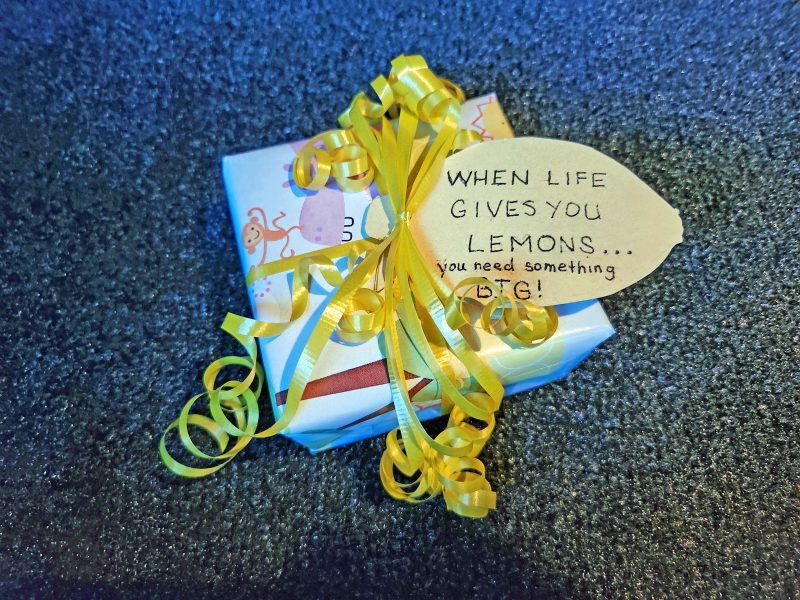
Kathy recently had a distressing experience, and I wanted to make her smile, even if just for a few moments, so I brought her a gag gift.

I bought the largest panties Wal-Mart had, because I knew she didn’t just have to “put on her Big Girl Panties” to get on with her life–she needed BIG Big Girl Panties to deal with the situation. She laughed and smiled for several minutes. Mission accomplished.

I love my birthday season. I have such good times celebrating with with my friends and family and it’s less than a year until I can do it again. Yay!

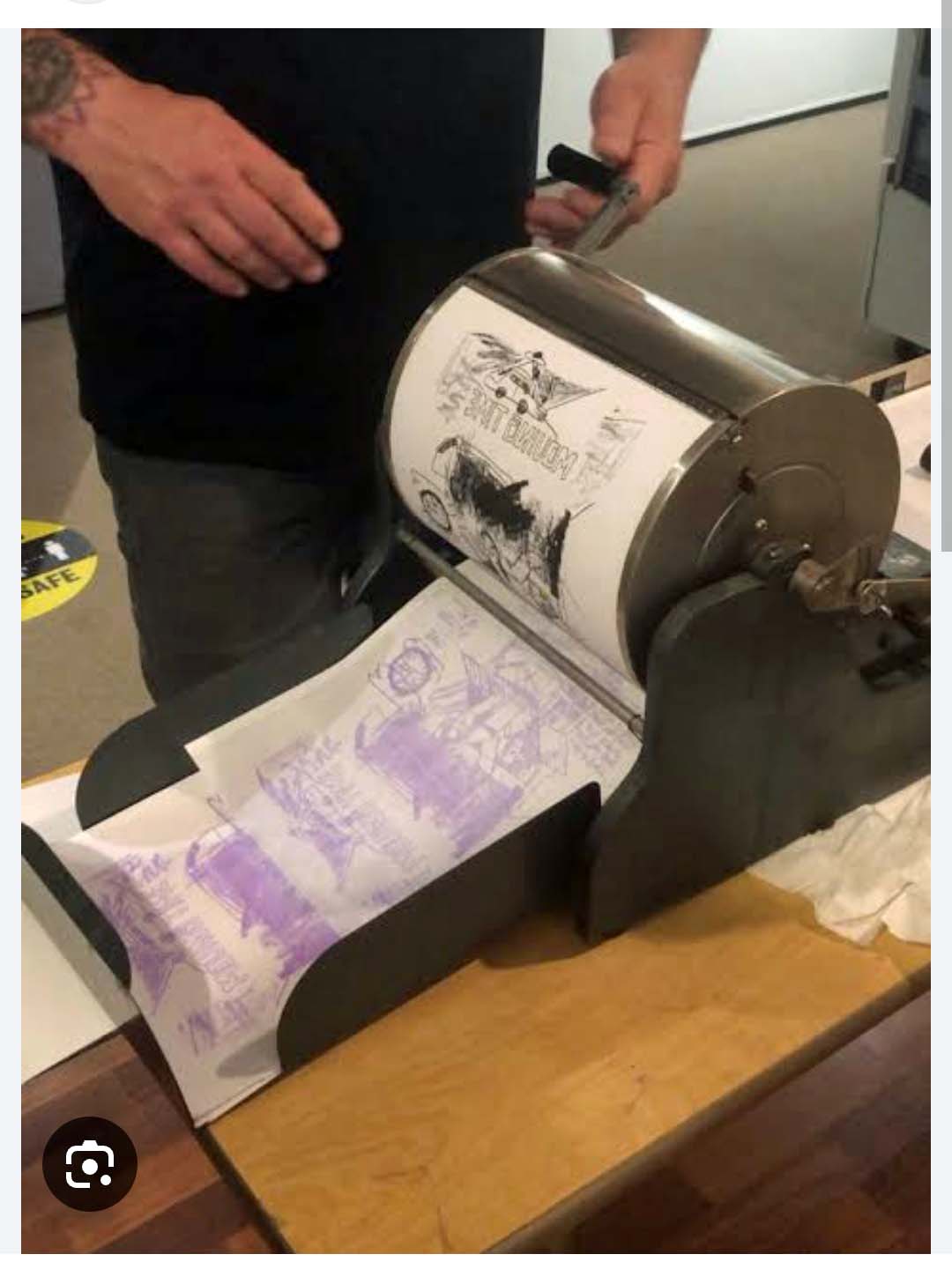
You can find anything online, right? Who documented all this old stuff, and who posts it for the rest of us around the world? Finding mimeographed copies of my elementary school newspaper on Facebook reminded me of the mimeograph and, not surprisingly, I found a photo of a mimeograph machine online.

#The stack of blank paper to feed the machine is on the right in the photo below; the stencil is attached to the drum; the man is turning the drum counterclockwise to feed the paper under the drum; and the finished copy appears on the left.

My elementary school teachers used mimeographed worksheets for all of our classwork. First, they typed text or used a specially-designed electric pen to draw an image on a wax-coated paper stencil. The finished stencil had holes in it to allow ink to pass through to a sheet of paper. Our teachers always made the stencils but, sometimes, we students were allowed to make the copies. What fun to turn the drum and watch our worksheets appear! A single mimeograph stencil could be used for thousands of copies, allowing our teachers to save them in a file cabinet for re-use in the next school year.

Xerox was the first manufacturer of commercially successful copy machines. Instead of carbon copies or mimeographed copies, we called these “Xeroxes,” as in “I made a Xerox of that page so you’d have a copy,” or “Please make a Xerox of this for everyone at the meeting.” Xerox copies were more easily accessible, more affordable, and produced better quality copies than mimeographs or carbon. As a result, by the 1980s, the mimeograph machine was essentially obsolete, and new copier purchasers moved on to Xerox machines.

Still, as one article I read said, the legacy of the mimeograph lives on, and it has a special place in the hearts of those of us (like me) who fondly remember it. When we see a sheet with purple print or drawings on it, we say, “That’s a mimeograph sheet! I remember those!”

Question: Who decided purple ink would be a good idea?

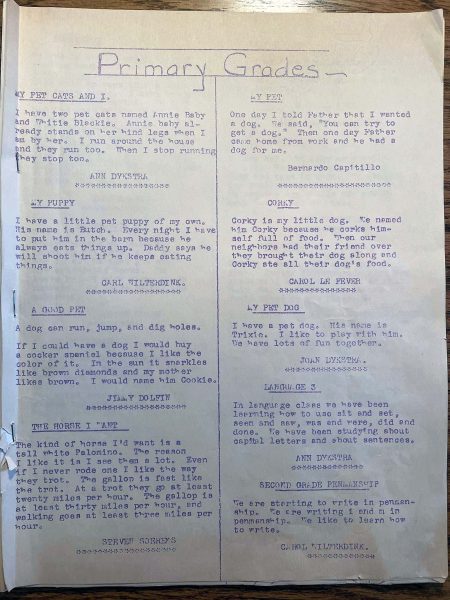
You know how sometimes, you’re looking for something in particular online and you accidentally come across something that grabs your interest? I don’t remember what I was looking for, but I came across a Facebook post that featured pages of my elementary school newspaper. I’m not on Facebook, but it was apparently a public page, because I could scroll through the entire thing. It was fun to read the “news” we reported in grade school and to recognize the names of the kids I interacted with every day in school (50-60 students in eight grades) and around town (population about 200). In such a small school, we didn’t have a newspaper staff. Everyone contributed to the newspaper, with sections dedicated to the primary, intermediate, and upper grades. I selected some pages to post here. Most of them include an article by one of my brothers or by me.

I don’t remember the name of the newspaper–if it even had one–but this is how the grade-level sections were labeled. For this edition, the primary grades were apparently assigned to write about their pets. We didn’t have a pet at that time, so the last article in the left column describes how much my brother, Steve, wanted a horse. FYI, there weren’t many horses on the nearby farms, and I never saw a Palomino, but Roy Rogers, a 1950s TV cowboy, rode his Palomino, Trigger, on his weekly show. Maybe that counts as seeing Palominos “a lot,” as Steve writes.

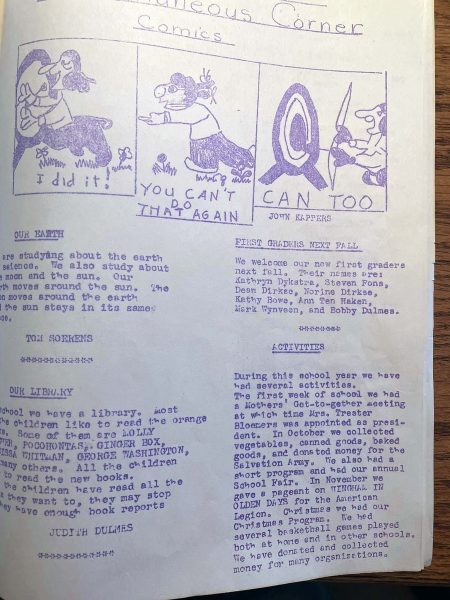
Tom, another one of my brothers and younger than Steve, wrote a short paragraph for the “Miscellaneous Corner” about the earth (first article, left column). It sounds like his class was studying the solar system. Note that the page, like a real newspaper, includes a cartoon, drawn by John Kappers, one of the primary grade students.

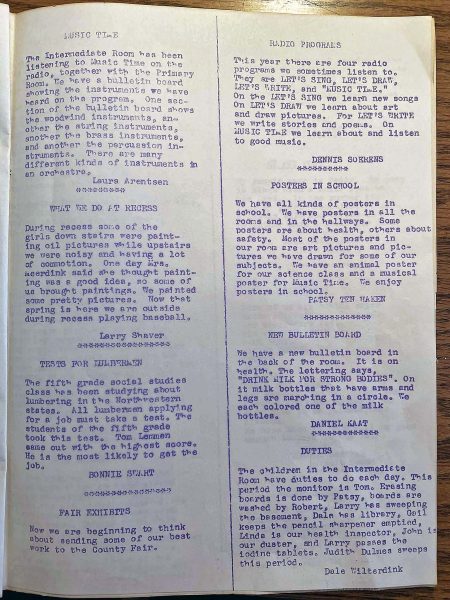
Denny, my oldest brother, wrote about the radio programs that provided the 1950s equivalent of online learning (first article, right column). Small, rural schools like ours could not afford specialized instructors so, four days of each week, our classrooms tuned in to Wisconsin Public Radio for an hour-long program and we followed the radio teachers’ instructions for singing (“Let’s Sing”), drawing (“Let’s Draw”), and writing (“Let’s Write”). We also had some music instruction (“Music Time”). I remember singing along with the “Let’s Sing” teacher, but I don’t recall “Music Time.” Online information indicates it might have included music theory information, and maybe a variety of musical styles (popular, classical, etc.) that we listened to. The article to the left (first one, left column) reports that we also learned about the musical instruments in orchestras.

In the last article in the right column on this page, Dale Wilterdink reports on who had which duties at school. The school janitor was always a woman from our small town (usually a classmate’s mom) who cleaned after school hours for a little extra spending money. Students were required to do minor duties after school to (1) assist the single janitor/schoolkeeper/mom and to (2) learn responsibility. Duties were assigned for either a 1- or 2-week period–I don’t remember which. I don’t think primary grade students had duties because I remember being in first grade and seeing Jimmy, an older student, clapping erasers outside after school to clean them. When Jimmy told me he was doing his duty, I didn’t have a clue what a duty was and I thought it might be a euphemism for a bodily function.

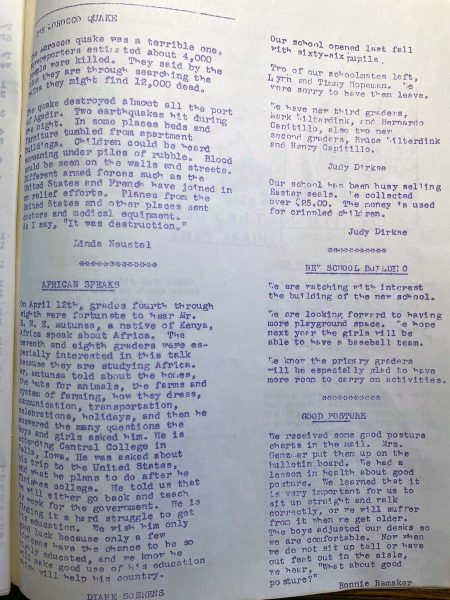
I still remember the African speaker we had at school one day. I wrote about him in the second article in the left column. Our area of Wisconsin was all white, so a person of color was a novelty. Not only that, but he was actually from Africa–a distant and exotic place that we were studying in Social Studies. Above my article, Linda Neustel reports on a Moroccan earthquake. I looked it up and found that on April 29, 1960, the city of Agadir experienced the most destructive earthquake in the country’s history. 12,000-15,000 people were killed, 12,000 more were injured, and 35,000 residents were left homeless. Chances are, we read about this earthquake in The Weekly Reader in school.

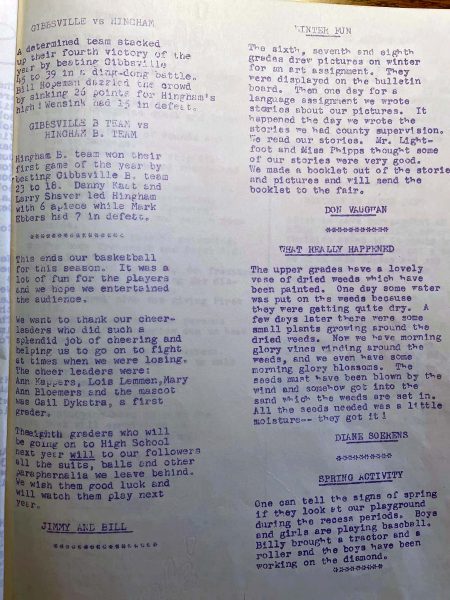
My story in the right column (second article) explains a scientific classroom mystery. I’m not sure why dried and spray-painted weeds needed water. Given that all of us had sandboxes at home filled with sand from the Lake Michigan beaches, I’ll bet that’s where the sand in the vase came from. Judging by the process I used to solve the morning glory mystery, maybe I should have been a research scientist!

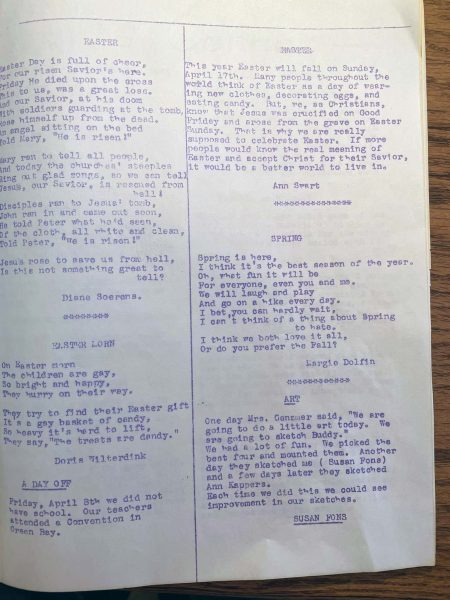
Here’s a poem I wrote about Easter (first article, left column). The poem shows that I can provide rhythm and rhyme, but it doesn’t look promising for my future as a poet.

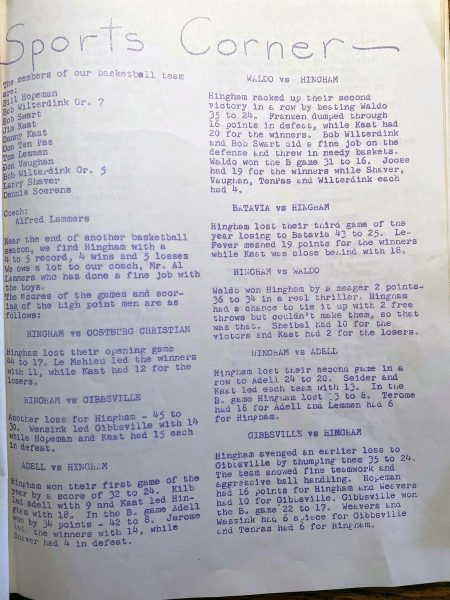
Just like the local newspapers our parents subscribed to, our school paper included a sports section. My brother, Denny, is reported as being a member of the basketball team (list of school team members, top of the left column). We used to play against a few other small rural schools. We even had cheerleaders in matching outfits that their mothers sewed. None of the schools had a gym, so basketball practice and games took place in the local village community halls. Every school had a baseball diamond, so those games were played at the schools.

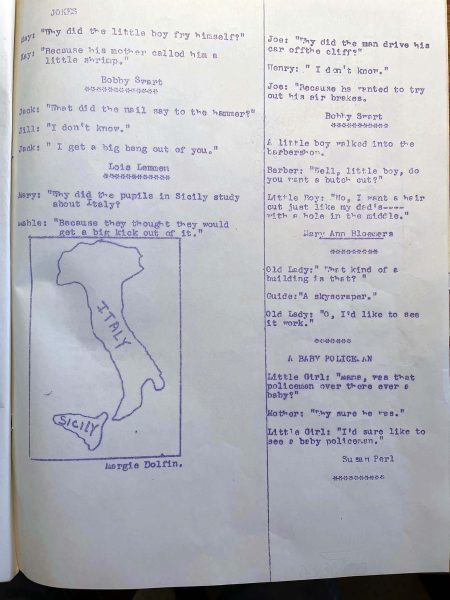
I love grade school jokes, and here’s a full page of them from the school paper. As our kids went through elementary school, Ted and I agreed that the fourth-grade jokes the kids told were the best, so maybe these were written by fourth-graders. Margie could draw very well, and that’s probably why she was drafted to draw the map of Italy and Sicily.

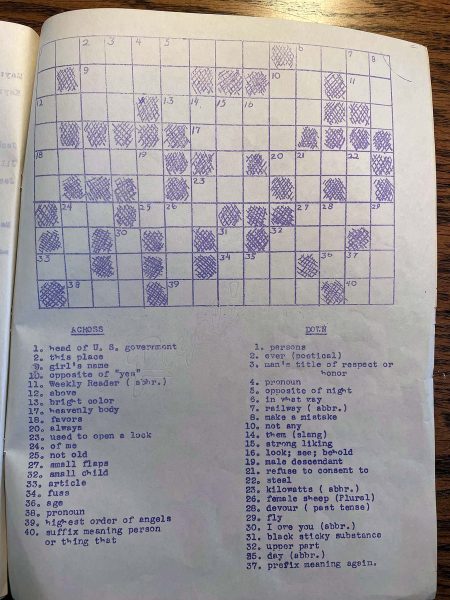
A newspaper wouldn’t be complete without a crossword puzzle. It’s not the New York Times’ crossword, but it’s fun to read and to solve the clues.

The newspaper pages I found on Facebook are apparently from a variety of editions of the school newspaper. Since every student wrote an article for the paper, I can’t imagine a single student contributing more than one article to any edition of the “news.” The former student who saved these pages might have been about my age, and saved the ones s/he was most interested in (i.e., those with articles by people close to her/him), which could explain why I found three articles I wrote, only two with Denny’s name, and only one each for Steve and Tom.

Theo, our grandson, recently had a high school assignment to interview someone who was alive in the 1950s. (I saw all the kids in his group contacting their grandparents for this one!) One of the questions he asked me was, “What would you do differently growing up?” My answer was, “Nothing. It was fun,” and that’s the truth.